
The Sound of Gold with Jazz enthusiast Darrius Willrich

 iHeartRadio iHeartRadio
  Apple Podcasts Apple Podcasts
  Amazon Music Amazon Music
  Spotify Spotify
  Pandora Pandora
  Deezer Deezer
  Podchaser Podchaser
  Audible Audible
  Spreaker Spreaker
  Podcast Addict Podcast Addict
  Castbox Castbox
  Castamatic Castamatic
  Overcast Overcast
  PocketCasts PocketCasts
  Goodpods Goodpods
  Podurama Podurama
  Podverse Podverse
  RSS Feed RSS Feed
  YouTube YouTube iHeartRadio iHeartRadio Apple Podcasts Apple Podcasts Amazon Music Amazon Music Spotify Spotify Pandora Pandora Deezer Deezer Podchaser Podchaser Audible Audible Spreaker Spreaker Podcast Addict Podcast Addict Castbox Castbox Castamatic Castamatic Overcast Overcast PocketCasts PocketCasts Goodpods Goodpods Podurama Podurama Podverse Podverse RSS Feed RSS Feed YouTube YouTube
 Online Jazz piano lessons with Darrius Willrich. The well established singer, songwriter and educator from Seattle Washington.
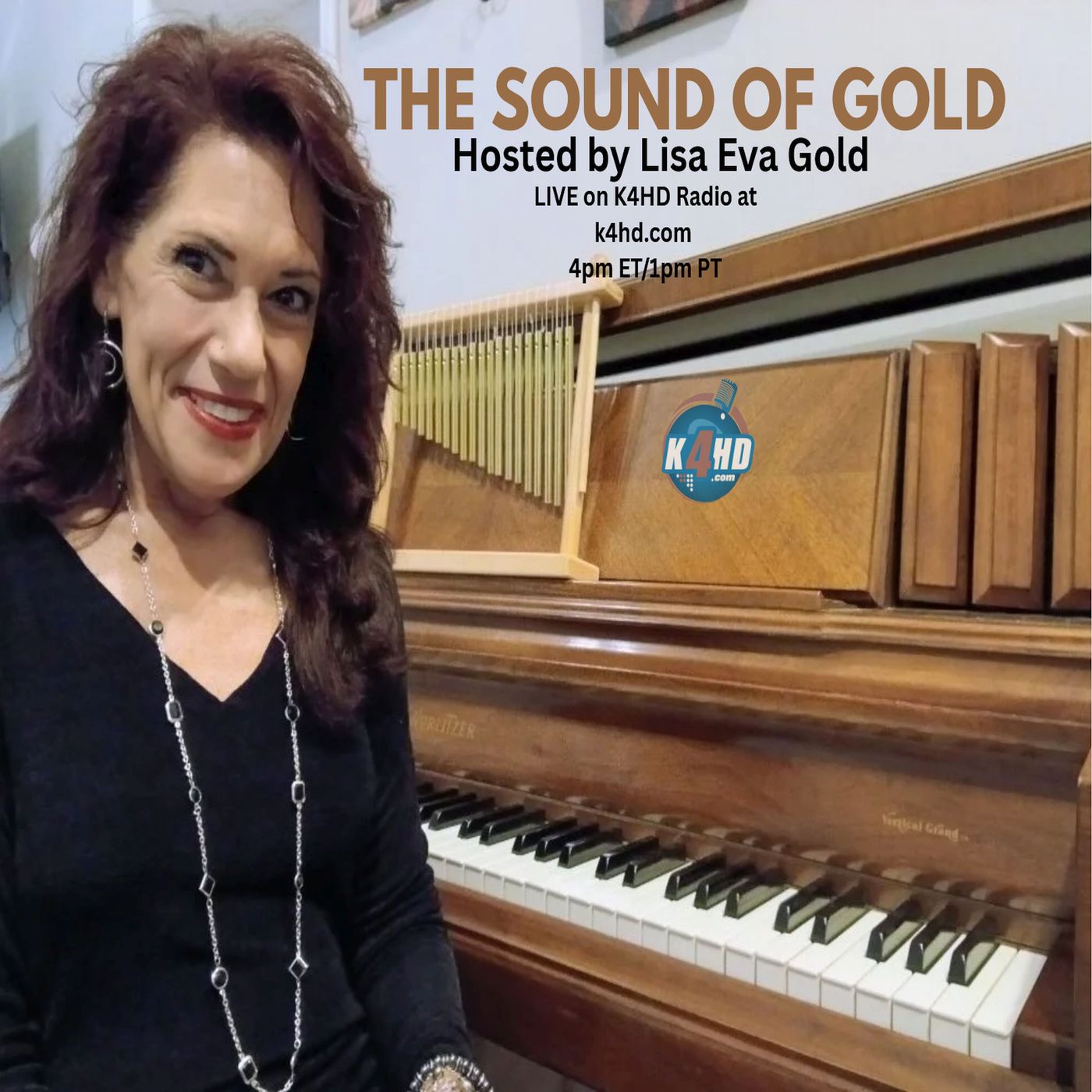
The Sound of Gold is broadcast live Mondays at 4PM ET / 1PM PT on K4HD Radio - Hollywood Talk Radio (www.k4hd.com) part of Talk 4 Radio (www.talk4radio.com) on the Talk 4 Media Network (www.talk4media.com). The Sound of Gold TV Show is viewed on Talk 4 TV (www.talk4tv.com).
The Sound of Gold Podcast is also available on Talk 4 Media (www.talk4media.com), Talk 4 Podcasting (www.talk4podcasting.com), iHeartRadio, Amazon Music, Pandora, Spotify, Audible, and over 100 other podcast outlets.
Become a supporter of this podcast: https://www.spreaker.com/podcast/the-sound-of-gold--6696013/support.
0:01 This program is designed to provide general information with regards to the subject matters covered. This information is given with the understanding that neither the hosts, guests, sponsors, or station are engaged in rendering any specific and personal medical, financial, legal counseling, professional service, or any advice. You should seek the services of competent professionals before applying or trying any suggested ideas.
0:52 Hi, welcome to the Sound of Gold. It is good to be back and good to have you here tuning in. I am if you're a new to listening, and if you are returning, you know, I am here in my home music studio in front of my piano with one of my cats who likes to be on stage here, and I'm excited today. I always have these amazing guests, and I'm especially excited today because for me personally, piano. Yeah, I do play other instruments, but piano is my love and I have my own way of playing. And I love all kinds of genres of music, and I teach all kinds of genres of music, but I think one of the most I would say it's not tricky, but one of one of the types of music that is taught or two of the types of music that is taught is not something that's taught.
1:51 All the time, and I wonder why. And like jazz and blues, like we hear it, we love that rhythm, we love the melody of it, but we always not we but a lot of us tend to just focus on the pop or the classicals. And why is jazz and blues not as obviously popular as classic and popular music? I don't know, but I can tell you that for. Me personally, even though I am a radio show host, I'm also a music piano teacher, and I'm also a student. I think I will always be. I love learning new ways of playing and getting different feedback from different teachers and different ideas, and also engaging in programs for taking lessons because sometimes with my schedule it's hard to schedule a live one on one with a teacher, but it might be easier for me with my schedules to have online classes. With that being said, I would love to tell you about my yes today, I have a very well known piano player, and not just a regular piano player, but a jazz pro piano player that is sitting behind stage, and I would love to welcome on stage, mister Darius Florich.
3:16 Hello, Hello, Hello, hy Darius. Thank you so much for being here. My pleasure. So, Darius, I've been I love piano. You heard me say I love piano. It's my go to instrument I have. I have my own way of channeling and energy and I play and you and I've had conversations before, and I think I've mentioned that, and I just have this knack for plane and I can't explain it, and I can't exactly teach what I do what I teach. And however, jazz and blues it has a different rhythm and has a different beat, and it's so fun and it's so cool, but it's not everybody's main focus. And my question is why not?
3:57 But also, like the emails, I have so. Many questions for you. Tell us a little bit about your journey. Let's start with that. Tell us a little bit about. Your musical background and how you got to where you are and your inspirations, and then I'd love to share with. The audience more. Yeah, I've been playing for like forty years. I started, you know, actually kind of late for some people. I like I got started around twelve to fifteen. Got my first instrument at fifteen and was just hanging out with some church musicians that were inspiring and I was like, oh, you have to show me how to play this on the keyboard, and then they created a monster. So I later took some So I went and took just some lessons and then took some jazz focused lessons because I felt like that was the music that was more I was hearing in my head. Even though those first lessons I learned how to read a bit and was playing sanatinas and a little bit of jazz stuff, but I definitely knew the music that was wanting to come out was more like jazz because my influences then were like Stevie Wonder and Prince Big, you know, big, big influences there.
5:05 And then I went to Cornish College of the Arts after that to study jazz formally and have been teaching and playing. I also put out some records as an R and B singer, nice like four or five albums, the first of which got released in nineteen ninety nine, and so that's that's a bit of my journey right now. Right now, like the things that are happening now, I'm working on a new project right now. The last project that I released was in twenty twenty, and I play the keyboards for Diggable Planets, which was a group that successfully put together hip hop and jazz for the first time in the early nineties. And I also play for Shabbaz Palaces. Yeah, so that's that's that kind of takes you from way back when too kind of now. In a quick, quick, quick synopsis, A brief.
6:00 Yes, and so uh the record like the last record that you produced? Can you please share with our audience if they want to download some of your music or buy some of your music, where did they find that? Yeah? So the best place too if you want to buy buy it would be just to know how to spell my name which is on the screen. And then for those people who aren't on screen, it's d A R R I U S Darius and last name is Wilrich w I L L R I c H. So that's band Camp would be the great place. But and also all the streaming platforms should have it, Apple Music, Spotify, YouTube, every everything. But if you wanted to support and pay for the music, band camp is the best place. I would recommend bandcamp dot com.
6:47 And what's the last album that you that you produce. The last yea yeah, yeah, yeah. The last album. Well, i'll tell you while, I was laughing in a second because the album is Stay Here with Me, that which it has a little bit of a story because a friend of mine, really amazing bass player named Evan Floye Barnes that lives here in Seattle's where I live. He wrote a song called Apex of a Beautiful Day and it sounded like some chords that I would have put together, and I told him I would write some lyrics to it, and I didn't realize it would take a decade for me to do that, but finally I did, and so it was called stay Here with Me. I put a bridge to it as well. So the reason why I was laughing is because the first single from that album, yes, was called easy to Forget, and I was like, oh, I was forgetting the Navy. You could tell I was kind of so that was That's funny.
7:40 That is funny though, So Darius, for our audiences out there, a lot of musicians are listening, and then a lot of the fans that want to maybe get into music are listening. And so there's so much social media, there's so many different things online. There's so much coming at us all the time. And you and I met because you have this wonderful program called Jazz Pro Jazz Piano Pro, and I love your emails. But I'll get to that in a minute, but please share with our listeners the website if they want to check out your studio and your teachings.
8:23 Yeah, it would be jazz pianopro dot net. That would get you to a presentation and get you really get your feed in, and like, really, my method and my point of view of how I think is effective to start teaching people and actually how to make jazz easier to understand it can I feel like it gets taught very in a very over complicated way. So that's my way of saying, hey, like this is doable if you do it a specific way. So some of I don't know. I'm not giving away your secrets. I read your emails and they're so inspiring to me. And you focus on scales and you and you and I have talked a couple of times where you're like put the book away.
9:11 You're like, yeah, just get. Rid of the sheet music. We get rid of like the sheet of the you know whatever scales I'm looking at, and we talked about breaking it down to look at it from a different point of view, and it's not complicated. So for for many of my listeners who may be more new to this world, how could we share with them in the most simplified way. How you let's say, take a C major scale has no sharp, so flats, then you have the A minor that's the reflection of the sea. So how could we how can we in a nutshell again without giving secrets away, to share with our listeners a little a little snippet of your approof.
10:01 Well, so you know, especially for for people that want to make music, and you know, as improvisers. You know, like if you want to read music and you read the classics, that's that's one skill, that's a skill, But that skill reading doesn't necessarily give you the ability to create music, the same as reading a book doesn't make you an author. It's he it's helpful. So I focus on, especially when people are starting out in the beginning, to focus on one scale, because of course jazz has like oh you know, lydian lydian dominant and as so many these scales, half tone, hole tone, whole tone, scale, like they have so many, so many things, and a lot of times I find that that teachers want to you know, they they mean well, but they're they want to give their students all of that, but giving it to them at the beginning to memorize is just really discouraging and and over complicated, you know, like because I feel like, you're not going to use any scale but the major scale until it's time to make your solos interesting. So major scales is like the thing, because that's going to lead to everything else if you can fully understand and squeeze the juice out of that. Because chords are inside the major scale, and that's what you these building blocks to making music. They're in the major scale, and you
11:31 can accomplish so much. You can accomplish actually everything from learning all the chords, even learning altered extensions of of of chords and reading lead sheets and all of that, because all of that precedes you making your solos interesting. Yes, and the moment it's time for you to make your solos interesting, you need the other scales, but not a second before, or else you'll just be bogged down learning those scales that you're wondering how to use. Because you're only going to use them taking but the major scale, you're gonna need that. To have chords in your back pocket, not like have someone give you chords. You're going to like have an unshakable confidence because they're just in there in every other note fashion, you know. Yeah, I mean like like someone can't ever tell me that E major seven has a D natural in it, because I know that E major doesn't have a D in it. Like when you have those things, when you have that, when you have that, you just can't be fooled. So I definitely focused there and discourage people from trying to get anything else together beyond that right at the beginning.
12:46 So when you, from from my experience and from us chatting, you offer a forty five minute session for anyone that wants to step into learning with you. And I would think this is not for like the very beginner who doesn't know their notes yet or there or have an idea of their scales yet. Is that correct? It can be because you know, like scales are pretty basic, so if you're okay, So for the beginner, it's great because you don't have a lot of bad habits to unlearn and you'd be stuck yeah, and you'd be starting in a very focused and very step by step way instead of Oh, I practiced this for a while and I had to go over here and find out what that was. No, you have a step by step you know, in the jazz p have a pro mastermind, and I ideally not it necessarily ideally, but I just get to what you're speaking to. Like. It definitely speaks to the jazz p on pro Mastermind, definitely, And my approach speaks to people who have been practicing and are stuck and don't know why they're stuck. And so that forty five minute session a lot of times onearthed why they're stuck and what we think a good step by step plan would be, and whether they study with me or not, they have that step by step plan, and if they want to work on that plan with me, then we talk about what that might look like.
14:12 Good. Yeah, sure, No, that's great. And you know, you're very easy to speak with. And Sunday one day when when I when there's like more days than the week, added more time on the clock, I do want to take lessons from you because there's so much that you teach that in some ways I don't teach it the same way, but I don't. I think I would learn so much from you, even though I've been playing forty five plus years, I would still learn so much from you, and I look forward to that time. I'm going to jump around for a minute, because I really feel and know a lot of people that are not in the music world, and especially maybe from us growing up with this world of like looking up to icons and musicians that are like bigger than life.
15:05 You know, we didn't wake up and just like I didn't wake up, and just like, hey, I can play piano, yet I'm teaching Like it doesn't work that way. Like we've had to build our way up to where we are and make the connections we had to make, and you know, take on jobs that to supplement because it's not and I guess I'm more speaking for myself. It's not like the one stop shop and like all my bills are paid and gases in the car, fee in the fridge, and I'm I'm just living the dreams. It's work at it's work with a purpose, but so it doesn't feel like work. It's almost like a juggle. And I've said in previous shows, it's not the struggle.
15:50 It's the juggle. How well do you juggle? Because we all juggle, don't Yeah, forget the struggle. We just just call it a juggle. So share this a little bit. You're recording artists. You've done more than I've done, and I haven't walked that path yet, see yet, I haven't walked that path yet. But share with our audience a little bit about your experiences on how you've you know, how you've zig zagged in life and you still like keep you've got it going. Uh you know, I don't know that there is a formula, but for you know, like for for me, uh, funny, at this funny, at this age twenty five, which forty five, hilarious.
16:39 I'm for the record, I'm fifty five. But at this age, what it looks like my best results have come in surrendering to what's right in front of me and just going with that and then figuring out how to work in because as you know, music and some of those good times in music and where everything's flowing seasonal, it's like it's not like, oh, this is going to be this way in the next six months. You're kind of like this is a busy season and then it's going to be slow season. And I remember coming, you know, as a younger full time musician, knowing that the first three months of the year we're going to be slow because you know, all the New Year's Eve and Christmas and everyone is taking the first three months to reup, so there's probably not going to be that many gigs and all that stuff. So knowing how to either put back money or get a part time job for the first three months and then sometimes being surprised that January through March was very busy, you know, So a lot of times for me, it's just going with the flow.
17:37 Do you need to stop and regroup and then do that and then have plans to get back on either creating or getting back out to play live. And you know, a weird thing because I have a day job, and the day job has helped me not do a lot of gigs that I didn't want to do, nice because when I was a full you know, when you're a full time musician and you know, it's sometimes it gets feast or famine. It's like you're by yourself playing stuff you don't want to play, but that you might have to because you have to keep the lights on. So having having a day job, Yes, there's a big chunk of either practice time or creative time that gets taken away.
18:24 But also I get to focus on the projects that I really love focusing on and can say no to the ones that I didn't want to do anyway. Yeah, yeah, I get it, and. You know, I guess it to I don't know if that really answers your question, but it's kind of like going just kind of going with the flow of things. I mean, it makes it sound easy, but there's there is juggle and struggle with that, you know, because yeah, sometimes where what the flow is saying is contrary to what you think is better best for your art. However, life you living life also informs your art and that's uh, you need to have the stories to tell about real life.
19:08 You know. If you if I was I was just you know, being a musician all the time all the time and was full, you know, I don't know that I would have a lot of life stories to tell. But you know being a dad helps. Uh Uh, having a dage and not being able to do what you wanted, what you say you should be doing for a while because of whatever reasons, it gives you material. It gives you material. So like at the age I am now looking back, the best course of action is surrender and still make sure that I am participating in what I love and what the message that I might have to share with people, uh, in whatever way I can, Like you look at my calendar and be like, okay, well I have this, this, and this going, and then well where can we fit these few important things in over the course of the next three months, you know, like so yeah, and having people in your life to help remind you of that, Like I've gotten better at that at having people that are motivating me to like, Okay, we're going to do this next.
20:12 You know. That's why I'm working on a new project because someone from the outside is saying, hey, I would like to promote something, but we need something to quote. So that's I'm like, Okay, that's cool that this person has a thing going helping me stay creative and creative minded, because it can get easy to get lost, and many times I have looked up and been like, oh my god, it's been a while since I created and set down and you know, but then you come back. The coming back over and over again is I think the coming back over and over again inside of going with that flow is the answer for me, it has been the answer. I mean, I think that's you know, because you can't all the way control the things that are going on in life, but you con throw your responses to it and what you're going to do given the new circumstances.
21:00 And I've been through the you know, the thing that we lose hope. I mean, like I said fifty five, I've been through the lost hope and it's like, oh, make this work and I'm never gonna I'm never going to do this. And you know, it finds a way and if you really stay focused and that's really in your heart to do you right. And so for for listeners out there, like and I have friends that like, I'm just quitting my job. I'm just going to do this full time and be. Like whoa wait, put on the brakes, like. Like you know, you want to have that that juggle, And like you said, there's I'm listening to a lot of what you're saying. There's you need consistency, you need to be flexible, you need you need your family, you need your friends, you need you need like a whole salad mix together of all this stuff to keep you solid because we as human beings and especially as artists, like we'll give it our all, and it can we can easily burn out kind of like what you were saying, like I can keep doing this and doing stuff I really don't want to do, just pay the bills, but I'm loving what I'm doing, and so you.
22:04 Know, it's I don't know if it's a thing about getting. Older, but I had this conversation with younger girls the other day and I said, you know what, I don't know, but it might be something with getting older where we find comfort inconsistency, and when I teach music, when I teach sheet music, I'm like, the beauty about teaching. Sheet music is that it's consistent. But once you own it, then you can you can, you know, jazz it up or improvise on it, but like know your foundation, own it and know that it's consistent because it's not going to change unless you change it. So with what you're sharing, you know, it's it's so important for I think it's also like mental health, like we and there's no surprise it's not uncommon today to bring that up because we all most people work most of us, you know, have to earn a living to make it, to pay the bills, to to eat. And that's that's not like uh oh sorry, what was me?
23:09 It's just life. That's just like how do you how do you juggled? Like nobody's like what fun would it be if we didn't have to like work and do all this stuff? Like I don't know, I'm having fun, you know, and you meet people along the way, and like you said, going with the flow. You know, you're not giving up on life, you're not giving up on your dream, but you're being open to like the universe and you know, people walking into your life and inspiring you and being like hey, oh I know so and so let me you know, uh let me introduce you or hey you know, like you were saying, you have a project coming up. Yes, yeah, yeah exactly, And and that's comes from you know, kind of going with the flow and meeting meeting this person in the studio because they wanted me to uh play play live something that needed to needed to get recorded.
24:03 And then that just led to like, oh, we're working on a project now. So yeah no, that's great, that's great. And again for our listeners out there, how do they find you on on your website for jazz. Pro jazz pianopro dot net, jazz pianopro dot net, I see the theories weewich dot rocks. That's definitely the artist website where you can see hear a lot of my music as well. Okay, nice, nice jeris what would you share with our audience out there that maybe is thinking about taking up an instrument and playing, but not not sure. And you know, we've we've been there where you know, you kind of like have to break the ice and you kind of fake it till you make it think. But but for our audiences out there that might be interested but not sure, what what could we what could we offer them to invite them to to get more involved?
25:02 Well, well, you know, I would always if you have any inclination to you're drawn to a specific instrument, just trust that inner knowing that inner desire, and try some things. You know. Of course, I'm partial to the piano. It's like basically the and I don't really play any other instruments. I sing in songwrite, but I don't really play any other instruments. How and something that may feed into this what you're saying is like, if I had it to do all over again, and if I had known that I was going to be a musician, especially when that wants to create music, I would have started with the drums then piano, Like if I had a music academy, I'd make no matter what instrument you play, you need to know.
25:50 How to play the drums right for the timing. Drums and the piano because you know, as musicians, I feel like, especially a creative musician, you're only as good as your sense of time. You start with that instrument that is responsible for the time, then you take that great sense of time to other every other instrument you touch. Now, I don't play drums, but that's just me. If I had it to do over again, that's what I would do, and that's what I would That's what I would recommend for people that maybe party from zero. And the reason why piano, especially for Western music, is because it's basically the calculator for Western music. All the rules about it are just laid out in front of you. The knights and the spaces between notes and harmony, it's just right there on the piano. So if you have those two, you've got what's going on. You've got basically what's going on in Western music. There's a sense of time, and there's this harmony and theory as well as full range from lowest to highest.
26:48 You've got it's literally black and white. Yeah, it's literally and so and so logical. When you're trying to teach it, it's like it defies our lives, because our lives are not as logical as that piano thing is. And the craziest thing is, and I teach this to the youngest of my students. The keyboard is just a bunch of patterns. And then if you break it down, and this goes into like. More adulthood, not children's mind. But there are twelve notes, you know, there's twelve numbers on the clock, there's twelve you know, I don't know, religion, disciples, there's twelve of this. There's the number twelve. And you know it's almost humorous, yes, you know, And it's so simplified.
27:33 Yet we make it so complex. Right, I mean, and there's a complex you know. It's because like when you're listening to music and you're enjoying music, or you're even in love with music, none of that seems connected to logic. It's very ethereal and spiritual and inspirational and like you know, could be even even borders on the wu WU. So when you sit down to learn it and you're and you're bomb maybe even I don't know about bombarded, but like you're, you start to realize that, oh, to get to get gain access to that world of magic, it's actually pretty logical, Like it's actually super logical. Well it's going to It may confuse you how logical logical it is, because life's not as logical as getting the getting availing yourself of those tools to make music super logical.
28:29 Yes, yes, A couple of questions for our listeners out there that are musicians or just beginning to become or the becoming of You mentioned that you have recorded some records or some music, and you've also mentioned that you're in bands. So I would love to share with my audience a little bit about your journeys on both those topics. And and you know, what what's it been like for you? Uh? You know? So making recordings is so when you're doing it yourself, is very time consuming and very expensive. It's been made less expensive with the advent of how computers and home studio stuff is you know, you can get a lot done these days or for a lot less, but you know that's part of the juggle, you know, like working, working, trying to create and practice and record.
29:31 And like, I feel like my first album was all live. I just recorded live. It was no computers really involved except for mixing or whatever. And I feel like I want to kind of get back to that. But we'll see. But my second and third albums. Oddly enough, I produced the first two albums and then to two songs on the second album were produced by other produce ucers, and as a player songwriter. I after that second album and I saw how well the two people that produced that, the two tracks that got produced by other producers, they turned out so well. I realized that, oh yeah, there's there's people that that's all they do is produce music.
30:20 I'm wearing all these hats. So from now and I'm going to try to hire people that that's all they do is produce to at least consult. You know, that's sure, I could do it, but like I would love to talk to someone that's all that they do is produce, so they would I would get more information and so the next two albums were had producers people that whose work I look up to, Vitamin D and Donie Goodman and Ian Delile so so. But the process is like another go with the flow for me, Like it's not like a prescribed this is how I'm going to do it. It's it's an adventure every product, sure, an it's an adventure every project like this this next one that I'm doing, Like, I'm just going to go song by song, like I have a collection of songs that may be an album okay, and may not be an album. I may need to supplement, but I'm looking forward to wherever that leads. Actually, I'm looking forward to wherever that leads just the opportunity to stay creative and the things that have been in my hard drive for a long time, being able to see the light of day.
31:31 Nice. So, before you answer the other question, when you're creating an album, do you have like a theme, like is your album theme based or are you just like, oh yeah, here's ten songs, just gonna throw it on there. Or do you have a purpose like a in your own world, in your own mind and heart, do you have like like this song, you know, it made me feel like this chapter of my life or or I mean I don't. Know the song. The songs are like that chapters of life or just you me telling stories from my life. An album usually for me these days, you know, especially in the last two albums, are just collections of songs that I think go together. They're not like, oh, I have this theme and I create an album from the theme.
32:21 It's like, oh, I've just been following the muse off and on for a few years, and now I have a collection of things to pick from. So yeah, that's what's going on right now. I mean, because even the ten songs that I have scripted out for this next record, and there's more songs that I could choose from, but these ten seem to have either either a similar vibe or feeling, and in the list that I put together, it seems like, oh, that goes together and we'll see. Yeah. But mostly just from again like me surrendering over the years to the creativity, you know, coming through and what's there now and.
33:04 Right like getting out of your own way because we've all done it. We all do it, we all have done it. It's just kind of like, even for myself, it's not the only person that limits me. Is me right? Right? And for me like like making I mean, I know back in the day, especially my heroes like Stevie Wonder and Prince Like, they came up in an album focused era, so I know that their thinking about an album is very thematic and cohesive. And for me, for me these days and with the juggling, like I feel like it would be fun to have the luxury to work that way, especially with a budget or studio budgets and being able to work that way. But for me right now, that would be another barrier to getting it done if I had to, like, oh, sit, I have to make it thematic, like let's just take the group of songs I've got and have them go to get a specific way. Otherwise I may not even do this excuse to not do it, or to waylay it, or like oh I got to wait until it's this, No you don't. You got to put your put your music out because there's more music to make.
34:14 Yeah, there is this book I read not to get off the subject, but I'm going to come back to it. There's this book I read by Sonya Croquette, and she's she's a spiritual healer, Lady and I'll never forget because I've taken this with me everywhere I go and every decision I make. She had said, especially some difficult times in my life, really has helped me. In her book, she said, we're always looking out there like what's next, what's coming? What are we going to do? Where are we going to go? But she goes, we forget to look down or look around us and look for the bread crumbs because it's the bread crumbs that are going to create where you are now, to where you're going.
34:57 And I just love that. To take it. Yeah, no, yeah, to jump to piggyback on that, Like that's definitely something as at my age and I realize its valuable, Like well, it's easy to be like, oh when I get that thing, then I can create this. Like, I mean there's some things that I there's some gear that I want, but like, really, like what do I have right now that I'm not maybe that I'm not even using? Like we're you're right, we we too often look out out there for permission to live fully. But yeah, it's your life right now. Just use what you've got. I mean, there's so many stories that I've heard that have been inspiring about musicians that just I mean a luxury to do this if you can. But like just took just got in a car and went to a cabin and just took the gear that they had and recorded an album and it was magical.
35:50 Uh uh. But you know a lot of times it's just like cutting cutting the bull and be like okay, yeah I could, I could wait until then, but like now, it's always the now. It's always yes, it's always with whatever you have, even if you just have a guitar and a mic. We have just a piano and a mic. Now is the time. I'm not saying go quit your job and go to the cabin, although that is a great idea. However, it's just you know, in the real and the reality of things, you got to put it in perspective. Sorry, but that's the truth. Right yeah, yeah, I mean, and your job is going to help finance your love of art. You know that you're going to need some money to keep that thing going.
36:32 That's or to pay for the studio. Absolutely, so tell us a little bit about and then I know I'm in my second season here and I love doing this radio show, so I promise some of my listeners or many of my listeners that I'd play a little piano before I do that, though, can you please share with us, I asked, before I cut you off my fault, tell us a little bit about your bands and how people can come out to see you and kind of like how you Matt and how you you know, got to where you are. Oh boy, okay, so yeah, like two minutes, it's all. So the bands that I tour with, the most of the most famous Diggable Planets who in ninety three had a song called well. The catchphrase was cool like that and it was a rebirth of the name of the song was rebirth of slick and I'm from Seattle, sure Ishmael Butler is the creator of that that group and he did that in Brooklyn and New York. Uh, that's where that that band was born. However, what people don't know is that he went to high school in Seattle, Washington.
37:42 So that's why we all the whole band is from Seattle. Nice. He now lives here, and so it's just was a no brainer to have to look back in his musical pass and put together folks from the scene where he lives. Uh, I mean, I mean I don't know, that's that's exactly what I was just broaching next to us, like I mean, well, I mean we we met under musical circumstances, just probably a producer that I was working with, or a studio owner that I was working with that he was also working with that and we we got a face to face. I think we knew each other was even before you know, our reputations probably preceded us and uh for a long while.
38:24 I mean I wasn't playing in any of his bands, but you know, was was in conversations with him and know that he would wanted to create with me. And finally, I think I subbed for a Diggable Planets gig before I actually played. And the pianist that was in Diggable Planets before me was Brian Jackson, who would was was of Gil Scott Heron fame. So I was very honored to step in after him into Diggable Planets. And and the other band, Shabbaz Palaces is another one of Ishmael Butler's baby. Uh. You know Ishmael, you know back in ninety three putting jazz and hip hop together in that way that that that that him and those producers did was was groundbreaking and visionary, and Shabbaz Palaces is another futuristic. Uh no one's thinking like this but him kind of deal and very refreshing and engaging way, like, yeah.
39:24 Now, are you guys playing anytime? Coming up soon? Let's see. So we just came off of a small tour we did. We played in Seattle, we played La in the Lodge Room, and we played in San Francisco just a week and a half ago. Okay, And I feel like Shabazz has something. Oh I don't exactly know because it's in the next couple of months, but definitely they have a website Shabbaz Palaces. Uh and uh, I know diggable planets. We play in Canada coming up to the next month, and we have some overseas tracks will coming in August, maybe some East Coast stuff as well. And so if listeners out there want to connect with you and follow you, is it just as easy as go to Facebook and find Darius will Rich.
40:13 That is it? That is the ticket. Yeah, And and really the trick is just knowing how to spell my name Darius with two rs will Rich like will be Rich. Yeah, that's because if you can spell my name, then I'm I'm easy to find. But yes, yes you're not hard to find. Just look up piano pro. Yes, piano pro your name comes up. Yes. So it's Monday. And whether you're listening my listeners out there on the East Coast or the West Coast, it's still Monday. If you're tuning in from Europe. I know in Australia it's already Tuesday. Wherever you are, wherever you're tuning in from. I'm just going to play a little something just to say, hey, like take two minutes just to chell. If you're in a space and a place where you can close your eyes and relax. Awesome if you're driving, don't do that and H and yeah, just relax for a couple of minutes and then we'll continue with uh, with our conversation Darius And yeah, it's so awesome to have you here. H. Just a little little
43:35 snippet of something I got to play yesterday at the Marriotte Hotel. We had a Body Soul expo and it was for Mother's Day. I got I got to be there and play a little bit. So that was fun. And it's hard to like play for like three minutes and stop because I'm like one of those people that could just sit and play for hours. But thanks for listening, Thanks for and thank you to my audience for tuning in and being here. I do this for all of you, and Darius for our listeners. Please tell us again how we connect with you and find you and sign up for your jazz classes. Yeah, so for the jazz piano pro mastermind, you would go to jazz pianopro dot net to really get a taste of what's going on there and what's available and how accessible jazz piano can be if taught that way.
44:28 Yes, yes, And you make it fun. Your your emails are so informative. When I read them, I'm like, you must spend hours like putting together these, like they're so they're so easy to connect with because you're. Just like real about it. It's like, hey, if you're doing this, you can do this so easy, you know, so easily. You just make it so understandable. And I thank you for that because it helps me as not only as a teacher, but as a piano player. It makes it easy for me. And like I said, one of these days, we'll talk about me taking some classes from you because I could, I would love to learn. I think it's just getting that that groove going and just getting my groove on.
45:11 That's it. Indely, we have another another minute, and I would love for you just to help close us off. Next week, all of you listening, I'm not going to tell you who my guest is, but I have this wonderful gosh, I'm so blessed with knowing so many wonderful people. So you'll have to tune in to hear who my guest is next week. But right now, I have a very well known Darius Wilrich on my show, and I'm so honored to have you. Please share with our audience maybe a couple of words before we finish for today, a couple of words of inspiration. Words of inspiration, you know, whatever you're dreaming about, just start and just start and take consistent small stay yeps, and love yourself the whole way.
46:04 Yes, and surround yourself with people that are going to that believe in you. Don't let somebody say, oh, that's a waste of time, don't care, you know, what are you going to do that for? Surround yourself with people that believe in you and that are going to support you and be a like group for you one hundred percent, even if you know you're you're building a snowman, just like, Hey, well I'm in Florida, so I guess it would be a sandman. Yes, you definitely want to surround yourself with empowering people and empowering thoughts and empowering as much as empowering circumstances as possible. Yeah yeah, and to stay and stay consistent, even if that means small steps. Small a step is a step.
46:49 That's right, and help keep music alive. AI will never ever ever take the place of the human soul or the authenticity that goes into playing an instrument. Yeah, yeah, Yeah, we're the real real deal and it doesn't get any realer than that. I think that AI will make live, live music interaction more premium. Yes, so let's keep music alive. And I look forward to to talking with you off screen and and we will, we will get to work together. And again, thank you all for tuning in today. I look forward to you'll see me. I won't see you, but I look forward to having on my show next week. And yeah, tune in to find out who it is who my guess will be have a blessed week. Everyone, Happy Monday or Tuesday or whatever day you're listening.
47:46 Thank you, Darius, easy my pleasure. Thank you for having me. Absolutely b


