
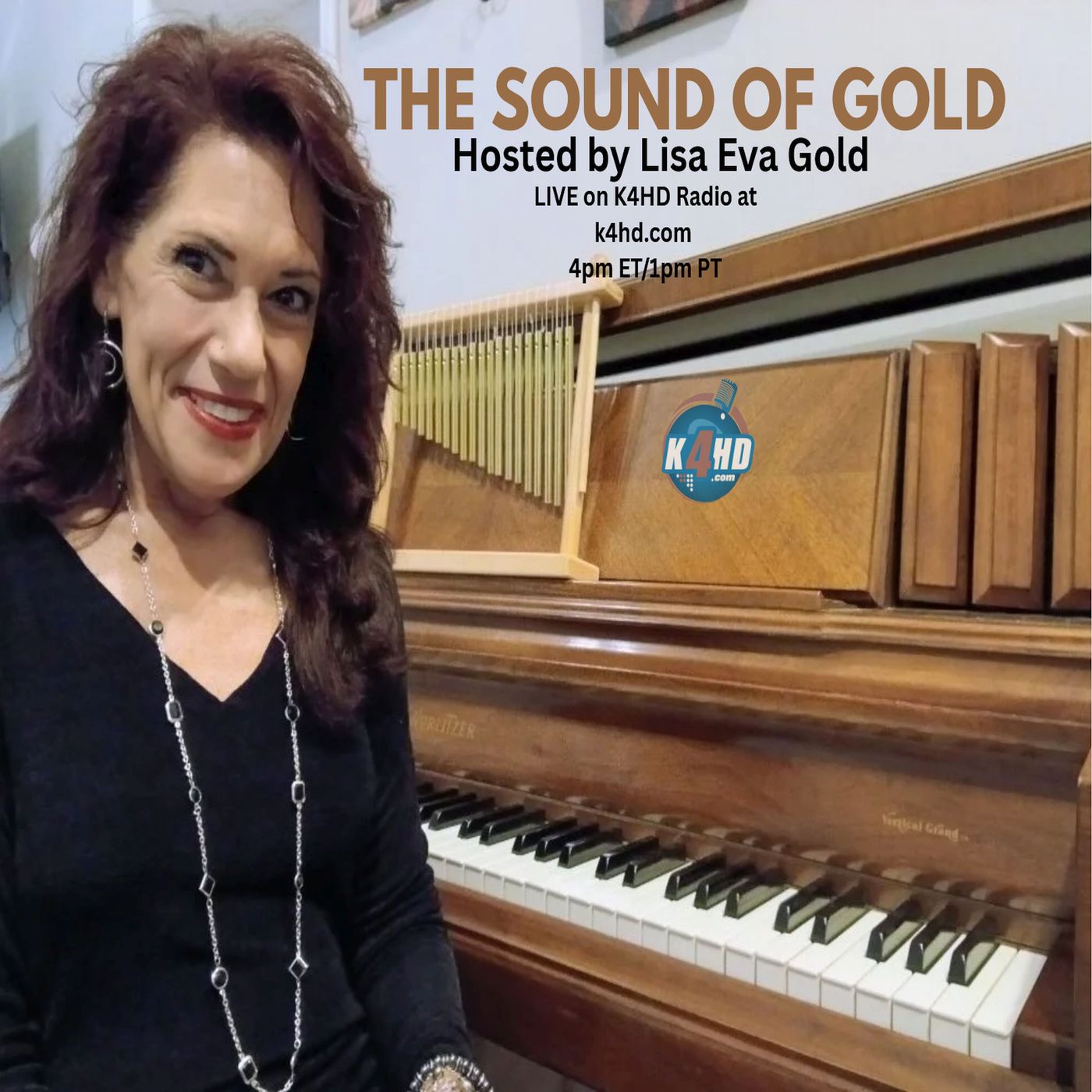
THE SOUND OF GOLD with my breakthrough piano guest Jeremy Gould.

 iHeartRadio iHeartRadio
  Apple Podcasts Apple Podcasts
  Amazon Music Amazon Music
  Spotify Spotify
  Pandora Pandora
  Deezer Deezer
  Podchaser Podchaser
  Audible Audible
  Spreaker Spreaker
  Podcast Addict Podcast Addict
  Castbox Castbox
  Castamatic Castamatic
  Overcast Overcast
  PocketCasts PocketCasts
  Goodpods Goodpods
  Podurama Podurama
  Podverse Podverse
  RSS Feed RSS Feed
  YouTube YouTube iHeartRadio iHeartRadio Apple Podcasts Apple Podcasts Amazon Music Amazon Music Spotify Spotify Pandora Pandora Deezer Deezer Podchaser Podchaser Audible Audible Spreaker Spreaker Podcast Addict Podcast Addict Castbox Castbox Castamatic Castamatic Overcast Overcast PocketCasts PocketCasts Goodpods Goodpods Podurama Podurama Podverse Podverse RSS Feed RSS Feed YouTube YouTube
 Join me today in meeting the founder of Breakthrough Piano Club. Meet Jeremy Gould. A talented musician and teacher of piano lessons. Tune in to learn some tricks and tips on how to learn tobplayvthe piano. Jeremy has created an easy approach to understanding how to play piano in an online method approach, different than most.
The Sound of Gold is broadcast live Mondays at 4PM ET / 1PM PT on K4HD Radio - Hollywood Talk Radio (www.k4hd.com) part of Talk 4 Radio (www.talk4radio.com) on the Talk 4 Media Network (www.talk4media.com). The Sound of Gold TV Show is viewed on Talk 4 TV (www.talk4tv.com).
The Sound of Gold Podcast is also available on Talk 4 Media (www.talk4media.com), Talk 4 Podcasting (www.talk4podcasting.com), iHeartRadio, Amazon Music, Pandora, Spotify, Audible, and over 100 other podcast outlets.
Become a supporter of this podcast: https://www.spreaker.com/podcast/the-sound-of-gold--6696013/support.
0:00 This program is designed to provide general information with regards to the subject matters covered. This information is given with the understanding that neither the hosts, guests, sponsors, or station are engaged in rendering any specific and personal medical, financial, legal, counseling, professional service, or any advice. You should seek the services of competent professionals before applying or trying any suggested ideas.
0:51 Hi, and welcome to the Sounds of Gold. Of Gold. I gave sounds an a at the end, little Italian, little Italian language there, but welcome. It's Monday. I'm happy to be here for you. And although I cannot see you, I know you can see me and you can also hear me, So welcome. And we are focusing on music. We are focusing on the passion of playing, the passion of being a musician, the passion of creating from an artistic point of view through sound. And I'm here in my music studio. Last week I was traveling, so it's good to be back home in my music studio and here with my cat CALLI. And if you're watching, maybe some of you can see and if you're just listening, letting you know I'm in good company. Cat Company. I'm a music teacher here in Palm Beach Gardens, Florida, and I'm also a radio show host. My purpose for doing this is keeping music alive. We as musicians, we learn to play our instruments, we learn to perform, we learn to be on stage and play for others and mostly play for ourselves. It is a true blessing when we are able to get involved with a music school or meet a music teacher that we can learn with. And as I said, I'm a music teacher, but even though I've been playing over forty years, i am still a student.
2:24 I still take lessons and I still learn, and it's never ending. And that's what the beauty of music is, it's never ending learning. I'm so excited today to let you know that my guest is a very talented special guest that is not only a pianist, but he is also an online music teacher for those of us that are too busy to go into a studio and have a live teacher. And I think he does do live lessons also. But he is Jeremy Gould from break Through Piano Club and I know we met backstage, and Jeremy, I'd love to bring you on to the stage.
3:07 Hi, Lisa, thank you so much for having me on today. It's just a pleasure to get to meet you finally. And I'm glad to see that you have a cat, because I have a couple of dogs that are going to be in the background and they might be making noise later, so hopefully, hopefully they won't interrupt this. But I love I love seeing people with their animals, and that's one of the nice things about, you know, teaching online is I get to see people at their instrument with their pets and in their in their homes, which is a lot different than having people just come to your own house. So it's lovely to be here. Thank you so much for having me. Thank you. And I have a more than one cat, so you might see we might get visitors, depends who's not stage fright today. Jeremy, we've been connected online. I don't know for how long, but I've been followed you.
4:00 You've been a true inspiration to me, and I'm sure you heard. Even though I'm a piano teacher for over twenty years, I've been playing for over forty and I still take lessons. It's a never ending journey and I think it's absolutely beautiful to be a musician. And I know a lot of people. A lot of my listeners are musicians or are thinking of getting involved and not sure how to. And tell us a little bit about your journey before we get into the heart of the teaching. Oh sure, yeah. So I'm out in northern Colorado, Greeley for any of you've been out in this part of the country. And I started piano as a young kid.
4:45 My first lessons were in fourth grade, but they were fairly short lived, and then I continue playing on my own, and then high school, got really serious about music, auditioned for music school, and long story short, I have two music degrees, a bachelor's in a mass and piano performance and uh and I teach piano now all online with with my wife Robin Fall, who's also my business partner. And in addition to teaching these days, I'm also a piano technician. I've been doing that for about a little over twenty years. So so my specific I guess expertise that applies to the Breakthrough Piano Club has to do with teachings of Abby white Side. Yes, who's a pedagogue that probably not as well known as she should be, but she was the first part of twentieth century, and she had some very uh, very opinionated about what was wrong with piano teaching at the time and how to fix it. And she's just she's a brilliant she was a brilliant teacher. So that's what we base the loosely, we're basing the curriculum around that. In the Breakthrough Piano talk about all kinds of things and this with our adult program. We'll talk more about that in a second.
6:16 But Ivy Whiteside is is the Bee's knees And if I could do anything, it would be just to spread the word and have people read more about her and learn about some of her approaches to piano technique. I think it's really helpful, especially for adults. Now I had I had looked online. I'm a I'm a frequent flyer when it comes to Amazon shopping. I'm sure many can relate. And I look to purchase her book and it's not cheap And isn't it out of publication. I'm not sure at the moment, it's been a little while since I checked. I know it was available as a as a downloadable file on Amazon, and I don't know if it still is or not, but yeah, they get the hard copy is probably very expensive at this point. Yes, but it was co this collection that you'll see. Oh, I should have it with me. It's up on my shelf over there. I could grab it in a second if I want. But it's two books actually in one that you'll you'll find it in and it's one is on piano playing and the other is a set of a set of essays about h various things, but it's called Master tu pan Etubes and other essays. And those two volumes combined into one or what you'll find if you go searching for Abbey Whiteside on Amazon or or elsewhere.
7:44 And there are to I know, there are some YouTube videos based on her techniques. There are not a lot, though, which which I wish there was more of. But yeah, I I personally need to buy that book. Even though I know a little bit about it, I don't know enough. And well, the way I came across her is my teacher during my undergrad was studying well had studied with Sofia Rosoff, New York, who was who was a student of Abbey white Sites. Okay, so like second generation abby White site and and so it took me a while to really get what he was describing. And but once I finally figured out, you know, specifically with outlining, how to apply that to my to my learning of pieces, it really helped everything. So anyway, it's it's great for adults because a lot of times is as students where I'm getting a little bit into the nitty gritty hero this is great, but it's as young students were presented with with piano music, with beginning music, and we often have these you know, we're taught to hold a specific hand position and maybe how to move our arms a little bit depending on the teacher. But it's very finger focused typically, right, you have to find your thumb on middle C or you have to find you know, and
9:14 all the fingerings and and everything's written and it's just finger to finger to finger to finger at the beginning, and it's really hard to avoid that, well unless you have another I guess, another approach. But what happens is then then when students start getting into intermediate and and more advanced literature, they still carry some of that note to note listening and thinking through and into the advanced pieces, and it just doesn't work as well, and then if they hit a roadblock, and then often they quit, and then I see them when as adults, right, and and so you know, the Breakthrough Piano Club is specifically for people who maybe they had lessons as as they were younger, and then they're coming back to piano, or maybe they've played throughout their lives but they haven't been just satisfied with their technique things like that. So so what we do is we help them get out of that sort of note to note finger focused approach and teach them new ways to approach practicing. It's more of an outside in kind of thing, so to start with larger units and then break them into smaller units of time.
10:23 So I love that. I have like so many questions I want to ask you, and I want to focus I want to focus on you. I want to focus on what you what you share with the community, what you bring online to. So many people that are breaking through right are coming back to piano or who have me personally, I've been playing for over forty years and I'm connected with the Breakthrough Club and not as much as I should, but but I do guilty. But what okay for those those out there that are looking to get back into playing piano, that aren't sure what is the best fit for them, the best program for them, what you offer as far as course wise. And I know I had signed up for a free program just to log in and sign up and then I'm gonna let you talk. But you you give us like an in and then you offer this amazing program with such a great community.
11:33 Yeah. So so the Breakthrough Club, the Breakthrough Piano Club is not geared towards beginners. So if you're looking for, you know, just learning how to read music again, maybe you've forgotten. This probably isn't thing for you. It's more for people who already can play, you know, maybe they have some pieces they love to play at the piano. Generally, you want to be at least an inner me idiot level player, so you can approach things like for release and maybe some small Mozart sonatas or sonatinas and things like that. You don't have to be advanced by any means, but you have some basics. Because we're not covering the rudiments of you know, what are these notes and what's this rhythm and all that kind of stuff. You already have that stuff worked out before you come to us.
12:25 But you know, it's for people who have really hit kind of a point in their life where they're ready to come back to piano or spend more time with the instrument. You know, they have they've always had a love for playing, maybe they've played their whole life, but now they really want to kind of maybe check off some of the pieces they've always wanted to play or been too afraid to play, and we help lead them towards that. So, so, do you have group classes? Do you have one on one class? Is? How do you? How do you? How does your program work? Yeah, so we started this about three years ago, and prior to this, you know, we had been teaching online, but we wanted to find a way to get adults together in groups because we found that teaching adults one on one is wonderful. But we kept running into this problem with getting them to play for each other or for somebody else, and they were never there was always this feeling like they didn't know whether they were doing it right or not, even though you know, we were telling them, you know, how they were doing It's hard when you're learning in a vacuum like that, You're not hearing what other people are doing and other other people's experiences.
13:40 So one of the amazing things with the group setting online is it's like we're all sitting in the room together with our own instruments, kind of side by side, yes, and then somebody's you know, it's struggling with something or they're working on a piece, and then you know, they get a suggestion from us or maybe one of the other members and they try it and it's like it works, and there's this light bulb moment, and then everybody else sees that and it's very exciting for everybody because they see, whoa, I got to try that on my piece. I've never thought of it that way before. And then and then there's just this upward like energy that happens, and they want to go practice and they come back, hey, I tried that thing and it really worked, but now I have this other problem. And then it just keeps going like that, whereas before it was like it can come to your lesson. And generally the pattern is they've practiced, they worked on it, but then as soon as they start there's a string of excuses, Oh yeah, it's just didn't go as well today as it went at home or all your piano really, you know, messes me up because it feels different than my piano at home. And you know, there's always a string of things like the barriers to actually working on the actual music, and so all of that stuff gets kind of pushed to the back because we're focused more on each other and and you know, when it's not your turn to play, somebody else is working on something. You're you're engaged, and you're
15:10 called on to you know, to make comments and things, and it's it's just such a more productive atmosphere than a one on one lesson, I find. And we really, I mean our first year day, we had five members initially in the group, and I had never seen anything like it. I've been teaching for more than thirty years as you have, and I've never seen adults make progress like this. Like I had a student who she started with she's been struggling with Clara de Loone you know, forever, and so she's she played she we worked with that as you know, our initial material, and she started gaining you know, some confidence, and I said, so what else do you want to play? And you know, all kinds of suggestions came up and she'd heard me use flight of the ball will be in an example, you know, and that'd be I'd love to play that, but there's no way, right, I said, well, we're going to start flying the bomb will be and she she dove into it, and in like in a couple of weeks she was playing through the whole piece, and in about a month and a half she had it pretty much memorized and almost up to tempo. And this is somebody who was not comfortable playing fast pieces at all, you know, and so so yeah, but part of that comes from, you know, the different approach that we're using, which gets people out of their kind of note to note kind of mode.
16:40 They're using bigger, bigger emotions right from the beginning, and they're starting to to see bigger chunks of music and grabbing shapes off the page rather than individual notes, and that translates into a change in how they move, which changed which has us feedback effects. Now they're moving differently, and now they're starting to hear the music differently, and once they hear the music differently, it makes it easier to to see it on the page and see where where the groupings are. So this it's just this really cool thing that happens. And then but when when you have the group of people and you have somebody who has this little breakthrough in class, and it just like it's like a little spark and the fire just spreads and it's really it's really exciting. And and they're in the habit because we have twice a week sessions, they're in the habit of playing for each other at least once a week. If they just come for one, some of them come to both, and and so it gets them out of this out of their shell a little bit.
17:45 They get more used to just performing. And it's so much easier when you don't have to adjust to a new instrument each time you go to a lesson or a new environment. So they're more comfortable. They're in their own zone. And even if their instrument isn't perfect, you know, at least it's something they're comfortable with, so they're not having to feel like they're overcoming like differences from one camera. So that's one of the hidden I think the hidden advantages to online lessons that I haven't heard anybody else talk about, but I noticed it right away with adults, particularly because they always come in and say, oh, what happened and this went perfectly at home? Right, I hear that. Yeah, and now they you know, that excuse is gone. So regardless of whether it went perfectly now or not, it's the same piano. So so you have to find another reason, if you know, if it didn't a better reason, right, yeah, and so so I don't know, it's there's a lot of advantages.
18:47 So, Jeremy, we are on we are on the radio. We're also live on television. So for those of my friends and audiences out there that are listening and not watching, share how to get in touch with with you and how to get in touch with Breakthrough Piano Club. Yeah. Well, we're on the School platform, which is scrolling down at the bottom of the screen here. I see it's www. School dot com and School is spelled with a K S K O L. And then Breakthrough Piano Club. If you just went to school and did a search for us, you'd find us, or if you did a search on Google for Breakthrough Piano Club, I think you'd find us as well. We also have a website. It's Gooldanfallpiano dot Com and that's my wife and I's partnership in our business. We also, aside from the Breakthrough Club, we still teach younger students K through twelve students also all online though.
19:50 Okay, and it's funny what you mentioned. I teach, I teach at school, I teach privately, and I do teach I do teach at the student's home. And my reason for all these years has always been I'd rather come to you because I can see what you're working on your in your own environment. You are, you feel comfortable, and you don't have to, you know, come to my home and then worry about what you know, the difference in the piano and the keys, or it's just it's so much better. I so agree with you on that. Yeah, I agree with you on that. Now my question is when you have students bringing different pieces and they're all sharing uh different songs and each person is kind of taking turns. Am I my understanding this correctly? Okay? So with that, and we learn from each other, even as teachers, we learn from our students.
20:49 And what would you say? You you said, Abby Whiteside has been a great inspiration to you. So teaching online is a little different than being in person. So how do you go about what has inspired you to teach a different way with her in mind, with her teaching you to teach others. Does that make sense? Yeah, I think so, because there's a lot of adjustments that people have to get comfortable with when they move from an in person setting to an online setting. Sure, but there's not as many differences as you might think. Initially.
21:31 One of the things that people will point out is, well, you can't really manipulate a student's arms and hands, you know, at the piano over the internet. You know, you can't take a student and show them their wrist height with your hand or something like this. But I will remind them that actually I haven't been doing that in my studio for probably a couple of decades because we have a hands off approach and policy, you know, for for liability reasons. But so I've learned to teach this way before I was teaching online, and so even though we were in the same room, there was no hands on anyway, So that aspect of it wasn't really an issue. The main thing is, you know, I have, like I have an overhead camera that I use and you know, so I can give them different views of what's happening, and then from their perspective, all they need is their laptop and they don't need all of it, like I have a I have headphones and a microphone just so you know, we don't have issues today. But but but you don't need anything complicated really just usually the the laptop is all you need next to your keyboard or piano and you're good to go. So there's there's not a lot of differences between online and and in person teaching for me. Uh, it's the big roadblocks we had initially, you know, just after COVID, where people often didn't have good internet service,
23:04 and it's still unfortunately the case in some parts of the US and elsewhere. But where you have high speed internet, it's it's miraculous. It feels like I'm just I'm beaming myself into your home. You know, it's very Star Trek kind of kind of feeling. You know, do this like this interview right now today. I mean it's it's seamless. It's amazing, Yes, yes it is. Now, Jeremy. If a student comes to you and I'm like, oh, I used to work on this piece and I just put it aside because I gave up I can't. I can't do it. I can't. It's just too hard. What what would be your response that? Do you do you review the music? Do you say, okay, let's I have my own way of teaching, So how do you go about that?
23:51 Yeah? So one of the big things if they're stuck on a piece, it's usually because well, there's there's usually a couple of things happening, but one is that they're usually using the muscles, the small muscles that control the fingers, that are better accomplished by using the larger bones and muscles in your body. So I help them find that in themselves. I give them this exercise that's called the sledgehammer. And. It's basically it's you you have your fists or your hands clasped like this, and we play moving side to side, and we learned how to move the sitting and bones for a second. It really takes about five minutes to learn how to do it, and it can transform how you move with the piano right away. Then we look at their music and I have them outline. Usually we'll pick a section it's maybe four measures, so we're gonna play the first beat of each measure for four measures.
24:50 So they have four things to think about, and they play, and then they feel how their body moves, and I draw their attention to, you know, the distances and the direction that they're moving, and they get really comfortable with that simple motion leaving out all of the details. Then, because their arms are already moving in the right direction at the right time, and they're playing the right notes at the right time. Even though they're leaving things out. They. Now have the notes available that they've been leaving out, and it's so much easier to drop those in. And because they've already got the piece in their ear, because it's something they've been working on. In this scenario, it's usually miraculous they find like they find that that feeling of the big motions in the lead makes it easier to fill in the gaps rather than feeling like you've got note moving to note and moving a note to build the rhythmic structure. Rhythm is a process of division rather than addition. So we have the units of time that are divided into smaller note values, and we teach them to feel that in a really clear sense, and then they can solve any technical problem that they have with their pieces through this lens and it's a much faster way to get to it rather than you know, you play a section over and over, you keep missing that one note right. Often it's because you just don't have a way to move. You're reaching with your fingers to get there, or you're thinking I have to twist or something. Well, if you get the our motion right,
26:21 you'll find your your fingers are often just on top of the notes already and you don't have to do any extra thing. So anyway, it's a it's a way to approach musical problems, technical challenges, and to really just open up possibilities for expression, influencing and control and all that good stuff that we want. We play panel. I love that. I love that, and it's so beneficial because even with my students, it's the shape, it's the shape of your hand, it's the motion, it's where are you where are you going? And it's kind of that. That's also the beauty of reading music is that you know what to expect and when you can when you can know what to expect and prepare for it, then it kind of takes the fear away from oh, what's the next measure? And it's not note by note, it's more of a shape, and it's more of a at least in my teaching world, it's more of a chunking and moving slowly, but also looking for the patterns, and also in my world, in my teaching world, breaking it apart and seeing, you know, what's different and what's the same, and then we make the song look smaller when you're able to find the same pattern maybe four times or six times.
27:44 Right, the piece, all of a sudden, it feels huge at the beginning, and then as they work on it, it doesn't feel so overwhelming anymore. Yes, yes, but yeah, So when students come to us, like I said, they're usually intermediate level or beyond that, so they already have so many things they do at the piano well well enough to play, you know, a piece of intermediate piano literature, you know, even if it's not perfect. And so, you know, one of my teachers used to say, there's as many different techniques as there are pianists, and I totally agree with that. So the nice thing about this approach is there's room for for differences in how you move. But the overwriting principle is that all of our emotions start from the center and move out. And so the fingers are the last thing we really want to work with when we're when we're trying to establish a coordination at the piano. It's the tail of the dog, right. We don't want to have it work the other way. So I don't know, Yeah, I have.
28:55 I have a question for you, and this is as a teacher and as a student, and I think about this all the time. I have some great students, and I have some students that, well, all my students are great. Take the back, they're all great. Me specifically, being a student, I find that I write right handed, and I mean no disrespect. So please, any of my listeners, please do not take this out of text. When I work with my students, most of them are right hand. They write with their right hand. So I say, the left hand is the slower child and needs more love and attention. So we kind of want to focus. For my teaching, I say, let's focus on the left hand first. Let's let's get out the kinks. However, I'm asking you, as a student, from a student point of view, what is your what is your take? What is your teaching on that not only dexterity, but the the bringing that together.
29:52 The coordination. Yeah, well, I think it starts with how we listen. So what you're talking about with the left hand his right hand. I notice this with left handers as well, that the left hand often lags behind. And it's because we are so in tune with the melody line and it's harder to hear the inner voices. The bassline sometimes isn't so hard to hear, but but but sometimes we kind of are not super aware. If I ask the students to see the tune, that usually can if I ask him to see the bassline, they just look at me with a blank stare. So, so what you're saying is, you know, really focusing on the left hand is really important because, yeah, it's like the it's it's the foundation of the harmony. You know, often the root is in the bass, not always, but but it's the it's the key to understanding all of the other things that are happening and the piece. So absolutely, But I don't think it's limited to people who are right handed or left handed.
30:51 I think it has to do with the way we're We're just conditioned to hear the tune is being important because that's the song part when we're listening to pop music and everything else, and so we have to recondition ourselves as pianists because we're the whole orchestra, and make sure we're hearing all of the other parts. And the thing is about listening that I think that I really emphasize is it's not so much listening just note to note. Music is hierarchical. There's a structure, and often that baseline will help you find that structure because you hear the chords the chord movement more readily if you just listen to the left. So interesting we start with the you know, if we start with the first bat of each measure, most of the time the chord motion is going to happen.
31:39 The chord changes are going to be on beat one, most of the chord changes, not all, but most, and so we can hear those chord changes right from the beginning. And then once we have that foundations, it's like we're building up the way we're hearing the music in a different way. Rather than starting with the details, we're starting with the structure. We're putting up the choice, and then then we're putting on the you know, the dry wall and the paint and. No in in I'll take I'll give you an example today, one of my students is working on Sona Tina n C C major and there is no I take that back.
32:19 She's also well, she's working on that, but she's also working on the song Angel by Sarah McLaughlin and it is it is written in an accompaniment style and then it's written just in the treble cloth. Okay, right, so you have like, if you're going to play for somebody who's singing, you play the accompaniment part opposed to the portion with the chords. Now, when you look at the accompaniment part, like my student including myself, sometimes I'm just like, yeah, let's go pick something different. And I'm being silly, but it just seems more of a more work, more of a focus. Yet if we if we break it down, it's really just the chord being broken up in the left hand.
33:06 Right, which is you know the idea you were mentioning earlier about using chunking in that situation. Yeah, So often we'll play what's on beat one, but if there's a whole chord that is implied in the texture, we'll just have them drop in everything that's in the measure in that instance, I just have them played the chords one chord per measure, and then you can open up the chords under the individual notes. And it's so easy because it's harder to play a chord moving to a chord than it is from a note moving to a note. But when we have our pagiated patterns, the r pagiated pattern is so much easier if we already have the hand shapes in place, and then we can just break them up. What students often will do, though, is they don't see it as a chord initially, and they'll learn one note to the next, to the next, and then they develop all these extra motions to get there. That it could be so simple if they just had the core and we're rolling through it right. So, I don't know if that if that applies to your example there.
34:07 Yes, yes it does. And I tell my students and perhaps you you share this as well. There's so many of my students I want I'm thinking of one in particular, brings me sheet music and says, Okay, I want to learn this, and kind of like the microwave effect, I want to learn this. I want to know it, like you know, by next week. And I tell my student that you know it's going to take as long as it takes, because that's not fair to limit yourself on learning the piece. Do you get that response from some of your students, Yeah. I think if I if I'm hearing you right, there's a little bit of impatience about. You know, they know how they'd like it to sound, and it's it's frustrating.
34:55 You know, they want to get there now. Yes, do all this pesky practicing to get there. But one of the things is often what will happen is as a student will have worked on a piece quite diligently, but it still is just a slog to get through. And it's because that they're still thinking of building up the structure from one note to the next. It's like starting a painting if you're an artist, and painting up in the corner and painting all the details in the hole and having blank canvas all surrounding, but painting all the details and trying to build the piece, and then you get stuck up here in the corner where there's a bird or something that gives them trouble. Right, It's like it doesn't make any sense. So we we build a piece of music in much way that much the same way that an artist would work with a blank canvas.
35:43 They block in the details. We look at the piece as a whole. This is our musical space. We have these sections. We can see that our first section starts in C major, then we move to G major, we end the C major. We play those chords. Those are our those are our landmarks, and then we then build structures from that. You know, you can always go through and play all the details slowly. That's great. Slow practice is wonderful, but this does speed up the process of learning because it can feel really frustrating and like a slog because you've got this idea in your mind of how you want it to sound and you're still stuck on the first page for months. I've had that. I've had students come to me like that. I'm like, why I get to the last page on day one? Don't wait? Yeah, but they need a way to do that, because you can't going through. If you're painting all the details and trying to get everything perfect as you go, it will take you a long time to get to the end, and then the end will not be as shiny and sparkly as the beginning. That's where we get with the beginner syndrome thing, right, It's where we always start at the beginning. So this gives you a tool. The outlining gives you a tool so that you can get bigger chunks and music under your hands and in your ears sooner in the process. And then you've got the big motion, the big body movements working for you already, which you're going to help make adding the details easier. So ye, it's fun. It's when you not maybe describing it perfectly,
37:15 but this outlining idea could be really improvisational because you have basically the chord changes on the beat, and then you decide, as you play, well, this time, I'm going to play some of the baseline. We just tuck some of those notes in. You don't to play everything, just add a little bit, and then the next time do the outline again, and then come back and play the melody line. As you play the outline with the melody right, and so you can keep doing this iteration of you just keep playing those changes with the right arm motions and the right feeling in your body and the right sound, just adding in different details in different combinations, and it's really fun to do. And it's really productive because you're not learning motions that are working against you when you're try and speak it up later gets us to the temple we want sooner to We don't have this feeling of starting very slow and speeding up gradually and gradually and gradually. We're starting with the sound of the piece, the feeling of the piece, right from day one, and then and then they have a structure that they can fill in the details.
38:19 I love that I have a big audience that loves to hear, not to take away from from you, that loves to hear me play. And in my second season, I made a promise to myself that I would play a little bit from my audience, a little bit of an interlude and then and then we will finish off our show with another question. But before I play, please tell my listeners who are listening and not watching us, how to connect with Breakthrough Piano Club and how to connect with you and your wife. Sure, so two ways. Search for Breakthrough Piano Club online and you'll find us. We're on the school platform s k O O L and our website is Goldenfallpiano dot com and you can just send us a message there and we teach students of all ages. Break Through Piano Club is just for adults. But however you would like to contact us, we'd love to talk with you more about your piano playing.
39:22 Awesome, thank you, thank you so much jaring me. I'm excited that we've had you here in our audience. Thank you so much. It's lovely to meet you and your cats. Yes, yes, slovely to be here. Well, don't go anywhere. I'm just going to play a little something. I don't have anything memorized or anything prepared. I kind of just play in the zone. This is something I don't teach because it just kind of flows through me. And I can't exactly tell you how that works, but I feel blessed. I just don't know how to define it.
40:37 A chees.
42:01 H m hm m hm h m hm hm h m m m m m m. I see, it's wonderful. I think it takes great courage to play just free improvisation live, and I'm really I'm really impressed to hear you do that today.
42:49 It's lovely, Thank you, thank you. I don't I don't get to do it as much as I love you or I want you, And sometimes I get to play it open mic and and busy schedules you know, you know have a symptoms. We just can't fit it all in. But thank you. So Jeremy. It's been such a pleasure having you on my show. And for my listeners out there that want to get back into learning piano breakthrough Piano Club on skool is. That's correct, and. We just have a couple more minutes for my listeners out there. Thank you so much for tuning in today. Tune in next week to find out who my special guest will be. I always have great guests, and I'm always so excited to do this. In closing, Jeremy, please share with our audience a little something, maybe that you've learned along the way that has inspired you to continue playing music.
43:45 Let's see, well, specific inspiration for playing music, I don't know. I would say that I've always played music, so it's part of me and I can't imagine not doing it. I've known people occasionally who who say when when they retire from teaching or whatever, they're not going to play anymore, and I just can't imagine I imagine doing that. Such music is such an important part of my life. I can't I mean, I can't even fathom life without it. So I don't know. I don't know how to answer that, because you know, I've had a lot of people who have been very inspiring and supportive over you know, my lifetime of music making. So I'm sure that after the show's over, I'll come up with some brilliant thing. I should have said. One thing that did come to my note as you were playing, is, you know, with improvisation the uh there's a quote by Miles Davis who's talking about improvisation. I don't know if you're familiar with this, but he said, you don't have to worry about wrong notes because there aren't any. So I think that's a good thing to carry with you as you're doing improvisation.
45:05 So yes, thank you. And also when you're playing somebody else's music, it's good to know that you can resurrect it. There's no there's no bad, there's no. Wrong right right, that's true. I love that. Yes, Well, thank you, Jeremy, and we'll be in touch. And and for my listeners out there, don't be afraid step into it, get get involved, be the musician that you are. If you've ever played it, an instrument. You are a musician. If you want to continue playing an instrument or come back to it, don't don't you know, don't let anything limit you, because we limit ourselves. So step out of your way and step into the light.
45:47 I love that. Yeah, well, thanks so much for having me today. It's been a joy. Yes, it has been, and we will. We will be in touch and I will continue to follow you on Breakthrough Piano Club and your lovely wife message me today as well, and so I appreciate both of you. Oh good well, thank you, and we'll look forward to talking to you. Yes, absolutely. And for my listeners out there that are not able to watch us live but our listening, thank you so much. And again, tune in next week. I have some special guests again, and I'm excited for next week's show just as much as I've been excited for today's show. Be blessed, how we can music alive. Thank you,


