
The Sound of Gold with guest House of Music

 iHeartRadio iHeartRadio
  Apple Podcasts Apple Podcasts
  Amazon Music Amazon Music
  Spotify Spotify
  Pandora Pandora
  Deezer Deezer
  Podchaser Podchaser
  Audible Audible
  Spreaker Spreaker
  Podcast Addict Podcast Addict
  Castbox Castbox
  Castamatic Castamatic
  Overcast Overcast
  PocketCasts PocketCasts
  Goodpods Goodpods
  Podurama Podurama
  Podverse Podverse
  RSS Feed RSS Feed
  YouTube YouTube iHeartRadio iHeartRadio Apple Podcasts Apple Podcasts Amazon Music Amazon Music Spotify Spotify Pandora Pandora Deezer Deezer Podchaser Podchaser Audible Audible Spreaker Spreaker Podcast Addict Podcast Addict Castbox Castbox Castamatic Castamatic Overcast Overcast PocketCasts PocketCasts Goodpods Goodpods Podurama Podurama Podverse Podverse RSS Feed RSS Feed YouTube YouTube
 A family's passion for the arts was brought to a community in Brazil in 1995. In 2017, that family moved to Florida bringing their passionate business model with them. This is not just any music school. Tune in too learn about one of the top music schools in theTreasure Coast of Florida. The dynamics that is offered here range from music to movement, music therapy, speech therapy, creative arts, sports, and so much more.
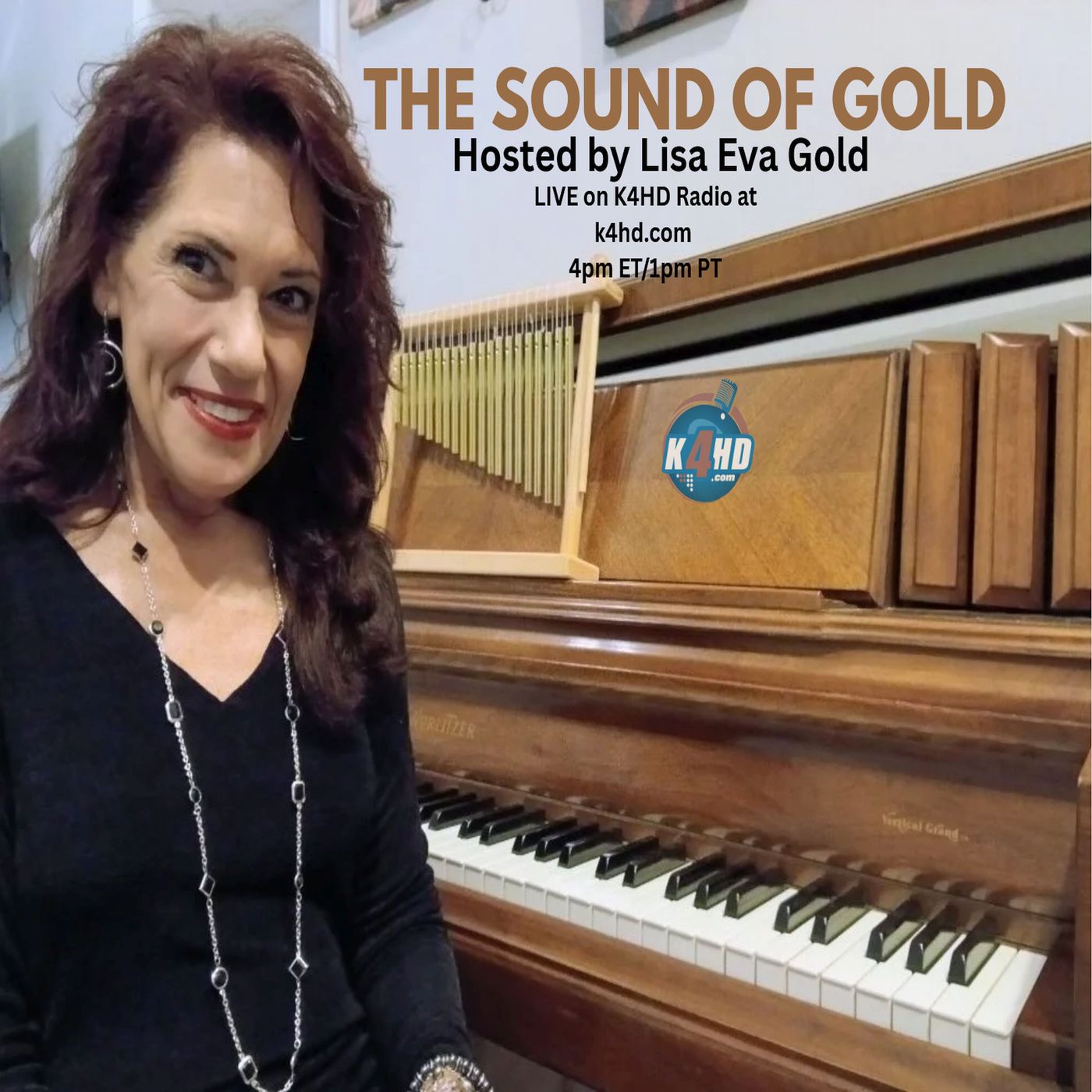
The Sound of Gold is broadcast live Mondays at 4PM ET / 1PM PT on K4HD Radio - Hollywood Talk Radio (www.k4hd.com) part of Talk 4 Radio (www.talk4radio.com) on the Talk 4 Media Network (www.talk4media.com). The Sound of Gold TV Show is viewed on Talk 4 TV (www.talk4tv.com).
The Sound of Gold Podcast is also available on Talk 4 Media (www.talk4media.com), Talk 4 Podcasting (www.talk4podcasting.com), iHeartRadio, Amazon Music, Pandora, Spotify, Audible, and over 100 other podcast outlets.
Become a supporter of this podcast: https://www.spreaker.com/podcast/the-sound-of-gold--6696013/support.
0:01 This program is designed to provide general information with regards to the subject matters covered. This information is given with the understanding that neither the hosts, guests, sponsors, or station are engaged in rendering any specific and personal medical, financial, legal, counseling, professional service, or any advice. You should seek the services of competent professionals before applying or trying any suggested ideas.
0:51 Hi, and welcome to the sound of gold. It's so good to be back. My show airs live every Monday at 4 p.m. Eastern time, 1 p.m. Pacific time. And if you've been here before, you know, my focus is on music. And if you're joining me again, welcome back. And if you are new, welcome. We focus on music, musicians, music venues, music teachers, music schools, music composers, and anything to do with music, musicology. And, um, And here I am in my home studio at my piano. And before I introduce my special guest today, I always like to start our Mondays with a little bit of an afternoon Monday afternoon sonatina. And it's composed by me. And welcome in. Relax.
1:41 If you're driving, don't close your eyes. But if you're in a space, in a place where you can just kind of take a breath, it's a Monday. And. If you've had a rough day or a great day, you can still enjoy and relax.
2:26 Today, I am so excited. Every week, I feel so blessed. To have these wonderful connections and musicians and students and teachers and musicology on my show. And, you know, it's really important as a music teacher. And, um, cause I do teach piano as a music teacher. I'm also a music student. It is so important to constantly work on our, our trade on our talent because As a music student, as a music teacher, sorry, my cat decided to interrupt us here. As a music teacher, as a music student, it's always so important to constantly review and renew. And to, in my world, in my mind, in my heart, I always want to do better. I always want to be a better musician, a better teacher. And the only way I can do that is to connect with people that know more than I know and people that I can look up to. And it's like the schools of life
3:59 are never ending. And that's the beauty of our lives is that we get to constantly learn from each other. And especially when there are schools that help us learn. There is one fabulous school. I think it's like one of the top schools in Port St. Lucie, Florida called the House of Music. And I'm so excited today to have the owners on my show, Myra and Bruno. I know you are sitting backstage. Please join me. And I can't wait to introduce you. Hi. Hello, Lisa. Thank you for having us. Yes, yes. You're welcome. Thank you for being here. There's so many questions I have. And I know there's a lot I've read and I've spoken with your mom. You're a family-owned business.
4:47 And. I would love for you to share your story. I know, I know personally, you've come, you've had the school in Brazil and now you have the school in Florida, but share with our audiences a little bit about your journey and where you began and what brought you here. I can begin. Yes. So, uh, my name is Bruno. Um, as Lisa mentioned, we, me and my sister and my whole family, we own House of Music PSL up in Port St. Lucie. And, um, we've, we grew up in, um, in an environment like this as children, right? Because my parents, they founded their first music school about 31. Years ago, back in Brazil.
5:28 So we were raised in a music school. Just like we see our nieces today, they. Have the privilege of growing in this environment. And yes, when I was 15 years old, my sister was 16, My parents sent us over here to the U.S. just to study English for six months. But the whole family ended up moving here after this journey that me and my sister had for only six months. Oh, no. Yes. And then a few years later, I was already 22.
6:09 I was already 22. It was. A couple of years after my parents came, they sold their business in Brazil. And my mom decided to open up House of Music in July 2017. And when that happened. I joined her and we started House of Music from scratch. Before then, she was teaching at home. Yes, that's correct. They would teach at home. And one thing that... That is interesting that. I'm going to tell you right now. Yes. Is mom.
6:50 Uh, everything was so new for her. So she didn't know any English, the culture completely different. She wanted to know how, how a music lesson would look like here in the U S she, she said, Myra, let's go with me to schools in here. I'm going to offer work for free to volunteer because I need experience. How it works here. I need to know like the. Methodology, like the method that they use. I need to know. I said, okay, mom, let's go. I was a teenager back then. I said, okay, this is my mom. I would introduce her. This is my mom. She's a music therapist. She knew no English at the time as well.
7:31 So Mayra was her translator. Yeah. I would go with her. And everywhere that we went to, they said, okay, we're going to call you. They never called. Nobody called. They never called. Nobody called. So finally one day, um, he found a one. School, like it was a regular school and. Then she would go there to teach music. Okay. And then she was excited. She got this job, um, And they were going to pay her like $ 10 an hour. But she was so. Happy that she would have that experience. And I remember she dropped me at college. And then she said, okay, I'll go give my first lesson and I'll come back to pick you up. She said when she parked the car, before she put all her stuff out of the car, she brought everything that she would need. The security guy said, um, told her the owner of the school wanted to talk to her before her lesson. And, and he said, Myra, I understood three words, unfortunately, budget.
8:39 And I'm sorry. And then I didn't understand it. Like she was fired before her first lesson. And then three months later, she opened house of music. So this is, yes. So we always, um, so this is, this was, um, we, we believe that, uh, that I didn't want that for her greater plans. So then we, they founded house of music. Yes. So that's, that's a good kind of the story then. Uh, and this is why it's good to have Myra on my side because sometimes I, I forget things, but yes. So 2017 is when, uh, we opened from, from zero.
9:21 Uh, she, she would teach piano and. Music therapy because, uh, her, uh, Her specialty is music therapy. She's been working with that for a very long time, music therapy and music education. So she would teach those lessons, and I would teach drums, guitar, and music production. So those were the instruments that I was teaching. And as time went by, we were able to also find other people that would collaborate, other music teachers to join the team. And yeah, it's been a journey. It's been nine years.
10:05 And Mayra, what do you teach as well? Okay, so I manage everything. We need to be, yes. We need to be. She knows everything I don't know on the administration side. Mayra knows every single detail, every single family member. And I remember. When I was a child and then I would spend the whole day at the music school and I would tell my mom, when I grow up, I want to be a doctor. I don't want to do anything with the music school when I grow up. And But today I manage everything here.
10:50 I supervise the lessons and I also do the behavior support because. We have so many kids with special needs here. I'm a BCBA. So we train the teachers on the behavioral side. I understand. Nice. I have so many questions before I start asking my train of thought. Um, Bruno, I, I made, I looked to connect with both of you on Facebook and I wasn't my, I wasn't able to find you on Facebook or maybe I did, but I don't know if it was you and Bruno week. I connected with you or I sent a request and I noticed, um, and I'm saying this because if I live local, you would probably see me because I teach piano and I would probably come to want to work with your school because you offer so much. I work with Danny Zayas at Zayas Music Studios. I've been with them for six years.
11:48 So I don't know if you remember Danny. But anyway. I know Danny. Yeah. It looks like we have some technical freezing. I don't know. Let's see what happens. Ladies and gentlemen, please stand by as we're having some technical difficulties. Our telecommunicating has froze. So while we're... Let's see, while we're waiting, I would like to. We lost you for... Yes, I lost you. We're back. We're back, we're back, hopefully. So you know Danny Zayas, and yes, yes, wonderful people.
12:31 Great guy, yes. I've been a part of the Christ Fellowship worship team for about 12 years now. I played with them a few times. I know. I know him, his beautiful family that they have beautiful studio as well. Yes. Yes. So, um, your studio is a little bit different and, and, um, I think because you offer, uh, and you're in Port St. Lucie. So it's a little bit North of where I'm at. It doesn't matter for those listeners out there that are looking to, um, maybe take lessons or learn more about what is offered. I want to share on our show today what you offer because you don't just offer music lessons.
13:18 There is so much and it fills my heart to have this conversation with you because you offer so much to the community, not just one, two, three. Please share with our community, please share with our audiences today all that you offer because it's not just music or piano. That's correct. So the reason why House of Music was founded is because of music. So, you know, everything that happens over here is because of music. So we're so grateful for that. But as the school grew and as the families that are here started getting to know our work, they were also like looking for other.
14:02 Programs to have their children involved in. So I think one of the music lessons were one thing. And because my mom is a music therapist, she has a lot of experience working with kids in the spectrum. Okay. And because of that, because of experience, I grew up learning how to also be around kids in the spectrum. So we started doing a lot of lessons with kids like that. Okay. Now we train our staff so they're able to teach kids like that. I love that. That are in this pack.
14:44 So that was the first thing, the therapeutical side of music. And then also what happened in the first couple of years of House of Music, it was like family-wise, it was just me and my mom. And about two or three years later, Mayra, she was living in Colombia because my brother-in-law, he's a former professional soccer player. So he was playing for Colombia at the time. And then when they moved here, also the next thing that happened, like the next program that we opened was the HOM Spart, which is, Mayra can explain a little bit more about.
15:28 Yeah. So Lucas, uh, right now he's on the fields. He's he teaches coaches. He's a coach. So he teaches soccer, but we also started a motor coordination with. The special needs. Wow. So we have that as well. Uh, so to strain their, uh, gross, uh, motor coordination, fine motor coordination, um, So we have many branches in the house of music today. So we have HOM music. We have HOM arts. We have art classes. We have dance, ballet. We have HOM therapy.
16:09 We have speech. We have music therapy. We have HOM sports, which is the one that Lucas does, my husband. That's soccer and motor coordination. And we have HOM Academy. So we have a big community of homeschoolers here. Yes. In Port St. Lucie. Here at House of Music too. And they were asking for more. We want to. Do more programs at House of Music. So little by little, we started adding programs. They come here on Mondays for academics. Okay. And then on Wednesday and Friday, we have enrichment classes.
16:53 They come from music, language, arts. Yes, and we adapted the whole space so we're able to have all of these activities. So we have a good setup for the motor skill side of the program. We have a very good setup for the academics. Yes. And it's a lot of work. We have to set it up and then tear it down because in the afternoon we use the same rooms for music lessons. Then the art room is already set up. So, yeah, so we adapted our location over here. We have, as of now, it got to the point that we need to expand. We need to get a bigger location. But thankfully, we have a good enough space that we're able to adapt to all the other programs.
17:48 So we have to. Set up, tear it down, set up, tear it down every single day. So how many, I guess, a guesstimate, how many students do you have? Like some schools maybe have like a 500 students. Around 400 students. That's wonderful. And are you looking to, do you think, expand, I understand in the size, but do you think the house of music, you will stay in Port St. Lucie, or do you think you will branch off in maybe another, another town, you know, because you, you offer so much in there, honestly, the schools that like the local schools here are music schools. They're wonderful, but they don't offer all that you offer. And the specialty that you offer is needed in every community because, you know, there, there is students who are on the spectrum and, all around us and they deserve to have the opportunity that you offer.
18:48 Yeah. Want to answer that one? Maybe something in that. Yes. We have, yeah, we have plans in the future to, to expand, branch out and go to, to different locations. Um, that's, that's in the plans that's in the work. Of course we need, we need, people we need to train people so we're able to also send them to the right locations because that's a very one of the things that we have here at House of Music is the culture like the teachers we have to teach them the culture of the school and we want to be able to have the same quality that we have here in Port St. Lucie on the other locations but yes we do have we do have plans to go to different locations as well and I'm sorry.
19:38 In addition, I saw, and ladies and gentlemen, we are live. People are watching us and people are, our audiences are also listening. So if you cannot, if you're not visually seeing us, you can, because we have a scroll on our screen about the House of Music. It's easy to find House of Music, PSL, Port St. Lucie. You're one of a kind. And I will mention that I noticed, which I think is wonderful also is, When I was, I have a daughter and I raised her and we had like a mommy and me group. So before, when she was a baby, there was some place to go and take her like a Gymboree. That's what I remember.
20:22 I don't think they exist anymore, but you offer a similar program. You offer like from zero to, I don't know how old. Please share with our audiences out there a little bit about this program also. So for early music education programs, We start at six months old with toddlers. Yes. So we have classes from six months old up to two years. And then we have the. We separate them in groups. So from six months old up to five years old, we have this program called music education. So it's the program that we focus on the fine motor coordination and Um, so on there, like listening on musical terminology on the notes, we, a lot of the glockenspiel here. Um, so they work on the note, um, and then we separate.
21:19 So, uh, we have groups from six months old to two years old, then two and threes and three to fives. And then once they, uh, are six years old, they go to a specific instrument. They choose, um, which instrument they. they would like to do their private lesson. But before them, we have the music education class. And that's another thing that our mom, that she specialized with the early music education. So that was something she was able to. Yes, and then as far as age, there is no limit. We have students over here that are over 70 years old.
22:02 So it's an honor to have this... you know, the. Group here as well. Uh, and we see a lot of interesting stories. We have, uh, veterans that come over here and they take lessons. Um, I, about two or three years ago, uh, Mr. Bill walked in. Mr. Bill is on his, um, his seventies, I think. Okay. And he came over here with an acoustic guitar and a dream to, um, to get better in the instrument. And when I started teaching him, it was great because he would always show me the songs that he wanted to learn.
22:47 Or songs that he was making. So in this process of showing his original songs, I was like, Mr. Bill, let me produce one of the songs for you. So I produced his songs and then the dream just grew even bigger on him. And he was just teaching me right now. And we're in the process of finishing up an album that we produced, mix and master of 11 songs that he has. So if you guys, if you want to check it out, his work is amazing, but. It's just to, so you guys can get inspired because there is no limit to music, right? He's 70 years old right now and he's still pursuing music.
23:30 You know, it's his therapy in a way. It's what makes him feel good. A successful retired guy. And now he's on, on a mission to release this album. He's already on Spotify. His name is. So if you want to check out some of his songs are really good. It's a, he's an inspiration. You know, we have the early, you know, six months old, the babies that come here. And then we also have this young people in their seventies. And it's, I love this. One of my private, because I also teach privately, one of my private students, and I share this often, is 95. And she, I go to her place of living and I work with her.
24:17 But she's smart as a tack. I mean, she's, you know, 95, God bless her, you know. She's still playing. Yeah. I love what you, I'm sorry. Go ahead. I love your programs. I love the idea that because I'm thinking of other schools and every school is a beautiful opportunity to grow. I love your school specifically for the fact that you grow with the students as me as a teacher, no matter what age my student is or what they know or what they don't know. what I love about being a teacher is that I grow with my student. And I always tell my parents that I'm, I'm not here to tell your child what to do and how to do it. I'm here to grow with them, to learn with them. And that's kind of what you, what you create for the students. You welcome them in and you have, you have this, you know, this outlook like, okay, you're going to start here, but it doesn't just end, you know, in six months, it doesn't end in a year.
25:21 And as you know, as a musician, I, we never finish. There's always something to learn or something to do better and grow on. And that's the beauty of music. And in addition, being the student coming to your school, it's almost like a world of, it's a world to grow in and continue on. And I love that. And I love I love the focus on the opportunity for those that are on the spectrum to have an opportunity to learn and to grow as well. And I also love that you not only offer music, but you offer art, you offer dance, you offer music therapy. Am I correct on this? Yeah. And so it's beautiful what you offer to the community. would you say in your years, because it's almost been 10 years that you've had this school, what are some of the greatest achievements that you feel that you've, you've provided? Like what has been your greatest high or is, can I say that word? The greatest high, the greatest achievement that you've, that you see in what you do.
26:38 I mean, every week I, we always, um, We always say this when we are together. Yeah. Every week here, we have something to. It's either Bruno calling us to come here, come see what my student did. Or another teacher. Because we, like you were saying, we grow with the student. We meet them where they are. Yes. And another... Here. At House of Music, we focus on their abilities, not their disabilities. A lot of places, they tend to focus on what the child doesn't know. Okay. What they don't know.
27:22 And then we're going to. We. Have to work on that. But here, we try to find what they know. So we can work on abilities. So we focus on their abilities. And it's amazing. Every week. And like for a student, for example, to play at a recital, a student that couldn't with noise at all to be up on stage at a recital. So it's very rewarding. Every week we have. Situations that are very rewarding for us. And it's not easy. You know, it's very hard. There's a lot of sacrifice behind it.
28:07 All that we do of course but at the end of the day it's very um rewarding and every time that we are like tired something happens a situation happens here and then that uh it feels like god is saying okay this is your mission yes and every week we have different situation right yeah yeah. Yeah Those questions are deep because when we start thinking about all of the stories and all of the situations that happen over here, like she said, it's very rewarding, especially working with kids. Sometimes a lot of them, they come over here with no hope, with no skills, with no confidence. And we have many stories and many testimonies of kids that come here not wanting to talk to anybody, not, not wanting, like they, they're not able to, and now they're singing, they're playing the drums, they're dancing. Uh, so, uh, it's, it's just, uh, it's amazing to see the transformation that music can do.
29:20 It's, it's so true. It's as a teacher, it's a gift. The high, I think it's, it's, it's looking at. Uh, yeah, absolutely. And moments like, uh, Yeah, yeah. Go ahead. Yeah, it's being, I mean, that is the gift. that keeps giving being, being a teacher and being, um, a representative of the school and providing what you do. It's just, we get to see, um, how much joy and growth and it's just, it's, it's so beautiful. So I understand what you're saying. Um, Please share with our audience a little bit about the recitals that you do. Do you do them in-house? How often do you do them? Do you do them just by one instrument, just all piano, all guitar, all drums? Share with us a little bit about how you go about your recitals.
30:14 So we finally came to the point that we decided to only do two recitals per year. We used to do some in-house performances But the recitals. They take a lot of work and a lot of dedication. As we decided to do, we do a spring recital usually or a summer recital, depending on the year. And then we do a fall or winter recital. Okay. So it happens twice a year. The winter recital is focused on Christmas. And we used to do individual instruments. It used to be like a whole day, like, starting at nine o'clock in the morning and ending around like eight o'clock.
30:59 Oh, that's a long day. It's still a whole day. But we, now we. Like we, we do, of course we divide in sessions. Like we have many sessions throughout the day. We have many sessions, but instead of having individual performances only, we focus on, on getting bands together, on getting like group, like a group of piano students together, group of the music education students together. Or let's say two or three drum students together. We set up like three drum sets. And then for guitar, bass, and other advanced students, we offer the band aspect of it.
31:40 So usually we separate the day in three sessions. The first one is the music education. Second one is like a piano group focused session. And then the last one is the band. We have a few individual students throughout the sessions, but the focus is to get them all on the group and having two of those big recitals per year because of the amount of work that it takes. Yeah. Yes. Yes. Yes. That makes sense. Do you find that you're busy all year round or do you find that like the school season is your top season?
32:21 Yeah, I mean, the school season, of course, is the top season because many students, they leave during summertime. But then during summertime, we have summer camps. So we're still very busy during summer as well. I think summer is one of the seasons that we work the most because of these additional programs that we offer during summer. What happens many times as well, we have different businesses also that want to collaborate with us, having our services on their location during summer as well. We're not able to do that during the high season, but over the summertime, we're able to partner up with some other businesses and facilities to have our programs over there.
33:20 So that I understand, the audience understands, do you do in-home lessons as well, or you're talking at other schools you offer your services? No, it's not even schools. For example, there's churches that, let's say they do a summer camp and they want to have a music program. Sometimes they hire us to go over there like summer camp and we separate a time of the day to bring some of our teachers and teach those kids. We have other facilities like an example is 55 plus community around here in the area that sometimes they do events and they hire House of Music to bring music over there and Part of our program is doing that, partnering up with them. But it's not at-home lessons. We focus on the studio.
34:21 And let's say if I were to come to you as a student, would I receive one-on-one lessons? Or would it be a classroom setting of so many students that are taught at one time? Most of our lessons are one-on-one. Okay. Okay. And then we also offer some group lessons. But yes, we have 30-minute 101 lessons. We have full-hour 101 lessons. And then we also have some other group, like a band group that we have. We have the music education, piano transition group.
35:03 Yes. We also have. The program that you do on Wednesdays. Social skills. And tell us a little bit about that. Yes. Yeah. So we have, um, um, a social skills group. We find that a lot of parents asking for that or, um, social skills for the, for the kids. Uh, so I'd see a group of teenagers, um, between 12 and 15 years old, uh, on Wednesdays. And we focus on, um, Let's say last month, for example, we went to the restaurant. So they were ordering their own food. Today, they're always on their phone all the time. There are other.
35:53 Things that we worked on with them. So we focus on how to manage money, for example, going to the store, shopping. having like responsibilities at home chores. Uh, so we have this social group. On, on Wednesdays and we want to do more with the little ones as well. I love that. I love that. And that's more, that's more social skills. Um, not necessarily music per se. It's more life skills. There's, um, um, it's kind of like a Montessori way of teaching. Cause I know, cause I know Montessori teaching is based on like feel and touch and, and like hands-on, um, more than just a paper and pencil, which is beautiful because we need that. We don't, um, yeah. And I think it's wonderful.
36:57 Very important for them to have those, those skills, um, So yeah, so we have that group on Wednesdays and we are planning on doing more of. These groups. Throughout the week with the little ones as well. So I, I'm me and my mom, we are sitting down and planning more of those skills, but then using music as well. So she comes with the music part. I come with the behavior part and then we can do, because I think he's like a natural reinforcement. So yeah, There are a lot of, um, there are a lot of therapists that they come with, uh, they come here at the music therapy sessions or the music lesson.
37:38 And they said, oh my God, he does. This child never does that at home. It's because they have like music. Um, it's, it's amazing. Uh, it's amazing. The results that we have here with, with music therapy. I love what you do and what you bring to the community. And behavior is so important. And whether, you know, we're playing an instrument or we have a child that's playing an instrument, behavior, you know, even within ourselves, you know, we maintain our own behavior in itself. And then when we have family members or we need to help them, we also have to know how to handle that behavior.
38:24 And as a teacher and the program that you offer and what you teach your teachers, I've not, I've not taken lessons or been taught by you. But I've had my own personal experience where I can understand where, you know, we have, you have to support each other, and, and work together to learn what works, because sometimes we don't know. And sometimes it takes a trial and error of maybe this will work. And if it doesn't, okay, well, next time we try something different. And And everybody, just like our regular students, everybody's different. So how we approach them and how we work them depends on who they are.
39:06 And whether students or adults are on the spectrum or not, we all have our own way about us, yes? We all have our own way of learning, our own way of showing up. And the way I may relate with you or you relate with me may not be the same you relate with you know, another friend or a student. It's, you know, we find out what works by the relationships we built. And thank you so much for, you know, being on the show today and being a part of this. And it's a joy to help share the word and talk about your school and what you offer. In addition to the music, even though my show is focused on the music, we mentioned art and dance. So I want to just focus on that for a minute or two.
40:00 Do you offer recitals for that? Do you offer different opportunities? Do you do pottery classes? Do you do a specific dance class? Can we talk about that since we're talking about House of Music and it's not all about music? Yes. So we do for the arts, we have our regular art classes. So they do a different project every week. It's arts and crafts. On the week, they either paint on canvas or do like craft. We also have sewing class. Okay. We have sewing class as well. For the dance, it's more like ballet.
40:42 Right now, we only do two groups during the the week, one more for beginner girls, and the other one is for more advanced. Okay. And then, yeah, so it's arts and then sewing as well. So on some of the recitals, we do have, like, the dancing aspect. Okay. So we do have some presentations that happen during. The recitals that we do twice a year. Okay. Yes. In something for arts, um, we tend to expose a little bit of the, the arts that they do over here. We put it, we put it up on the entrance of the, uh, yes. Oh, that's wonderful.
41:30 Yeah. So you bring it, you bring it all together when you have your recital and that's beautiful. Um, I'm not sure if this is a question other than, um, yeah, I'm, I know when I was growing up as a child and I took many years of lessons, my greatest, and this is something I teach, and maybe this is something you can help me understand if it's something you focus on at your school. Working together, you mentioned you have groups where you have band members. You have students that have different instruments come together. You have, and I know as a music teacher, ear training is a big thing and listening and and working together, how do you bring your piano, your drums, your guitar, and whatever other instruments? What, how do I ask this? What is your approach to bringing them together? Is there a secret to having them play together? Because there's a lot of anxiety when you come together and bring different instruments together and the groups have to, you know, Yes.
42:40 So especially for the bands, we kind of have to select the students that we put in the band. So I, you know, we have to work, of course, they take the 101 lessons, so we need to know their abilities and their taste of music too. It has to match with what we're trying to accomplish. So then we work those 101 lessons focusing like hey let's work on this song because we're gonna get together with other fellows and we're gonna you know uh we're gonna yeah yes as a group uh so yes so they have they need to have the ability to play together wonderful of that concept to make that happen because it's not a lot of you know a lot of students they're you know a they're not able to do that, right?
43:40 Yes. This is why we have to select... I see your cat. My cat, yeah. Yes, so we have to select the ones that we're going to put in the group. Sure, that makes sense. We're just about out of time. I'm sorry, Mayra, were you going to follow with something? But with group lessons, we usually don't advertise to everyone because we don't know the. Uh, the students who we usually advertise for our students that are already doing private lessons, uh, the groups. Understood. Understood. We're almost out of time for our audiences out there that are just listening. This, we are, our show today is focused on the house of music located in port St. Lucy. It is very easy to find.
44:30 If you Google house of music, port St. Lucy, it's all over the social webs and, um, Any last words before we finish for today? No, we just want to thank you for having us here, for giving us the opportunity to be in your show. Yes. Thank you. Thank you for connecting with us. Yes. And also, if you have our website, in there we also have a nonprofit organization as well called House of Harmony. And with that, we pay for kids that cannot afford music lessons. But we do have some kids here at House of Harmony. We do have some kids here that do lessons. And that House of Harmony is paying for their lessons. Thank you so much.
45:28 We will be in touch. And one day I will have to take a drive up so we can meet in person. Yeah. We were also on WPTV this week. If you want to hear more. We have our story there as well. Congratulations. We will be in touch. Thank you so much for being on the show today. For my audiences out there, thank you for tuning in. Tune in next week. Help me keep music alive by... supporting us and we want to keep the instruments being played and we want to continue learning and inspiring each other. And again, for my listeners out there, tune in next week. I'm not going to tell you who my guest is next week. I have another fabulous guest. You have to tune in to find out. And in the meantime, be blessed and enjoy the week and the day ahead.
46:37 Thank you.


