
The Sound of Gold with guest Ariel Hyatt

 iHeartRadio iHeartRadio
  Apple Podcasts Apple Podcasts
  Amazon Music Amazon Music
  Spotify Spotify
  Pandora Pandora
  Deezer Deezer
  Podchaser Podchaser
  Audible Audible
  Spreaker Spreaker
  Podcast Addict Podcast Addict
  Castbox Castbox
  Castamatic Castamatic
  Overcast Overcast
  PocketCasts PocketCasts
  Goodpods Goodpods
  Podurama Podurama
  Podverse Podverse
  RSS Feed RSS Feed
  YouTube YouTube iHeartRadio iHeartRadio Apple Podcasts Apple Podcasts Amazon Music Amazon Music Spotify Spotify Pandora Pandora Deezer Deezer Podchaser Podchaser Audible Audible Spreaker Spreaker Podcast Addict Podcast Addict Castbox Castbox Castamatic Castamatic Overcast Overcast PocketCasts PocketCasts Goodpods Goodpods Podurama Podurama Podverse Podverse RSS Feed RSS Feed YouTube YouTube
 Join me today as Ariel Hyatt will be my guest. She is a huge inspiration and a valuable asset to the music industry! She is the Founder of Cyber PR Music
Celebrating 30 Years Supporting Independent Artists.
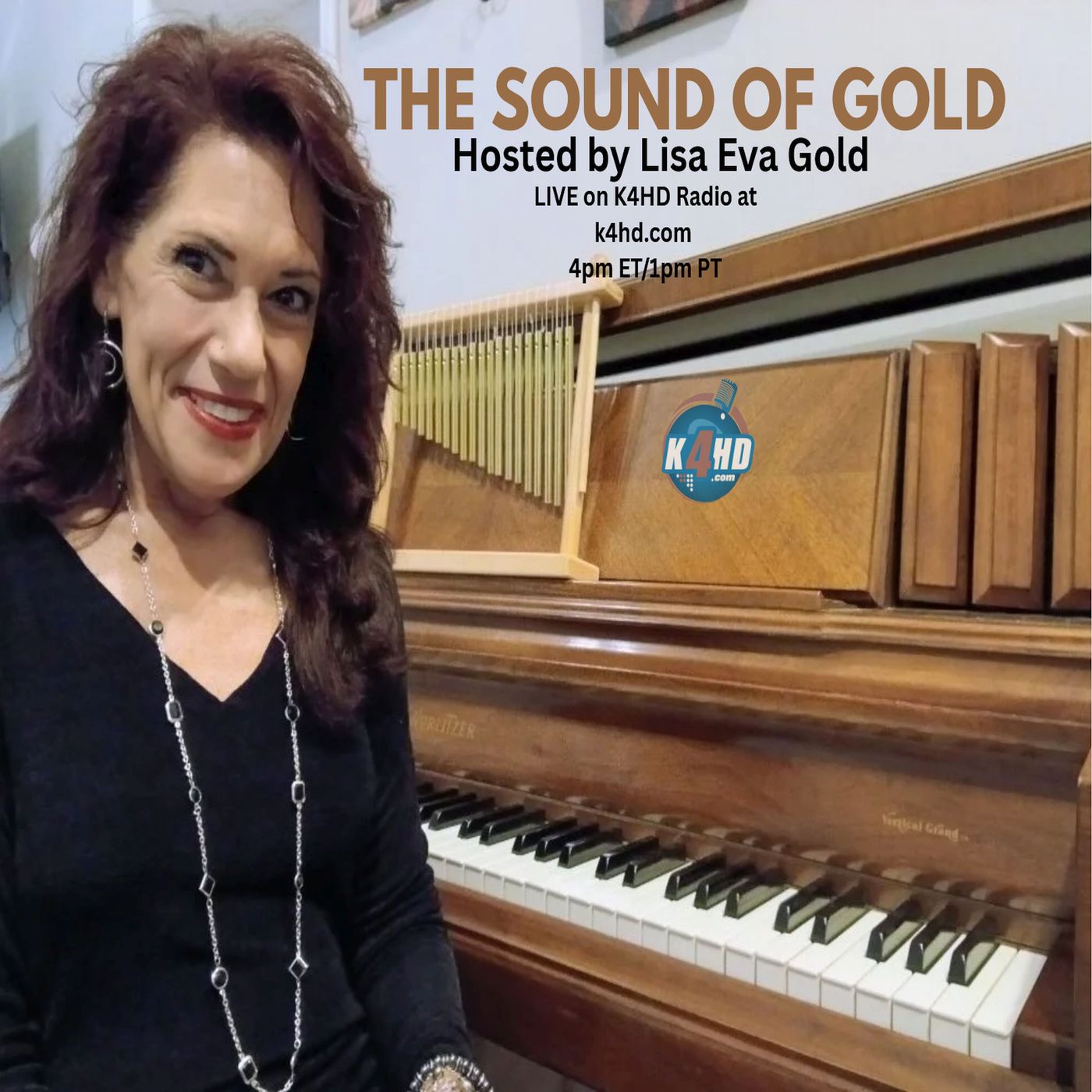
The Sound of Gold is broadcast live Mondays at 4PM ET / 1PM PT on K4HD Radio - Hollywood Talk Radio (www.k4hd.com) part of Talk 4 Radio (www.talk4radio.com) on the Talk 4 Media Network (www.talk4media.com). The Sound of Gold TV Show is viewed on Talk 4 TV (www.talk4tv.com).
The Sound of Gold Podcast is also available on Talk 4 Media (www.talk4media.com), Talk 4 Podcasting (www.talk4podcasting.com), iHeartRadio, Amazon Music, Pandora, Spotify, Audible, and over 100 other podcast outlets.
Become a supporter of this podcast: https://www.spreaker.com/podcast/the-sound-of-gold--6696013/support.
0:01 This program is designed to provide general information with regards to the subject matters covered. This information is given with the understanding that neither the hosts, guests, sponsors, or station are engaged in rendering any specific and personal, medical, financial, legal, counseling, professional service, or any advice. You should seek the services of competent professionals before applying or trying any suggested ideas.
0:52 Hi, welcome to The Sound of Gold. I am so excited to be with you today. Whether you're tuning in virtually so you can see me, I'm here in my home studio, music studio. And if you're just tuning in to listen, welcome as well. And it is Monday presently. We are broadcasting live. And if you're with me Monday or another day, I hope your day has been great. I hope you've had a great weekend. The Sound of Gold is my favorite place to be here and now because we focus on music. I'm so excited to introduce my guest today. My guest is running a little bit behind, so we will meet her when she gets on. I'm not going to tell yet who it is, but I just wanted to touch base with the idea of what's it like in the music industry and how do you keep it going and how do you make a living from it? What works?
1:55 Some things that don't work. And I've been in the music industry for over 20 years. I've been playing music for over 45 and I've learned some tricks along the way that I will share with you. And my guest today will share as well. But before we get there, It is Monday or whatever day you're listening to this. I always like to start my show with a little music introduction. And this afternoon, as. Last show last week, it was a little. Bit stormy out. And it is again this Saturday, this Monday. And I want to play a little something and I want to just call it easy ease at the end of the day. And so sit back, relax. If you're driving, just enjoy it. And yeah, so thank you for being here.
2:47 Thank you. So, Thank you. I have my guest calling me right now. Hi.
4:42 Hi. I'm live online right now, and I sent you an email to connect with us, and I'd love to see you on our show today. Okay. Okay. Okay. Okay. We look forward to seeing you. Okay. Thank you. Okay. So. That was my guest today. And I'm so excited. She had a client crisis and she just called me to say, I'm so sorry. I'm running late. And which I kind of knew she was, but I. Didn't know that she'd be late late. So she will be joining us momentarily. And I am excited because it's not just any guests and every week I have a wonderful guest. So Not to take away from anybody. I think everyone is so special in their own way. And especially in the music industry, we are so much a part of each other because the music industry is not just, you know, me, you, them. We all come together in unity because music is healing. Music is worldwide. It speaks for itself. It doesn't matter what language you speak or.
5:54 Where you live. And my very special guest today is Ariel Hyatt. She is the author of Beyond the Buzz, or Buzz and Beyond, I think it is. And she will tell you more. She has been in the industry for a very long time. She's a great supporter of the music industry. And she has so much to tell you and so much to share with you. And I'm so excited. And while we're waiting... I'm just going to play a little bit more for you. So sit back, relax, and she will join me as soon as she joins us. So I appreciate your patience.
6:35 I'm so glad you're here. And yeah, enjoy. We can call this the waiting zone. Okay. Thank you. © transcript Emily Beynon Thank you. Thank you.
8:45 Thank you. Thank you.
9:57 Thank you. Thank you so much for being here today. Hi, Ariel. How are you? Amazing. Sorry for being late. That's okay. I'm so glad that you can join us today.
10:39 Well, happy Monday. It's Monday presently, and we are broadcasting live. And it is such a treat to have you on the show today. There's so much you bring to the music industry. And, you know, I want to first start out by saying thank you so much for being here. How are you? How's your day going? How is. I mean, we're just getting through a weekend and here we are on a Monday. I feel great. I feel it's the end of summer right now. I think it's a time for renewal for a lot of us, getting back to our normal routines. That's what we're looking up against. And I've had a lot of amazing conversations today with a lot of incredible musicians.
11:25 So I feel inspired today. So awesome. Well, uh, we haven't, we've spoken a little bit through email and, um, and I just wanted to mention, cause I know you're just coming on the show. Um, presently I'm here in Florida. I'm in my music studio, my home studio. And, um, I'm so excited to be broadcasting, uh, focusing on the music industry and what I said earlier in the show. I don't know if you know, maybe, you know, I'm a music teacher. And, and I have this show and my focus is I have this great passion to continue on this road of inspiring, including myself being inspired musicians and this, this world we live in. And I, I feel like what, like there's been questions I've asked it like, Oh, what's going to become of the music industry. And I thought, you know what? I feel like we're truly rising above where we were. I feel like we, as musicians, the music, the music world, because music is so healing. And I feel like we are really, like I said, rising above and you bring so much to the industry and you, So that I'm not talking too much more and taking away from you because the light shines on you today.
12:52 Please share with our audiences how you impact the music industry because it's huge. Thank you. Thank you. So a little share. Yes. For the past 30 years, I have run an agency that supports independent musicians and I I've had a front row seat to working with artists who are hobbyists and say they are all the way up to working with artists who are household names. And it's my absolute passion to support musicians no matter where they are in the journey. And I started as a traditional publicist a long time ago.
13:35 I still do publicity here at my agency, but that's a very small part of the picture, as we all know. And now what I do is I've written seven books in this journey about how to help artists get their heads around things that most creatives are not natural at, which is marketing, promoting. I wrote a book about crowdfunding. So I'm always here looking at how artists can participate in the new music industry because... It continues to be new, I feel like, every week now. Now, for our audience, there's audiences that are watching us right now, and then there's audiences, is that even a word, audiences, that are listening. So for those that cannot see the scroll on our screen, how would our audience that are listening connect with you and find you to get your books or to check out your website?
14:34 Yeah, you can find me all over at CyberPR. That's the brand. And my main website and all my socials are CyberPRMusic. So CyberPRMusic is the website.com. CyberPR on all social media and or CyberPRMusic. If you look for those two, you'll find me. Awesome. Awesome. And one of your bigger, I don't know, it's been, how do you say it? This particular book has been in my view, more than any of your other books. And that is The Buzz. And I'm saying it wrong. Beyond The Buzz.
15:14 Yeah, From Buzz to Bond. Excuse me. So sorry. Can you tell us a little bit about that? Yeah, I'd be delighted to. So From Buzz to Bond came from countless conversations I've had with musicians about where they've been putting a lot of their time and attention these past five years, especially. And what I have observed is musicians have been focused on what I call buzz marketing. That's getting more followers, getting more likes, trying to go viral on TikTok or Instagram or YouTube shorts. It's about, buzz marketing is about getting as many plays as possible on Spotify. It's about throwing money around mostly at advertising, like meta advertising, Spotify advertising, and coming back with results.
16:10 You will see more eyeballs, more streams. But what I noticed was that artists were still struggling when it came to what I call bond marketing, which is what you and I are doing right now. Having a conversation face-to-face. What happens when you have an active email list? What happens when you have text messaging list and you can actually message your fans what happens when you're standing at the merch table after you play a live show or someone comes into your studio and takes a lesson that's bond marketing it's bonding it's us knowing each other and I noticed an enormous problem because I had artists coming to me with tens of thousands hundreds of thousands in some cases millions of streams and no real fans.
17:03 And what do you think that is? Or what did you find in your research on that? I didn't need to research far. I mean, you can pay, you can pay almost, there's hundreds of companies, social media marketing companies or social media fan companies. They promise you real results. They're not real. Advertising on YouTube promises real views. I don't know that they're real. I think they're gray area views. Spotify promises, you know, you can not Spotify, but you can hire all kinds of playlisters to help you get Spotify plays. And again, I kept finding there were not real people or the people were targeted in foreign countries where advertising dollars go farther. And so I feel that needs to change if artists really want to create something that feels like it's really landing.
17:56 And where do you feel that You mentioned it. Every week is a new week. You know, every day is like a new opportunity. My husband always says it's a new day. You know, you kind of do something different or you look at it in a different way. And we're constant as human beings. We're constantly growing. We're constantly evolving and changing. And in the music world, you said every week is like a new world. And in what ways do you feel that change? In what ways do you feel that we're changing? As of right now, today, where do you feel like we're going with music? Or is that too vague of a question? No, it's not. I think, you know, sadly, what I'm seeing, what we're all seeing, what's in the news, is there's a lot of AI-created music. And it's flooding the DSPs.
18:51 So there's, like, millions of fake AI content kind of AI slot music happening, very low quality. I mean, obviously it's AI and if Suno can create something in 30 seconds, it's a problem. So what I see now is all of the DSPs, Spotify, Deezer, Apple, they all have to figure out how do they keep that music out of the zeitgeist and how do they keep it off their platforms? But right now I think that is a major problem because it's crowding out artists that take time and effort and energy to really record their life's work.
19:33 Right. How do you, you know, how do you get seen in the, in the tidal wave is the question. And for those you mentioned, there's the hobbyists and then you have the celebrities or the ones that are known or have, their name. Between the two, is there a common thread? Because I mean, they're musicians. Is there a common thread where we all have to go out and get the work? As a musician, we all have to go out and get the gig or we got to get the attention. Maybe I'm answering my own question and you've you've been doing this or your focus and your experience, I think is more invested than where I've been more teaching than I have been walking on your, on your street, I can say.
20:21 So from your experience and what. You promote and what you help support, what do you see is a common ground for the hobbyists and, the icons and what works and what doesn't work and what are you able to share with us today? I think it's the dirty S word. It's the word that no artist wants to confront because it's the opposite of art and that's sales. Yeah. You're never going to enroll someone in the possibility of joining you on any kind of journey if you don't understand the basics of sales. And when I say sales, I don't mean that you're showing up somewhere and like, shoving a CD in someone's face. I don't mean that you're like, you know, begging people to come to your show.
21:05 That's not what I mean. It's about making people feel invited to the party. That's sales. Okay. So it's, it's, it's about understanding that bands and people in general, we all have a desire to connect. That's what we want to do. And we all have a desire to help one another, like humanity at their highest and best. And I live in New York City. So I've had like, I'm born and raised in New York City. I've had a front row seat to this my whole life. Through amazing times like 9-11 and COVID and watching a city that is not known to be friendly. If you really are in trouble in New York City, like on the subway, for example, and you ask for help, people will run towards you and help you because everyone's innate nature is to help. Fans want to help the artists they love.
21:59 Yes. Artists forget that fans aren't as smart as they, as we think they are. And so a lot of times I think also, especially with social media, it's all about posturing and filtering and only displaying your, your, you know, one minute moment of the day. That's, you know, your most ideal filtered, gorgeous moment. If you actually can share something and I'm not saying, you know, go bleed all over the page, but like share something that's more relatable, share something about a journey, share something about what you need. You'd be amazed at how fans might begin to step up to the plate in a very different way.
22:40 Oh, I love that. You mentioned, I have a couple of questions for you, but before I get there, you mentioned AI and me personally, I mean, I have, I only know so much about AI, but I truly believe like you can't take the human feeling, you can't make that with AI and not to, you know, not to disrespect people that invented AI, but I mean, you, you can't like as a person, as a human being, if I come to play the piano, like I'm playing from my soul, I'm playing from my, from my heart and you can't make that up. Yeah. So I understand what you're saying with AI. I want to go back a little bit and Ariel, would you be so kind as to share with us a little bit about your journey and how you got to be doing what you're doing?
23:33 It's pretty simple. I'm a huge, I'm a huge music fan. I have, I have a lot of colleagues in the business that started out as musicians and I'm, I'm not one of those. I, I've just always, I wish I was, but I'm not. I've always just loved music to me, music, is church. It's religion. It's where I would go and turn to on good days and bad days and hard days. And I was so connected to seeing live music that when I was young and still in college, I had the incredible fortune of having my mother, who's an entrepreneur and a business coach. So she was always coaching women to choose music their dream job. So I, I grew up understanding that that was a possibility that you could actually choose a career that you love and it could be your dream job and you could make that happen.
24:34 So I feel very fortunate in that. What a great inspiration. It was very, it was a great thing to sit at the dinner table every night and it was a world of possibility. So with that gift of growing up in a house like that, I chose my, one of the hardest paths being in music and not working at a major label or at a big conglomerate. I did it all by myself. And the one thing that I've done over all these years is I'm deeply committed to educating artists as well as doing the work. So I have two sides to my house and half is helping artists to navigate through the books and the blog and my podcast. And then the other half is agency work.
25:20 We roll up our sleeves. We help our clients add fans to their email list. We help our clients understand their brand and who they are in their heart and their soul when it's not just the music. We help them understand how to put fan journeys together and how to monetize and how to look at scaling whatever it is that's working. How do we make it better and bigger? And So that's a bit about what I've done. And I've done it in many iterations as the internet keeps changing. I've done it in many capacities. I went from having a PR firm to having a booking agency, to having a street team marketing company, to always doing publicity. That was always the through line. And then in very early days, I went digital when that was not a newspapers and magazines, I was like only a digital PR firm, which people thought I was crazy for years there. And now of course there are so few newspapers and magazines left. Everyone is in digital.
26:28 That's so true. Now you have seven books. I mentioned one of them. What are the other six? Oh, okay. So from buzz to bond is my, my newest book all about, it's a very thin small book about this philosophy of, bonding with your fans as opposed to buzz. The book before that was called the ultimate guide to music publicity. It's a, it's a handbook on how to get PR for your music. Okay. The book before that was called crowd start and it was a crowdfunding book. How do you make money leveraging your crowd? And then my original book from back in the day, 2008 was a, music success in nine weeks, which was a tongue in cheek. I don't actually believe you're going to, but it was a nine step process that taught artists how to think differently about marketing and it involves social media.
27:24 Then I wrote cyber PR for musicians, which is tools and tricks for building your social media house. And I also wrote the musicians roadmap to Facebook and Twitter. So those are the books and yeah. Yeah. Yeah, it's been quite a journey releasing all of those books. That's so awesome. And you are such an inspiration. And I love what you bring to the table. It's not... For our audience out there. Oh, sorry. My cat wants to play piano. For our audiences out there. For our audiences out there, you want to say hi? There's my cat. Hello, beautiful Siamese cat. So for our.
28:04 Rewind, repeat. Our audience out there, you know... It's not from from my experience. And I have friends that are in the musicians that perform the gig gigs. It's not your nine to five job. It's not your nine to five income. It's not consistent. Recently, I was part of a group where we were talking about like it's seasonal, like your your income stream is is seasonal being that it's not like, OK, every week I'm going to make this amount of money. or every month. Can you talk a little bit more about the industry and the income that, I mean, the difference between a hobbyist and somebody who's an icon, but you, you have to grow into that, I think.
28:49 Yeah. Yeah. I think one of the biggest misnomers of being a creative is do what you love and the money will follow. It will not. It will not. I learned, I even learned as a creative, I'm a very creative person. I think that's why I love artists so much. And I relate so much to the creative community. And I am very flattered that many artists who've worked with me have said, oh, you feel like one of us. You feel like an artist. And aside from the S word and attaching sales to your art, which doesn't feel great, business acumen is a huge part of the puzzle that so many artists don't have. I mean, I get hired because so many musicians can't figure out how to use MailChimp, right?
29:33 So they hire me because they'd rather... stab a pencil in their eye, than like go and set up a sales funnel or set up a website or do any of those technical things. So, you know, this concept of your music career just coming to you because you're really good is sadly not going to happen. And I like to shift this do what you love and the money will follow to follow the money while doing what you love. So figuring out whatever your formula is that works for you, if it's your teaching lessons or you have an online course or you work a soundboard at a local club or you work as a barista in a coffee shop that has live music. I don't know. There was a million ways to do sort of music adjacent jobs.
30:27 Yeah. And it's a hustle. It's a consistent hustle and a consistent grind. And I think one of the things that has come to light that I love in the last 10 years is even musicians who you think, oh, they have it all. They're successful in their touring. You find out they have a day job when they come off the road or they're just breaking even, or they're not making any substantial money, which can be like, it's hard news to get, right? We want to believe that every artist that we see is doing okay, but unfortunately they're not. So yes, it is about figuring out if making music full-time is like the way that you want to live and you're not okay with, I'm an accountant, but then I also am a DJ or whatever. You have to figure out where the money is and how you can put a plan together that you can get some of that money. And it's definitely not going to be on 0.003 cents per stream on Spotify. Like that's not where the money is coming from.
31:37 True, true. I believe that. You know, something I've been. as I mentioned earlier, I feel like we're always evolving. We're always learning. We're always growing. And I've really been contemplating and in a positive way, like the value, what we're, as we constantly learn and the value we gain to better ourselves at what we do, whether it be music or self-improvement or both or, and both out in the job workforce, you know, you're, we're constantly learning something and, you know, Money, we think, oh, well, you know, I'm going to make more money because I'm doing this or I'm doing that.
32:19 And I've had conversations recently. Where the value you put out sometimes is not the exchange. Like the money is not the exchange you get back exactly. And because also I realize this too, the money is on the outside. The true value that we show up with comes from the inside. And so being human and the more I think, and I don't want to take too much time away from you, but I feel like the more we can like learn and be and do, and the more we can give from our heart as an artist, like that's where the value is. And I don't think that that green, that paper that's printed with green ink can always match what we give. And it's sad because I think we were raised on that. Oh, work hard and you'll, you'll earn more money, but I don't know. I'm not, I'm not finding that, that equal meeting.
33:24 What is your feedback on that? Yeah. I love that. I love that way that you just framed it because I think that's also very, very important where it's always interesting to me when businessmen call me operative word men, older guys that I, and I love my clients that no disrespect at all, but like there, I do get a lot of people that call and they've figured out how to be really successful, like running a business or as a doctor or a lawyer or a dentist, or are they at a construction company? And their dream was always to be actually holding a guitar or touring. And so now they have enough money. The kids are out of the house. They're ready. They're finally allowed to do it. And yeah, they're constantly talking about ROI. Well, what's my, you know, if you invest $ 50, 000 working with a super producer, that's worked with Grammy award winning people and you've flown to London to mix your record, you're likely not going to make all of your money back.
34:24 Right. Um, that way, right? Like selling, I don't know, like no one buys CDs anymore. There's that reality too of like the industry as we knew it, selling shiny little discs for $ 25 a throw. Not when it was. Not at all. There's a whole middle class of musicians that unfortunately have had to learn this lesson the hard way. But so instead of an ROI, I like to say ROC, return on conversation, which is a little bit what you're talking about. Like what is in your soul? And moving by magic is something that my coach, Julie Flanders, always talks about. She talks about this with a lot of artists who she's coached over the years. And it's really understanding that magic shows up if you allow for it and let it.
35:11 Yes. But if your whole vision is like ROI and this costs this and I want this on the other side and you're doing some sort of quid pro quo thing, you're missing the point. And in some ways, I don't know. no disrespect to anybody or I don't know what people believe in, but in my head, in my world, I believe like spiritually we're blocking the door. Yeah. And money is energy. Money is energy. And I think we forget about that too. And we're so, when you get too attached to like a way it's supposed to show up. Yeah. So, I mean, this is all a bit, for those of you that are not so woo-woo, but you're listening to Lisa, so you might have already known that that's where this would go. But I think it's important to understand that, yes, it's a wild, wild west right now.
35:59 There's no rules. There's no formula. If there was an actual formula that worked, everyone would be doing it. And that's not what's happening, right? It's not what's happening at any level in the business. Every artist has a unique story of how they're creating their own success on their own terms. And these are all really valuable lessons. And also the medium that we're supposed to be putting all of the music out, social media, Spotify, these aren't mediums that make us feel good about ourselves. It's a lot of work. Yeah. It's a lot of work. And it's also, I mean, it's proven now social media is making us more lonely.
36:40 Facebook just lost an enormous court case where it's proven that it's done. Well, they, They settled out of court for billions of dollars because they know they're harming young people. We know that for young women, particularly, it's not good. So being pushed to go and market all your music on these platforms that make us feel sad and lonely, maybe you want to have a rethink about that. And maybe you want to do something that's different. And that is where I think this beautiful idea that you just introduced about inner worth or figuring out another way is the actual answer to bond marketing and to feeling fulfilled as a musician. And no disrespect, if you want to spend $ 10, 000 on a Spotify company and go rack up millions of plays and that makes you feel great at the end of the day, please have at it. But I have noticed that for most of us, not me, but you, creating music, it's about connecting that music to others.
37:45 That is the, there's the value and the reward. So true. So true. And music is very healing. You know, it, I tell my students, you know, no matter what, what day it is, no matter how you're feeling, you can always find a song or a melody that can, that will align with how you're feeling. And I tell my students, because when I, not to get too much into it, but when I give a lesson and I teach the piano, there's three different octaves. You have the low, the middle and the high. And we go through each, each octave or each section of the piano. And I'm like, okay, how are you feeling today? And they'll tell me, and then I'll be like, you know, if you can relate it to a sound, what would it be? And then I'll say tomorrow you might feel different and that's okay. You know, because we're human and it's so true that, and, I don't know what it will be like, but I think we're coming out of this space, again, going back to the money and the value of how we show up and the music that we play. I'm repeating myself. We have these great expectations that we're going to be met back with that money, but it's not about that. It's about how we can influence the people around us, how we can help them. you know, how we can maybe connect with them and understand where they're at by just playing a song for them.
39:14 And yeah, it's just, it's magic. I believe it's musicians are magicians and they're magical. Yeah. I mean, well, let me get back to you and ask you for our audience, where... new musicians that are just getting into this business and that are maybe hobbyists, what would you recommend for them since they're just kind of getting into this new world? Just because they say, whoever they are, that you have to do it a certain way does not mean that it's necessarily true, right? You could read any a million music industry, make it in the music business blogs, and they would all tell you that you have to post, you know, 300 times a month on TikTok in order to be anything or you're nothing. I don't know that you need to buy into that. And I think also, if you do want to get in and try to play the game, you have to realize that it's a lot of work. Yes. It's a lot of work. No matter what lane you choose, no matter where you want it to show up, it's going to take more work than you ever thought possible. And so understand that. I love to cook. I love to cook. I cook. I cook well. People come over. They enjoy my food. I've had a few marriage propositions because of my blueberry pie recipe.
40:43 Just because I love to cook does not mean that I should start a restaurant. And I often ask a lot of artists like, okay, like you've made this music. Do you need millions of people to listen to it and hear it? Like think about like what would make you happy? And maybe it's not like, maybe it's just okay to play music for your family and your best friends and do something intimate and quiet. And it doesn't have to be about a grand scale thing. Like my cooking, my cooking is like something I like to do when, when I have some time to myself and I want to feed my family. Great. it doesn't necessarily mean that I need to start a blog about cooking and cook on TikTok 500 times a week. Like I don't have to do that. I could just enjoy it. So I think there's also that is like understanding what it takes and how hard it is, even when you do everything right.
41:35 You know, there's only one Bruno. Mars, right? There's only one, the Dave Matthews fan. There's only one, you know, there's one of one in so many categories, right? Sure. And so, yeah. I think, I think really, if you are a new artist, go easy on yourself. That's my other piece of advice is like, just do as much as you can do and be okay with that. Don't knock, don't drive yourself bananas. I love that. I love that. And it's so true. You know, we, we growing up, I think in the, in the eighties, you know, that was like the, I don't know, my opinion, seventies, eighties, those were like the best years for music. And we grew up with these icons and thinking, yes, that they earn all this great money and all this great attention. And we look at them as stars and we forget that they're people too and that they've worked hard. And I think for, sorry, I have a couple of cats. I think for the listeners out there that are just getting into this, you mentioned, and I believe it, it's work.
42:43 And it's I'm not. Going to say sacrifice, but it's even the most successful people. I mean, they put the work in for what they want. Yep. And it's you don't always get back what you think you deserve, but you get back what you need. Yeah, that's true. And sometimes maybe, you know, we we have higher. My mom, my mom says to me, you know, your expectations are too high. Yeah. So so I. Sit with that and I am bringing it up right now. And I think about that sometimes. I'm like, all right, well, maybe I need to lower the bar. Because the expectations are my perception. And so but listen, we have a couple of minutes left and you've shared so much with us today. Please share again with our audience that's listening how to connect with you, how to find your books.
43:39 My books are on Amazon. You can look up Arielle Hyatt on Amazon. If you want a one-click experience, otherwise you can find me at cyberprmusic.com all over the place on LinkedIn, on Instagram, just look up Arielle Hyatt, cyber PR. And Ariel, you have a podcast as well. Is that, is that true? I do. That is true. I am a sporadic podcaster. Okay. Uh, we're right in the middle of season three, which is bringing the from buzz to bond book to life. So, um, I just posted season, uh, episode eight in the season, and I am taking listeners through the bond marketing funnel, which starts with identifying your brand voice and ends with a bonded fan base. We're right now working our way down the pipe.
44:32 I love that. I love that. You are such an inspiration and I'm so grateful. I mean, the words does not go, I can't even express it enough because it's just a word, but it has so much meaning to me that you made the time to be on the show today. And for everyone that's watching and listening, reach out, connect with Ariel. She, she walks her talk and she, I mean, I only know you so well, but I sense your true value and what you, and your passion. And I love that. And thank you so much for being on here and we will definitely keep in touch. Pleasure is mine. And thanks for you and I met because I think you joined my email list years ago. Yes.
45:14 So it's, it's a pleasure to put, well, I've watched your, your, your broadcast, but it's a pleasure to be a guest and thank you so much for doing what you do and inspiring your students and artists everywhere to, to think differently. Yes. Yes. Thank you so much. And we will be in touch. All right. Have a great day. And to my audiences out there, thank you for tuning in today. Help me keep music alive. Tune in next Monday at 4 p.m. Eastern, 1 p.m. Pacific time to find out who my. Guest will be. I never share who it is until the day of. I always have wonderful guests, so little end of show piano playing for you.
46:04 Piano plays piano plays Music Music


