
The Sound of Gold with guest Jackie Yong

 iHeartRadio iHeartRadio
  Apple Podcasts Apple Podcasts
  Amazon Music Amazon Music
  Spotify Spotify
  Pandora Pandora
  Deezer Deezer
  Podchaser Podchaser
  Audible Audible
  Spreaker Spreaker
  Podcast Addict Podcast Addict
  Castbox Castbox
  Castamatic Castamatic
  Overcast Overcast
  PocketCasts PocketCasts
  Goodpods Goodpods
  Podurama Podurama
  Podverse Podverse
  RSS Feed RSS Feed
  YouTube YouTube iHeartRadio iHeartRadio Apple Podcasts Apple Podcasts Amazon Music Amazon Music Spotify Spotify Pandora Pandora Deezer Deezer Podchaser Podchaser Audible Audible Spreaker Spreaker Podcast Addict Podcast Addict Castbox Castbox Castamatic Castamatic Overcast Overcast PocketCasts PocketCasts Goodpods Goodpods Podurama Podurama Podverse Podverse RSS Feed RSS Feed YouTube YouTube
 Currently the Assistant Professor of Piano and Keyboard Division Coordinator at Palm Beach Atlantic University. I teach at both the college and preparatory department. I'm also serving as the Florida State Music Teachers Association (FSMTA) Vice President for District and Local Associations, FSMTA District VI Vice President for Concerto Competition, and Palm Beach County Music Teachers Association (PBCMTA) Secretary.
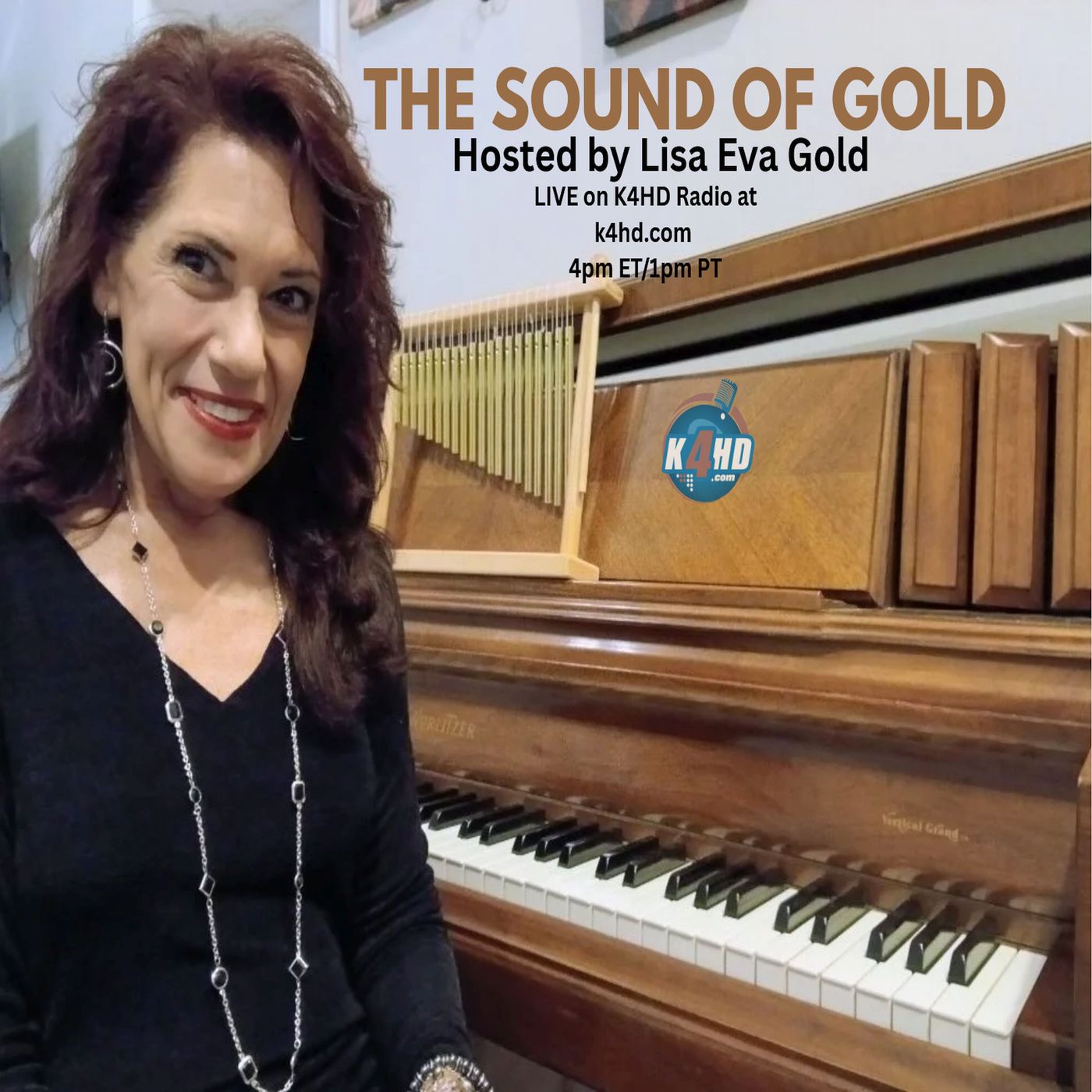
The Sound of Gold is broadcast live Mondays at 4PM ET / 1PM PT on K4HD Radio - Hollywood Talk Radio (www.k4hd.com) part of Talk 4 Radio (www.talk4radio.com) on the Talk 4 Media Network (www.talk4media.com). The Sound of Gold TV Show is viewed on Talk 4 TV (www.talk4tv.com).
The Sound of Gold Podcast is also available on Talk 4 Media (www.talk4media.com), Talk 4 Podcasting (www.talk4podcasting.com), iHeartRadio, Amazon Music, Pandora, Spotify, Audible, and over 100 other podcast outlets.
Become a supporter of this podcast: https://www.spreaker.com/podcast/the-sound-of-gold--6696013/support.
0:01 This program is designed to provide general information with regards to the subject matters covered. This information is given with the understanding that neither the hosts, guests, sponsors, or station are engaged in rendering any specific and personal medical, financial, legal counseling, professional service, or any advice. You should seek the services. Of competent professionals before applying or trying any suggested ideas.
0:51 Hi, welcome to the Sound of Gold. It is so good to be here with you. And I love mondays because I get to have this show and I necessarily cannot see you, but you can see me and you can hear me. So welcome. I'm here in my home studio with my cat. He is keeping me company, and you know it's I hope you all had a good weekend. And if you're watching this on a recorded the recorded version of this, whatever day it is, I hope you've had a great day. And so today's Monday. We just had a weekend that I hope you enjoyed yours. For those of you that know, you know, and for those of you that don't, my new audience members that might be listening in for the first time, this is the Sound of Gold, and I am the radio show host, and our focus is on music, musicians, music venues, music teachers, music schools, music composers, and musicology of all kinds. And it is my pleasure to represent the sound of Gold because I am not only a radio show host, but I am also a music teacher and a professional pianel player.
2:07 Today is Monday, as I mentioned, and because it is that day and it is the end of our day, and whatever day and time you're listening to this, I want to just welcome you in and just kind of take a couple of minutes to relax if you know, as I mentioned, you know, but if you don't, I feel like a channel an energy and I play. I don't have anything. Memorized, So if you take a couple of minutes just to relax before I get to introduce an amazing guest I have with me today.
3:34 I have been playing piano for over twenty years. Nope, I've been playing for over forty five years. I've been teaching for over twenty years, and it's a true honor to get to love what I do and call that work because it's really not work. And as a music teacher, as I mentioned, I have the privilege of connecting and having friends that our teachers as well. And I have a very special guest with me today and he can tell you a lot more about what he does with his teaching. And I have Jackie Young joining me today from pomp Each Atlantic University assistant professor. And Jackie, I know you were sitting backstage, please join me. Hi, Lisa, Hi, thank you so much for being here today.
4:25 My pleasure. And that was a very beautiful improvisation. I already like it. Thank you, thank you, and yes, I just kind of feel in the moment and I play it out and however it sounds. Thank you. I appreciate your kind compliment. You play, you play as well, and you play some really big con concert pieces, big classical pieces. And what is one of your favorite pieces that you'd like to play. That's a hard question. It's almost like asking which one is your favorite child. So my right now on my fingers, I've been playing Rhapsody in Blue lately because it's America to fifteen. I think Rhapsody in Blue was celebrating anniversary I think last year, and I think that's not the most difficult piece, but it has a lot of connection with my life. I feel like because you know, it's Rhapsody, there's a different episode describing different narratives and stories in life, and I just feel a lot of connection to it.
5:29 And there's seriousness, there's beautiful melody, yes, excitement, and the rhythm. I think it is almost like, you know, describing a life in a short fifteen minutes. Oh, I love that, And yes, I guess it is a hard question because there's so many and for me maybe you can relate too. There are some days where I feel a certain way and I'm going to play a certain way, where other days I feel differently and I'm going to play differently, Like some days you want to hear classical and other days you want to hear like ac DC rock and roll. So exactly. Yeah, So I know you because we are on the board of mt and A Music Teachers National Association here in Florida, and it's been a privilege it continues to be a privilege to be on the board with you.
6:17 You do so much. But before we even get to that part, Jackie, share with us a little bit about your history of music and how how your journey has led to you to where you are now. Yes, I can give you a sized version of the story because I can talk about it all day long. My background is a little bit different. If you were to have a stereotypical, you know, knowledge of Asian students, they would start with four or five right that they will go on to lots of competition, that kind of stuff. But for me, I actually started fairly late. I only started playing piano when I was about fourteen years old.
6:59 I started self taught after going to church, and I really like it. One of my friends she introduced, you know, some basic technique for me to learn it. I learned how to read notes, and I learned them really really fast. I practiced a whole lot, and I started accompanying my church choir before I started taking my first formal pianel lesson, and I got so good at it that the church director encouraged me to take a formal panel lesson. But I wasn't coming from a very wealthy family, so I wasn't able to ask my parents for that. So my church director choir director was very kind that the found a sponsor for me to pay for my tuition.
7:41 Nice. Yeah, I remember the tuition was about sixty dollars, and they answered me fifty dollars a month and I would use my pocket money to pay for that ten dollars. That's why I started. Actually I was turning sixteen that time, okay. Yeah. And in Malaysia we use Trinity College London and also a br SM, so that's the board zen board system that we use over there, and I do it very very quickly. The first year, I finished level three with high distinction and I actually got ninety nine out of one hundred. The only points that I was deducted was because of one we're all not in sight reading. Oh yeah.
8:25 And then the following year I took a level of five and seven. I also received high distinction and the highest score in my city. And then the following year I was doing the last year of my high school grade eight. That's the highest before going on to diploma level okay, and I eventually achieved a licensiate diploma, playing some very difficult pieces. And then I was deciding if I should go on to you know in college to study either medical field or something science or music. I only applied to a University of Malaya, the only school that I applied for the music program, and I also got into some other university too, and I start to think about what do I really want to do in my life? What is my true calling? Yes, now I would foresee myself, you know, doing music in the next ten twenty or the rest of my life. So I decided to go for music. Yeah, and in Malaysia, the public university system undergraduate it's only three years. So I finished it three years, and so I was technically applying for my master's degree program when I was a junior according to the American system. Yeah, so I always feel like I'm lacking a lot, you know, I think one year less of training. But I was fortunate that I got into a program at the University of Tennessee and they offered me full tuition scholarship along with graduate assistantship. Yes, so that allows me to come to the States to
9:56 begin my you know, American dream. I'm here twenty nineteen, and then guess what, twenty twenty. Yes, there is a co acdemic, right. It was very hard. I was spending most of my time alone in my apartment. But yeah, but I get through it, you know, And I was applying started to apply for doctoral schools in my second year. It was a little bit unusual because everything is online. Yeah, yeah, And I decided to go to study with Reed Gainsford at Florida State University. Okay, yeah, that's where I did my doctoral degree in piano performance. And while I was there, I was pretty ambitious too. So the tuition, you know, I was al received a graduate assistant that covers my tuition and stuff. But I also did three additional certificates specialized studies in piano pedagogy, music theory, and on college teaching, because I want to make sure myself, you know, unmarketable for his college teaching job of course, right, yeah, And I think I'm very fortunate and lucky that I applied to a different college teaching position in Beach Atlantic University.
11:13 Hire me, and this is I'm mentoring my third year teaching here now. Wonderful, and so I have a lot of questions for you. Now. I want to go back now in the United States from my training, I started private, taking private lessons when I was five, and I grew up with that. And I grew up. I had maybe five different music teachers, and I think for them quite on me that one got sick. But and then you know, life moved on and I become an adult and then you find ways to connect and learn. So the United States, from my experience, is different than Europe. I have family in Europe, and my cousin who taught, who was my first teacher was my is a piano teacher in her in Italy, and so I don't know, but I do know there is a sequence. Like you said, there are different segments of piano learning that you have to pass in Europe. Is that the same in Malaysia? Are there like certain levels you have to pass in order to move up?
12:23 Yes? Yeah, So part of the Malaysian history was we were colonized by the British, so one of the music systems that we were introduced mostly were through London. They have several examination board the most famous one would be the Associated Board of Royal School of Music. Okay, also Trinity College of London, but of course now they're more coming in. There are some Australian examination board, and I believe the Royal Conservatory of Music is also pretty getting more and more prominent. But for the most part, most of the students, if they take panel lessons, they will go through either the a b RS and or Trinity at ZAM in Malaysia.
13:07 Now recently I heard jumping a little bit the S A R R or the Yes. They've released the pressure of having to pass that it is now more open. It doesn't limit the students because I can't explain it well, can you share with our audience a little bit more about what I'm what I'm hinting to. Yes. So the good thing with this examination board system is that they're continuously adapting to what the students and teachers need. And I remember it was during the pandemic where it was challenging for them to send you know, a zeminar from the UK to different countries because you know, for the obvious reason. They start to do online at ZAM and one of the very thing that's difficult to evaluate through ZOOM is things like site reading, oral skills and technical skills. Right, So they decided to offer an option where the students can play four pieces instead of three pieces, and one of the additional pieces kind of replacing the technical skills, allowing students to focus more on the solo pieces. Right. Of course, there's good and bad things, right, The thing is that the students get to you know, have more solo repertoire that I can use it for
14:38 you know, say audition or competition. And if you look at college audition requirement, it usually requires four. Right, so we have the Baroque, Classical, Romantic, and the contemporary. Right you only have three, then you would have to sacrifice one of the period which I think you know, it's okay, but we want to mature students have the balanced diet, right, yes, yes, Well, on the other other hand, you know, if we take that part out of the curriculum, that means we're not gonna spend as much time teaching those things like sarating scales. They're important for students musical growth. Right. I think it depends on how the teachers want to run it. If they really want to be ZAM oriented, right, they can totally neglect that. But I'm pretty sure most teachers are still being you know, honest and accountable. I'm pretty sure they still have to teach those things. So this other you know, the pros and cons of you know, replacing the technical skills with additional solo piece.
15:41 I understand. Now for you share with our audience a little bit about your your teaching. You teach at the university, you teach privately, how would audiences out there that are listening, because those that are watching, they can see the role on the bottom of how to connect with you. But those that are listening, how could someone want to connect How can somebody connect with you to take a lesson or to learn from you. Yes, So I'm the assistant professor Piano at Pambich Atlantic University. As you mentioned, I'm also the keyboard division coordinator, so I oversee all keyboard activities at the university. I teach all piano majors and most of the piano majors because we also have had John teaching some of them and I have. I also teach some secondary students, and in fact I have I guess you can use colorful to describe my students because I do have a graduate pharmacy students.
16:41 I used to have a senior she's an English major and psychology major. As a student he's a ministry major. And sometimes you know, they are more enthusiastic than the music students because they truly want to learn it right. So I do enjoy teaching those as well. Right now, I'm doing doing a curriculum revision for piano classes, so I'm taking all I'm teaching all of the piano classes. I want to make sure that a curriculum setting fit our student needs, but also matching the market needs to make sure they are employable. So that's what I'm doing right now. There's a lot of teaching, but I do enjoy teaching teaching piano classes as well. And other than the college level, the university also has a preparatory department where pre college collegiate students of all ages could sign up to study with the faculty at the prep department.
17:38 Right now, we have three teachers that students can choose from. Actually, yes two days ago, we had an open house where we have lots of students coming in, parents coming in to sign up. And I remember during my first year of teaching, I only had one student. Last year it started with six, and then semester it grows to eight, and then over the summer there are a few students inquire. I was up to twelve. Oh wow, yeah, I was just checking the list. Right now, I think I'm up to sixteen. Oh my gosh. There's a lot of students. But I do enjoy teaching students of different backgrounds, getting to know students of different personality.
18:25 I think that's very important, and I feel like I do it right and I feel i'm yes. I also think that I'm early in my career stage. I'm still young and have lots of energy that I could handle more students together all my experience, and I think it will be very beneficial. That's wonderful. I've been so I've been teaching. In fact, I had applied to I think last year I put in an application for PBu, but then I thought, well, it might be a little too far for my drive, for my drive because I think it's for an evening position or adjunct and that jumped. Yeah. But anyway, the students I have and I'm relating to what you say, and I mentioned this before we started our show today.
19:17 I love watching my students grow, and even more so than that, I love growing with them because I can see where they start. And as a teacher, my students teach me too, you know, And it's just such a joy to have to be in the position to teach what we know and then and for the children to be open to learn. And funny you said, like your graduate students or the older students. This morning, I had my oldest student, who's ninety five. Wow, So it's quite it's such a joy to see the enthusiasm and like they want to take it. It's not like mom and dad sign them up and you have to take the lesson.
20:00 So I understand what you're saying. Yes, what what is your favorite and you you're allowed to be partial? What is your favorite focus? If you had to pick a period of time and you could and if you could just teach that, what would. It be in terms of music? In terms of yes, piano music. Because I thought you might be mentioned h level, But we can talk about that later. Oh well, okay, that's yes, we're on that topic. We can talk about both. Okay for age level. Personally, I'm more passionate with older students, so you college levels and both, because I feel like sometimes it's easier to communicate and you can go to talk about something in a much deeper level.
20:48 Right. But people might thought that teaching younger kids are easy, it's actually much more difficult because you need to know how to talk to their level and explaining things in ways that they will be able to understand. And one thing that I noticed has become a challenge is that you know there's this generation gap. I know I'm still young, but like the younger generation, they grew up always having Wi Fi around, right, that's not jame Z or jen Offa. The way they communicate is different. Attention span might be shorter, right, So all things we have to consider. So that's what I'm trying to learn. I wanted to you know, be able to teach students of all kinds. If I were to, you know, get to choose, I would probably focus on other students in terms of music.
21:38 Again, at this it's a different day, a different different right. In terms of you know, versatility, right, we want to make sure. I want to make sure my students be able to play any kinds of music, not just the one that they like, right, because you know, personal preference can change, and that you don't I don't want them to make out all the good things in different period right. So I'm classically trained, but I also play a lot of churches too, so I know the contemporary style, and in fact, that's actually how I started to So some of my students, I would ask them to play a lot of core progression and teach them some improvisation skills to surface their foundation before they can you know, move on and be creative with how they want to improvise.
22:24 But I do like to think that I'm very good at teaching, uh, like the late Romantic and modern period. Yes, those are more complicated because say they don't use they don't necessarily use tonal language. Right, those are hard to understand, but you can always associate, you know, things from the period before that you can trace and connect them. And once the students click on it, and most of the time they like the contemporary or people will call it the weird pieces more than the regular pieces liked are a Bach, the. Wrap and off right, So do you use I don't know the curriculum you use, but I know like with my students at the music studio, we refer to the Favor books and at the younger ages and then you know, we go into different different books for the older students.
23:23 With your younger students, do you start with a favor do you start with a different like. Alfred or for me? I think it depends on the student's personality. For younger students depends on the age level because different you know, piano methods has different has their own pros and cons Right, I would use Favor for older students when they need something, you know, organized that that can read it. So I would I would use favor. But lately I've been really enjoying teaching using this piano method book called Piano Safari. I'm I'm not sure if you're aware of it. I've heard of it. Yeah, it was so far. Both authors they graduate from University of Oklahoma. One of them has a doctoral degree.
24:11 They actually did a research, very thorough research on piano technique, analyzing each piano technique book and they pedagogically, you know, make sure that it is introduced in the right sequence right. So I thought that was very neat and it's very technique focused, and it also introduced learning alongside note reading, so it's not just you know, teaching students not reading right away. It trains students to listen a lot. He uses all range of the keyboard. Nice. He actually started with black keys rather than piece, which is very unusual. But I think it helps students to get really familiar with the keyboard topography.
24:56 Yes, yeah, I love that. I'm going to I'm going to look into that as well. Now for our audiences out there, for those that play an instrument, play piano, or for even those that are thinking about signing up to take a lesson, what what is your feedback? I know how I teach, and I know my my mythology if that's where you were to use, But what is your feedback as far as practicing? Do you are you? Is your focus on technique? Is your focus on scales and chords? Is it on the music piece? Is it on the note reading? Like? What is your yeah, what is your I guess focus? And maybe if it was a schedule of a practice, how would you put that together?
25:47 So I'm asking a few questions and hope not too confusing. Uh, different methodology for practicing. I think that's a very important question. There's a quote saying that a good teaching is a teaching about practice because you know, we only get to see students maybe thirty minutes or an hour a week, maybe two hours if we have studio class, right, But the rest of the time student needs to practice by themselves. So I think it's very important that during our teaching we give very clear instructions on how to practice right. So I would you know, depending on a student edge level, their practice should always go through everything that we cover during lesson right. And here's the tricky thing the student might not always remember even if they take notes right. So I had a tripod set out in my office that the students can put their phone and record their whole lesson so then they can watch it at home after the lesson or anywhere they like. Right, Because things like technique we can demonstrate to them right, we can help them feel it at the moment, but they can't always, you know, able to replicate it correctly without someone guiding them. That's to them. I can always refer back to the video recording on how we do it right. So that's one thing that I kind of reinforce in my lesson. And then you you probably know there's two you know, quality over quantity. I rather my
27:18 students have quality maybe short practice then longer but distracted practice. So I would always telling my students to keep their practice time sacred, sacred away from distractions. And that can be our full right or our friends need to lock our practices and make sure they don't knock on your door and all the time. Sometimes parents can be distraction, right, So make sure the practice space is can be like a bubble that they can kind of date the music that they're practicing. Very you know, focus. I think that's very important now, you know. Of course, the students and parents always ask about specific hours, how much minutes they need to practice. For young beginners, I would recommend, depending on the age you know, at least fifteen to thirty minutes right, Intermediate level forty five to an hour, Advanced level in hour to two hours. You know, college level.
28:19 Can never practice too much, right. The concept of practicing is, you know, knowing the piece. Because you need to own the piece, you couldn't play it like you might know it. You really have to let the music infiltrate into you and let you be part of it. Right. It's almost like acting. It's like if a bad actor is not knowing the script well, but then they try to add, it will be pretty painful to watch them, isn't it. So in order for our audience to fully enjoy the music, we need to thoroughly understand it, and that includes not reading, knowing the harmony, knowing the theory, knowing the chord progression, understanding the composer's background, why the composer wrote this particular piece, why this particular articulation is here. Right, we have to know how to separate out on uh, you know, assumption of the music and passively understanding from the composer perspective to fully interprect the music authentically.
29:19 So so let's say, and this is for my piano players out there, and really if you use if you play any instrument, you can still use these ideas. So I'm going to pretend I'm the student. So I'm going to ask you questions. So if I'm playing a piece, and do you do you have me play? Like first time seeing a piece, it's I don't know, I'm not it's a Beethoven piece, and I do I sit in and I play left hand, right hand? Separate? Do I play hands together? What is your approach? Do I play? And again, I have my own way, but I'm I'm wanting you to speak. So how would you introduce me to a piece? Or you pick a piece for me?
30:08 Uh? What would be a good piece? I guess we can pick Beethoven because it's also Beethoven's aniversary. I think yes, two hundred and fifty years. Also, that's right, is it one hundred years since his death? It might it might be two hundred, I think yeah. Because I had a conversation with Pat last week or okay, last week, about his birthday? Yeah, this year or the celebration of his yeah something yeah. So for example, take you know, Beethoven piano sonata for example, right would start the first the lesson even though students may or may not know, I would start queezing them. You know which period was Beethoven from which composer influenced him? Uh?
30:53 What kind of piano that does he plays? And why does how many piano sonatas did he wrote? Right? What's beta? The most important contribution in music? That kind of stuff to kind of give students heads up, where are we in? Right? Because the thing is, if you use the wrong period to interpret the wrong composer again, it can be pretty painful if you play Bethov and too romantic. I mean, it's possible, right, but it has to be kind of appropriate. So I think we should start with the composer and then the next thing. Now, this can be pretty arguablet because some teachers doesn't like it. If it's younger student, I would recommend them to listen to the music online, reading the music, following the music together line by line with the music, just to give them an oral idea on how they sound right. And then the next thing is not play not playing yet to kind of analyze the structure right, because you know it's all predictable. There's first theme or first subject, second subject or first theme, second theme right, to see how it changes, right, Yes, that's in the exposition and then development section. See how the modulation happening. Right, So then when you actually play it, it doesn't come as a surprise.
32:10 You know what to expect in a harmony. And then recapitulation, knowing what's the difference between recapitulation and exposition, right, and then kind of foresee where could be the problem, Where would be the problematic spot that you need to maybe pay attention to, So then when you actually start playing, it doesn't come as a surprise, basically right on first round if you're a good side reader. If my students are a good side reader, I will ask them to just play both hands together just to get through it, to get a big picture right. And then when you actually start practicing, of course, need to practice them chunk by chunk, section by section. Always practice separate hands right hand multiple times, left hand multiple times before you can und both hands together. Now, I always say this to my students, when you play your right hand until say eighty percent good, and your left hands say seventy five percent good. When you combine, you don't get seventy eight percent.
33:04 You get lower than seventy five percent, isn't it. Yeah, you might get sixty five percent good right. So you have to push your right hand up to one hundred percent, left hand up to one hundred percent to get maybe eighty five or ninety percent good right. So that's the important of practicing separate hands, you know. And then yes, there's more things to talk about, and then we can talk about phrasing, talk about you know, tone, color, touch, articulation, dynamics, planning, that kind of stuff. Nice, I am, yeah, that's good to know. That's good to know. Usually well what I have found and maybe maybe you have found this too. And I mean no disrespect to anybody. And I sometimes like to be funny, but I sometimes wonder if it comes out funny. This does so the right hand the left hand, I always say, the right hand seems whether you write with your left hand or not, the right hand is always easier to learn fast. The left hand needs a little bit more attention.
34:16 So especially I have students young students that get very, very frustrated because they can't get their left hand to work equally as the right hand. And I will say to them, it's it's the slower the slower child. You need to give that child a little bit more love a little it's the slower friend. You need to give them a little bit more love, a little bit more attention. And it's okay because it just needs It just takes a little bit more time for that left hand to learn like the right hand, and I can't. I wish there was I've said this many times. I wish there was more days than the week. I would spend a day researching and how the brain works, because no matter who we are, the left hand, even for me playing over forty five, you're the left hand, still it struggles, and I have to I take it on as a challenge, but I also take it on as a slower approach.
35:11 What is your. Feedback, Yeah, I think that's a very very valid you know, and nothing to scare about. I guess discuss about this not the only exception that I have ever experienced in my life where people left hand are better than right hand. Are streams players? Oh that's true. Right because they hold the right violin here. Yeah, So I have a cello student, you know, many violent, violent students, and I gave him a shop on prelude in B minor where the right left hand has the melody and he played like beautifully right, which is rare because because you know, most people struggle with their left hand, and I think it's quite common to experience that. So you know, just spend more time on the parts that you we get Eventually it will it will come up, you know, equally good with your right hand, because I think the tendency for people when they practice is that you know, practice what they are good at right. So so right hand is stronger fingers, so they practice the right hand all the time because it makes them feel good.
36:17 But then when it comes to left hand, it starts, it sounds bad, and then they feel discouraged and they they spend as not as many times as you know as their right hand. We could you know, be really honest, you know and critical to ourselves and or take the emotion away right and just be really honest with your left hand. I think eventually you get it. Now you you might not be as fast like you mentioned right, So left because left hand is slower, but doesn't mean you won't get there right. You can always start with slower temple and be really patience with yourself, and I'm pretty sure eventually you will you will, you know, make it and if it were to go even deeper, of course, there are specific things that you can do.
37:00 Some point. If you want to play a fast running passage sixteen notes legato with right hand, if you're doing the first trial, you might not get it really clear. So I would do the opposite articulation. For example, point that accident staccato first, and then once you gain the strength in each individual fingers in your left hand, when you play legatto, it will be as good as your right hand. Yeah, so you would practice the left hand first. We spend more time with left hand, you know, you still have to practice right hand, just you know, give more love to your left hand. Yes, And sometimes many times I have an adult student where the left hand and the right hand playing it together.
37:42 It just the coordination is not fully there. So I'll frequently say, let's just play it in chunks, and let's play left hand first. Let's play the parts that you don't know we're not gonna and some lessons, I will say, Okay, we're not playing what you know because your brain is not having fun anymore. You want such challenge and that's how you you will learn it. And I don't mean like you know, yeah, that's how we learn it when we when we are more focused on those sections. And I want to backtrack a little bit. You had said a few things over our interview, and I want to go back. You were talking about like practice time. If and I'm getting to a point if you were just a say to your student, go home and practice this, what do you what do you say? A good amount of.
38:32 Practice time is yeah, so what I do with my Yeah, yeah, I have a I have a practice lock that my students would use, especially especially for newer, younger students were you know, having a disappoint notice would be a challenge or you know students who are over scheduled. Right, I have a practice lock. Is our accountability load? Yes, that would. They would have to report the specific fake time that they practice. They have to give it to me the next lesson so I can look at it and then you know, I don't punish them or anything, but get an idea of how they practice, right, And there's there's no point for them to lie right or right just a a certain amount of time because you know, they're basically going to themselves right, because if they're not any any manage benefit it from anything. Right. And what I do with the practice lag is at the back is Blenk spaces. They will write down things they need to practice there to make sure they really go through it right, because you want to. I want to make sure my students already and polish everything that we discussed in this current lesson. In the next lesson will be you know, everything would be polished. So I would, you know, have an agreement with them to sign, but we will have to agree that, you know, for my piano class students, I would say fifteen to thirty minutes er day, right, only counting weekdays. If you have to take a day off, you can you know, push say, know the nets that you practice forty five minutes. I think that's fine too.
40:03 But I think I think having a consistent practice is more important than cramming your practice the day before or like an hour before your lesson. I think because it's building our muscle memory, right, and yes, things that takes time and piano playing piano is one of those things. It's not like your you know, academic subject that you can just cram everything like flip through it or you know, use AI chat GBT to summarize it for you. It's a it's a skill that tests your honesty and discipline. There's no shortcut, there's no magic. There is no shortcut, no magic. And as I mentioned earlier, I have my cats here, so it seems to be and Rebel my engineer, she knows this. It seems to me when I have a show, these seems to think is playtime. So there's any noise, you hear, any movement in the background. They just think it's like a.
40:58 Free for all time to get attention. And I have an orange cat named Charlie and he's a little bit of a he likes to give everybody a hard time. So but thank you for sharing that. You know, there's a few different things I've learned, especially this year, and it was kind of hard to accept in the beginning. But I've been working with it myself because I still take lessons even though I played all these years, because I want to continue to grow and be better. And for those listeners out there, like as a musician, you never like, Okay, I learned this, I took the tests. I'm good. I don't need to do anymore.
41:39 It's a continual and it's not something that you that you dread looking forward to. As a musician. I love to sit and play and practice because I hear myself getting better, or I understand the piece better, or I change something and I make it different, and it's just it's such a wonderful creator of outlet. And what I wanted to mention or go into is that what I learned, especially this year, was you know, you don't it's not the hours of practice that really make the difference. It's shorter spurts of practice time where your focus is more in line with what you're doing. And again, I've been working with this a lot more this year myself and with my students, and it's like, okay, you know, focus in on these two chunks or this one chunk, and then maybe go get a drink, go for a walk, go go look outside, take some fresh air. Because the more we break it down and focus our attention, the more we retain it. And so tomorrow when we come back, the brain is amazing. You'll get to play it so much easier. But I can't tell you that today. You have to show it to yourself tomorrow how much you've absorbed.
42:58 And there's this thing called interference. And I've had earlier or I think last year. Greg Goodheart, yeah, was a student, not a student, but he was on my show. And he's a teacher as well in California. He wrote a book and I think if you log into his website he may even have a free download about interference and how important it is when he works with his practic classes and he offers interference. And sometimes we'll say, pick up something that you haven't played in a long time, or go back to something so easy, like because you're playing such a hard piece, you know, and breaking that down. Okay, now, distract yourself with something different, something easy, and then go back to the piece. Yes and yeah, And it makes such a difference because we think, oh, we have to learn this piece today, and it's impossible to learn it and own it, like you.
43:54 Said, right, yeah, what you mentioned That practice method is mentioned in the book Professional Piano Teaching written by Jeannine Jacobsen. That's one of the methods. And then you know inter leaping, yes, yes, living, so you know, practice different hours of the day, right, But of course you know there's also people that prefer practice like four hours straight or six hours straight. Right. I think they all works, It just works for different people. I tend to practice longer hours when I was a student, and usually late night too. I have less attractions when I get all my job done, right, then I can truly focus on the music. I would practice, say, you know, from ten until two am in the morning and then walk back to my door to sleep, because partly because the pieces that I was learning was long, so pieces like Schumann Symphony, Attitudes or Carnival. But run through the pieces takes like thirty minutes, right. If you only like an hour, it's not enough at least for me. Right.
45:00 But at the same time, lately, since I've been starting teaching, I found that interleaving practicing has been more beneficial for me, probably because I have more responsibly and things to take care as an adult. Right, Yes, like my mind will always think of the next thing that I need to do. But being able to achieve one task at one short practice, right, it has the same effect as longer practice. I think we just need to find the best method for us right, and we. Have a few minutes left, and I want to say a couple of things and then I have one more question. But yes, I have students that sometimes it's easier for them to practice in the morning. For me, I practice several times a day, but my best focused time is at night. But everybody's schedule is different. One of my adult students, his best practice time is in the morning.
45:52 So depending on your schedule, definitely make time to practice, even short, short amount of time is good. And I wanted to make the mention you with it with the newer generation, the younger children. I noticed something last year with my students. I would give them music to Let's say Mary had a little lamb easy easy piece. They played it and they go okay, they call me miss Gold. They go, okay, I'm done. What do you have for me next? But oh no, no, you you have to keep playing it. Well, I'm already done with it. So it's like that Amazon order, I want it now, or microwave you know, I want it now.
46:34 Yeah, what they call the fast food trend where people thought that you know, I can pay all the notes, I'm done, right, But there's so much more than just playing or pressing the correct buttons if you would say right? Because music is art, it's language is a communication. There's, you know, so much more things that you can work on. You could never finish practice of piece. There's always things that you can pick on it to make it even better. It's so true we have Jackie. I so appreciate you being on today and I could we could talk about this for like the next hour, if not hours, but we have about another minute left. What would you like to share with our audiences as far as inspiring them to continue learning music and if they haven't started yet, yeah, what would you share with our audience to finish this offer too?
47:29 I think there's music within everyone. There's music in everyone that you can share it no matter how old or how young you are, and in their space for you to grow in music comparing with other people. Of course, that that were never works right even us? Yeah right? And uh, practice doesn't make perfect, practice makes progress, right, So as long as you practice, there will always it will always become better. And to those who are learning music that might be feeling challenged, I think that you know, don't forget that while you sorry it first, remember your love. Ye love that. Thank you Jackie so much. We will be in I think there's a yeah, there's some MTNA stuff coming up soon, so I'm exciting about that. And yeah, thank you so much for being such a huge inspiration here and everywhere else you teach.
48:25 And yes, pleasure, thanks for inviting me. Yes, of course, of course, enjoy your enjoy your day, and we will be in touch. Yes you too, Thank you, Thank you so. Much for tuning in today. It's been a pleasure. As always. Tune in next week. I'm not going to tell you who my guest is, but tune in to help me keep music alive.


