
The Sound of Gold with guest Andrea Rosado of Mind & Body

 iHeartRadio iHeartRadio
  Apple Podcasts Apple Podcasts
  Amazon Music Amazon Music
  Spotify Spotify
  Pandora Pandora
  Deezer Deezer
  Podchaser Podchaser
  Audible Audible
  Spreaker Spreaker
  Podcast Addict Podcast Addict
  Castbox Castbox
  Castamatic Castamatic
  Overcast Overcast
  PocketCasts PocketCasts
  Goodpods Goodpods
  Podurama Podurama
  Podverse Podverse
  RSS Feed RSS Feed
  YouTube YouTube iHeartRadio iHeartRadio Apple Podcasts Apple Podcasts Amazon Music Amazon Music Spotify Spotify Pandora Pandora Deezer Deezer Podchaser Podchaser Audible Audible Spreaker Spreaker Podcast Addict Podcast Addict Castbox Castbox Castamatic Castamatic Overcast Overcast PocketCasts PocketCasts Goodpods Goodpods Podurama Podurama Podverse Podverse RSS Feed RSS Feed YouTube YouTube
 The human brain is incredible. More and more research is showing the impact it has on healing the mind, body and spirit. Todays show focuses on the impact music has on individuals whom suffer from Alzheimers. Tune in to learn how you can help be a musical influence.
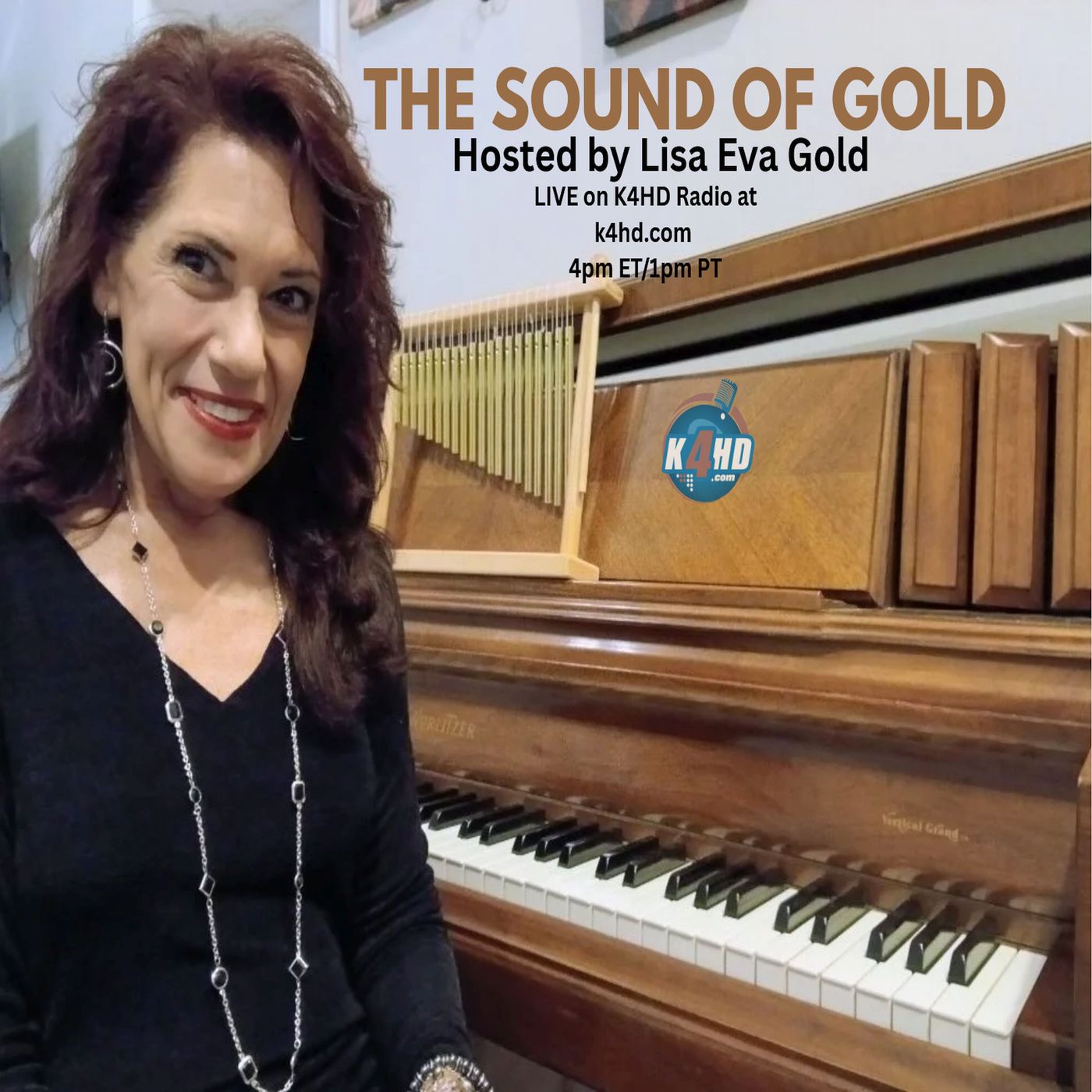
The Sound of Gold is broadcast live Mondays at 4PM ET / 1PM PT on K4HD Radio - Hollywood Talk Radio (www.k4hd.com) part of Talk 4 Radio (www.talk4radio.com) on the Talk 4 Media Network (www.talk4media.com). The Sound of Gold TV Show is viewed on Talk 4 TV (www.talk4tv.com).
The Sound of Gold Podcast is also available on Talk 4 Media (www.talk4media.com), Talk 4 Podcasting (www.talk4podcasting.com), iHeartRadio, Amazon Music, Pandora, Spotify, Audible, and over 100 other podcast outlets.
Become a supporter of this podcast: https://www.spreaker.com/podcast/the-sound-of-gold--6696013/support.
0:01 This program is designed to provide general information with regards to the subject matters covered. This information is given with the understanding that neither the hosts, guests, sponsors, or station are engaged in rendering any specific and personal medical, financial, legal counseling, professional service, or any advice. You should seek the services of competent professionals before applying or trying any suggested ideas.
0:51 Hi, welcome to the Sound of Gold. I hope you're all doing well. It is Monday, and in the United States on the East Coast it is, and wherever you are tuning in from whatever time of day, it is welcome and I'm so glad that you're here. My show is the Sound of Gold. If you're new or even if you're back revisiting. The Sound of Goals is focused on music, musicians, music studios, music venues, and music teachers and pretty much everything to do with music. I'm not only a radio show host, but I'm also a musician, a piano player, a piano teacher, and I'm very invested in music and the well being it has on you and me and animals and the world around us. There's great vibrations that are intertwined with a sound and they connect with us, we connect with it. My big dream is to be a musician. This is my cat CALLI.
1:58 If you're watching, she's one of my here and if you're listening, I'm sitting here in my home studio with my cat Kelli. My biggest dream is that I may play. First of all, to do this show. My biggest dream is to have the talent that's out there shine and to bring you out my show and to help promote you. And on the other side of that, I have this dream to play for healing purposes. I love playing music, and every now and again I'll do an online show. I've done them over the years, and I love to play and bring peace. And with that being said, you know, music has so many benefits to it, and I think every single human being out there knows maybe of a relative or a friend who has a relative or a friend of a friend who maybe is dealing with mental health issues, maybe decline or challenging. And especially for our populations out there, relatives friends who have or have Alzheimer's.
3:09 And it's such a sensitive subject. I've had, I've lost family members to Alzheimer's. It's such a sensitive subject because it's so it's so heartbreaking to watch anyone go through it. And so my mission on especially today's show, is to really hone into how music heals and music helps strengthen the neuropathways in mental health and for those that are dealing with Alzheimer's. And I'm sorry for the background noise. I have other cats and they decided it's just playtime, so they're playing that set aside. I have a very special guest today. There is an organization out there, if you haven't heard of it before, it's called Mind and Melody, and I came across it just by chance. And there are you know, there are no chances that are not meant to be, they say, right, So I have with me today miss Andrea Rosato from Mind and Melody. Andrea, you're hanging out backstage there, go Hi, Thank you so much for being available today. I don't even know if you're working today, but you've made the time and I just I just admire you and everything you do. There's so much to say about Mind and Melody, and I only know probably like the iceberg surface of it. Before we dive into that. Please give us just a little from my audience out there and from my viewers, give us like a little background us to a little bit
4:43 about your musical journey and what's drawn you into where you are the position you have, and then we're just going to go from there absolutely. First of all, thank you so much for having me and us and Mind and Melody on I was working today. You know, it's very exciting to be able to get to do something like this. I do work a lot of the behind the scenes of the magic that we have going on. So yeah, to tell you a little bit more about myself, well, I love to say how I have been obsessed with music since I was born. My mom would play music for me as a baby and with her you know, headphones on the belly and everything, you know. So as soon as I was able to, you know, use my hands and stuff, I was trying to make beats.
5:31 Pianos and ukuleleies and. Guitars were always around, and you know, I was always inclined to those things. I didn't take formal lessons in music until I was like eleven years old, but it was always kind of like a hobby. I was always obsessed with listening to music and the way that it made me feel and my mom always used it as something of a tool. She would always use it. She's she's a doctor, or so she plays it. She calls herself the musical doctor. She music for her patients. She thinks it's something that's really important to helping soothe people when they're nervous and destruct them from maybe the anxiety of waiting or the nerves of being at the doctor's office.
6:17 She's always used it as a tool for not only soothing people, but connecting with them. So I was always instilled that and the power of music was always present in my life. So again, I didn't do formal lessons until I was like eleven, and even then it was like kind of light guitar lessons. I'm pretty much. Self fought for the most part guitarists. I play kind of the basics of you will. I know the basic chords and everything, and I can read, you know, charts and stuff, and I sing, and I kind of It's always been my hobby. It's always been something that I've turned to at every point in my life for whether it be as anyone who's a music enthusiast, imagine, right when you're feeling happy, when you're feeling sad when you're angry.
7:04 It's always something that I turned to. I make my own music. I've always written like poetry and stuff, so that's my connection to it. I always was obsessed with it, and then I was really intrigued by psychology growing up as well. I never really looked at music as something of a for me as a career. It was just always a hobby for me. But psychology was my passion that I wanted to pursue as far as my career. So I did end up getting my bachelor's in psychology. I will hopefully soon at some point be getting my doctorate as well. But thank you. But as kind of part of my journey, I worked at a music store for many years while I was in college and my psychology program. I wanted to do something that kind of tied those things together, and it kind of just fell in my lap, similar to how you heard about the organization that it was just kind of a happenstance kind of thing. Someone introduced me to the organization because I was talking about what I wanted to study and my intention or my goals for me in pursuing my study of psychology and neuroscience. And cognition is the effects that music has on it. And in that kind of discussion with somebody, they introduced me to the organization and I kind of began as a musician and have worked my way up since then. So that's kind of my long winded background with music.
8:34 I love it. You're such an inspiration and we've talked previously other than the radio show, and there's so much more I can say, but i'll say that. I'll probably say that for another time because it's a little different of a focus, but I want to really hone into the benefits of music and the healing power because we all I don't I don't care who it is on this planet. We all know somebody, if not have somebody near, near and dear to us that has had or has Alzheimer's or that deals with mental health issues. And like you said, music, I mean it connects to all of us.
9:20 Whether we're sad, we're happy, we're excited, there's always one song out there or for every emotion there is a song. And so with your experience and with your with your journey and where you're going, please tap into that a little bit for us because there's so many people out there that are just questioning, like, how do how do I help my loved one? I can't because it's so difficult to to Sorry, it's so difficult to see that you lose your your family member or your friend. And how do you make it so that music in some way brings them back or heals them? Absolutely? And I love that question.
10:02 I know that it touches home for close to home for you, and I'm sure that's the same case for many people. And I love the question because it is something that this organization Minded Melody heavily, heavily, heavily. Focuses on, right, is the power that music has to access a person's true identity despite what they're going through, despite having lost so much of their personality, seemingly. We're actually working on a presentation now so I can tell you the stats. Seven point two million Americans right now are diagnosed with Alzheimer's and specific to the county that I'm in, Miami Dade County, seventy seven thousand individuals have been diagnosed with Alzheimers.
10:53 And that's the. Largest number in any community in the nation. So it's an epidemic, may give you, well, it's it's very very common, unfortunately, and it is a condition that unfortunately ends up stripping away a person's personality. One of the things that we use to kind of drive home the uh not even impact, but what it does. What this disease does is if you think of what's a thing that you do in the every morning, right, you get up, you brush your teeth, you make your bed, you make your coffee. It's things that you do without even thinking about it, right, it's automatic. A lot of the people who are experiencing these these this disease, you lose that, right, you lose your personality, you lose your sense of humor, your routine. Uh so you lose yourself.
11:48 Now with music, it's so fascinating. It's one of the only things that accesses or activates rather multiple systems in your brain. Right, So that's that neuropathway part of it. It's activating your memory, your emotion, your motor skills, your focus, right, what's responsible for your executive function. So so many. Of these things are being activated, and so it's able to penetrate whatever it is that you're going through. And one of the most visible things that we see is how connected to memory it is, right, you can even now, I'm sure you can think of a song that reminds you of a specific moment in your life and it.
12:40 Takes you back. Right. I had this story. She was a I mean maybe in her thirties, but we were having a conversation and she mentioned the fact that her there was a song that was playing when she was giving birth to her son, and every time she hears it, she like goes back to that moment. And I told her, I promise you that when you are seven ninety years old, you're still going to listen to that song, and it's going to be like you're back in that moment when you're worth to your son. If you have that connection to it already, that'll never go away. That doesn't matter the. Condition that you have, whether you know you have advanced Alzheimer's, that song will still spark that neuropathway in your brain that takes you back to that moment.
13:23 And that's the power that music has. That's the power that we try to harness, we try to use and take advantage of. Really, Right, So we all have these connections to music. Right. We listen to songs that make us feel things. We go to music when we're happy, we go to music when we're sad. We oftentimes connect to music a lot in our youth, right when when you're developing certain your brain as a teenager or you know, when you're in your twenties, and you really really create those strong bonds to certain types of music or certain songs or artists that it's proven and we see it time and time again. You play that song for somebody that is no longer there, right, someone that especially at our sessions.
14:12 We do our sessions in kind of a group setting, and a lot of the times will have several participants where they're just head down, you know, not looking. You can tell they're not really aware of where they're at. We try to interact with them by speaking to them and asking them like how are you feeling and stuff like that, and it's like they're in the shell and they can't communicate, and you play a song. We usually use. Older songs, right, We typically do songs from like the the eighties that hopefully our participants will recognize things from when they were younger, right that they created that inevitable bond with And you'll see that you play these songs for people and it's like a light switch turns on, the life comes back into them. You get access to this person once again. They'll start singing all the lyrics.
15:05 We've had situations where people used to be musicians and then obviously as time goes on and you know, they were put in a facility and you know, the people forgot that this person played the instrument, uh, and so it wasn't a part of their life anymore. We've had situations where we've learned this and then brought the instrument to them and they've played it flawlessly, and it's like they returned back to their personality. Someone who wasn't spiling anymore, wasn't communicating anymore, suddenly has this this personality back. It's a huge smile, life back in their eyes. And that's the power that that music has. You know, it has this connection to our to the wiring in our brain that's inevitable and can be accessed at no matter what point in your life and what conditions we're in.
15:56 So yeah, wonderful now you for our viewers, they can see our scroll on our screen. For those that are listening, please share with us how people our listeners can tap into or connect with mind minded Melody for more information. Yes, uh so, I mean we have our our website, which is kind of the main source there. We have our contact information there, so it's Mind and Melody dot org. Our logo and our. Actual name is Mind and Person Melody, but for the sake of the website, it's mind m.
16:39 I N d A N D M E l O d y dot org. And we also have our socials. We post a lot of videos of different sessions. Participants are musicians, uh, and that can be We're found on Facebook and Instagram. It's Mind and Melody all written out m I N D A N D M E l O d y I n C inc. For in corporate. So that's that's our information, all of our socials there, that's where you can find us mostly Instagram and Facebook posting about what we got going on. So basically, for for our listeners and our viewers, you're nonprofit organization. Your focus is on bringing music to facilities, so you're not a facility itself. You're an organization that kind of contracts out musicians too. And this is also for my musician listeners. If you have the time and you can connect with Andrea Rasatta, I'm gonna say your name right, Rosatto Rasatta reach out to mind and melody, especially on Facebook. I think that's how we met through Facebook messenger because you are not only located in Miami, but you are growing. You are in Home Beach County now and you are continuing to grow correctly. And so I mean, I would like to think next is Shreasure Coast.
18:08 So this baby is snowballing that you've created, and it's so beautiful because it is so needed. It is so needed. So my musician friends out there, like I said, if you have the time, please connect with Andrea. She would love to connect with you and get you in to share your talent. I mean, I don't not giving jobs away, but I know I've got so many musicians. Absolutely, We're always looking for, you know, more people to spread what it is that we're doing. We're very much empathy based, passion love based, right, not only do we want to bring these people these moments, but we want to connect with them in these moments. So we are constantly looking for passionate musicians who want to use their talents to do that.
18:55 And yeah, we have. The organization was founded in Miami Dade and it's since expanded to several different counties. We're working out of Miami, Roward County, Palm Beach County. Hopefully we work a little bit in the Treasure Coast, but I believe right now we only have. One, maybe two musicians in the Treasure Coast, so we're working on expanding there. And we do have a small network of musicians in Tallahassee, New York, and New Mexico as well, So we're constantly working on growing and expanding. As you mentioned, we don't have our own facility. We do work with several facilities throughout these different counties. So we work primarily and that's who the organization was founded, working with older adults with Alzheimer's.
19:39 We also work with older adults. With Alzheimer's, you know, individuals and either senior living communities, independent living communities, and we also work with a variety of other individuals too. You know, we work with some long term care facilities where maybe it's individuals who have had some sort of brain damage or stroke or car accident or whatever the case is that they're in that long term facility. We work with those. We also work with young adults and children with special needs. We work with different organizations like the Friendship Circle of Miami. We work with some special needs schools, the Dan Marino Foundation up in I believe. Bom Beach County.
20:19 So, uh yeah, we are constantly working on expanding, bringing on new facilities, bringing on new musicians. So if anyone is ever interested, I am the person to come to as well as far as you know, recruiting and all of that stuff. So if you want my direct contact, also, it's just my name Andrea A. N D r e A at mind and Melody dot org. That's my direct email. If anyone is interested, I would be more than happy to give you some more information. Wonderful, Thank you, thank you. And for our listeners out there as well as our viewers. Let's say if this is brand new for them and they're their relative or a friend of a friend, they have somebody they know that's in a facility and this is brand new to them, how do they contact you the same way?
21:08 Yeah, they can reach me via email. I am the one that's working on kind of expanding the organization. Uh So, we have a small group of internal team members. We have someone working on the scheduling aspect of it. Which is a base of its own. That I don't like to involve myself in too much, but I'm responsible for anything that is expanding. So if it's any new facilities that are interested in any new musicians that want. To onboard, I'm the girl for you. And again, my email is the easiest way to contact me, obviously. I mean you can reach me through the website as well. The website has our contact information. It's not my direct contact, but you ask for me, or just ask for what it is that you're looking for, we'll be able to direct you to the right place.
21:55 But yeah, if anyone's interested in. Bringing Minded Melody into any facility that they know of, it's always best. We're always looking to expand and reaching out to new facilities, but it's always best to have that personal account, have someone advocating for the program, because it's hard to cold call a place and say, hey, we have this program. I know how great it is, and you know how great it is. But I think a lot of the times, with the way that things are as far as budgeting and all of that stuff, people are kind of closed off to things that they aren't familiar with, that they don't really recognize. Uh, And while. We try to get as much exposure as possible, sometimes you know, the activities directors or admin at these facilities just don't know. So if there's family members that see the value in it and are interested, then there's power in that and it's worth you know, advocating for it.
22:48 Sure. Absolutely, So I have a few questions. I'm kind of just gonna jumble them off all at once. So let's say I'm a musician, and let's say I come in to you a facility nearby, and just I want my listeners out there and viewers out there to understand, like really what it's about, like how it works. Like if I were to go into a facility and I'm gonna say, bring a keyboard, Like is what is the ideal day of or the hour of or the three hours? Like what's the program? Absolutely that is a wonderful question. So what we offer. Facilities, Obviously it's going to look a little bit different depending on who's conducting the session. We give autonomy to our musicians. Everyone's an individual and has their own style.
23:37 But what Mind and Melody offers is interactive music sessions. Now what that means is that it's going to be sessions that are consisting some performances, typically from the time periods that the participants will recognize. Considering the majority of our participants are older adults, it's going to be music from about, like I mentioned, the forties to about. The eighties, So some performances. Whatever instrument you may be playing, you know that that's of your choice of repertoires to be had. And then we'll also incorporate different musical activities. All of our session leaders are or will have instruments, so tambourines, moroccas, rhythmsticks, some interesting instruments sometimes like a thundertube or stuff like that that participants might be intrigued by. And a session essentially is you're gonna have your intro as you would imagine, and then mix in different activities with performances. So maybe you'd start with an intro activity where you get people to warm up by you know, playing a song and having them raise their hands and do little easy dance moves.
24:46 Again dependent on the participants, so we accommodate our sessions. If it's a very active group, then we're gonna get up and we're gonna dance, and we're gonna you know, maybe do a conga line, or do whatever it is that the participants are kind of moved to do, and we want them to actually just take part in the music making process with us. So whatever that looks like for that group. Some groups are a little bit more or a little bit lower activity levels, a little bit lower cognitive levels, in which case you're really going to emphasize that instrument playing just shaking it to the beat, or you know, playing maybe songs that are easy to follow along to, maybe playing songs that listen kind of a call and response sort of activity where we want people to repeat the chorus.
25:33 We want them to recognize the chorus and repeat it with us. If that's something that either the group isn't something it's not something that they can do easily, or just as another activity, we might have a song that we hum instead of sing the lyrics to, you know, and just have people use their vocal chords and say something. You know, a lot of the times people are afraid of doing those things because it's not something familiar to them. So a lot of a session I think consists of working towards that engagement, making people feel comfortable and connecting with them and creating this environment where they want to participate. You know, a lot of a session is going to be people like saying. Oh no, I don't know how to play that.
26:14 I don't know how to play that, and making finding a way to make them feel comfortable enough and. Motivated enough to actually play it. You know. So our sessions are typically one hour long, and a session is going to look different from a session leader to session leader, but essentially it's that interaction of it. And we're always looking to learn more about participants, so using song to do so, using song to learn about what this experience, what this song reminds them of, what experience it reminds them of. Or you know, where they're from, or something like that. You know, as you do sessions repeatedly with certain participants, you also start to learn them, so then you kind of modify the session style to that as well. You know that this and reacts very well when you play a certain salsa song, so you'll reserve the salsa song for the part of the session where you want this activity where.
27:08 They get up and shake their tail feathers a little bit. You know. So that's pretty much what I mean. Every session looks different, so it's hard to give you a perfect rundown. But essentially those are the things that we're trying to incorporate in every session. So if a musician's got like considering doing this, is there a limited amount of participants or is it just whoever shows up and it's different every time, or is there an expected group number limited. That's a wonderful question. It depends on the facility. So there's some facilities that have set groups that do you know. We have some facilities that do weekly sessions and it's the same seven participants and it's.
27:51 Only seven of them. And we have some facilities that either do weekly or monthly sessions where it's twenty to thirty. Parts of that might show up to the session, and it might be the same people more or less, or it might be rotating crowds of people. So it really does look very different from session to session. I have the majority of the session that I actively do are with younger participants, where I work with the special needs community primarily, and that's more of like a consistent group. The group sizes are about fifteen to twenty participants. It's the same participants every time, and we work on kind of music making together.
28:36 But again, it varies from facility to facility. Now, for our viewers and our listeners, I'm speaking from a little bit of a different platform. I'm other than a musician. I'm also a music teacher and I work with mostly children. I do have some adults. And I've been doing this for over twenty years, and so that makes me sound old, but I don't think i'm that old. Set aside. I set that aside when I work with students. I've always loved working with them one on one and imound. I'm finding, especially most recently, that a lot of my musicians, including myself, are starting to expand and teach group lessons as well as myself and the support. You know, it's it's great to get one on one attention, but the support that you get in a community, in a group is so empowering because I think we are all that like terrified little child on the inside where we don't want to be rejected and we I don't care what you know, this is set aside from any mental health issue.
29:40 We're all human, right, so you know, we we're all a little bit terrified, and we all feel like we're already gonna be rejected out the door. So having this group or having group sessions, which I've been doing with my students, is so supportive because they're they're supporting each other or like, oh hey, Joey, that sounds really good. What was that? I want to play the same thing, you know. So it's it's so supportive and it's not for me. It's eye opening because you know, I think, oh, we all want that one on one attention. That's special one on one. But really, when you come into a group setting, and I'm not speaking for you, but I think we can relate in a group setting, you get so much more love and support and reassurance that the acceptance is just there, like you don't have to. Most of us people that are thinking about getting into the music world are terrified even to do that. So you know, in group settings of teaching and group settings of being a student, there's so much power to that.
30:44 Absolutely, And I mean that's also just it's community. It's something that you know, ties you together with your peers. It makes you feel more accepted. Right, you mess up, but nobody cared. Really everyone is also messing up. Like that's the main thing in our sessions. Our sessions aren't really for the most part class style, just because of the demographics that we were with. More just like music making and that's kind of up for interpretation to whoever's listening to it, you know. So participants will be afraid a lot of the times, but when they see that the like three of their other peers around them are just shaky and they don't even care because they're having fun, then they feel encouraged to do that as well, and then in turn they end up having fun.
31:32 And I think the main thing. That makes making music feel good is just doing it. It's playing right. It's like play. A kid at a park is gonna play. However, you know, they're not doing it right or wrong. They're just exploring and playing. It's fun and it's not with the purpose of being perfect. Again, it's it's just to do it. And I think that's the main thing with music, and that's also as a teacher, I'm sure that you can also attest to this. That's the main thing, and growing and becoming a better musician is just doing it right, just just doing it and doing it wrong. The more times that you do it wrong, the more you'll learn, the more you'll practice, and then in turn.
32:22 After doing it a couple of times wrong. I'm sure you'll you'll figure it out, you know. And and so that's kind of why I think that group setting works, because you're encouraged to just try because everyone else is doing it, you know, and it's it's a it's a community thing. You feel more connected and more accepted. Absolutely, absolutely, thank you so much. And again for my listeners out there, please share with us how they can get in touch with you. Yes, of course. Again, my email and my direct email if anyone wants to, you know, apply to any position, or if you know of a facility that might be interested or might benefit it from this program. My direct email is my name, which is Andrea A N d r e A at Mind and Melody dot org. That's m I n d A n d n E l O d y dot org.
33:18 Uh. And then you can also find out some more information on our website that's Mind and Melody dot org spelled like in my email, uh. And our social media platforms were. Keeping updated with pictures and videos from sessions and our musicians and everything like that. That's Mind and Melody AK. M I N d A N d m E l O d y I n c and. You are a nonprofit organization, and you know what, I don't even know this. When did you begin? When? When did you start this movement? Yes? Uh so, our co founders Christina and Lauren actually started this as kind of a passion project back in twenty fourteen. So the organization was founded in twenty fourteen.
33:59 Uh So it's been almost twelve years now that the organization has been around, and it's been an exponential amount of growth, which is really really incredible, even over the past I mean since COVID like six years, seven years, it's been a huge growth. Wonderful, wonderful. And You've been mentioned several times about playing and I love to play, and I have fans out there that love when I play, and being in my second season, I made this promise from day one that I would play a little bit more than talk. So if you don't mind, I'm going to just play a song and then I have a bunch more questions for you before we tune, before we finish our show for today.
34:42 Excited Now, I don't have anything. Written or memorized. I'm just kind of feeling what I'm playing.
35:24 Oh, thank you.
36:47 Think that was just a little a little something. It's always so fascinating to me. The fact that you just play what you feel. I think that's I. Mean, I love that, and that's exactly what music. Is, right, It's real colection of what we feel. So to have just that streamline is such a beautiful talent. Congratulations, thank you, thank you, and I love doing it. I used to play for like two hours straight every week for three years. I did that, and it's just it's a joy, a pleasure to do that. What I wanted to ask you, you know, I've been focusing more so on the Alzheimer's patients. You mentioned patients that have had maybe brain injuries or I'm bringing up the fact of mental health because that's something I think most everybody, if you're a human, you're dealing with some kind of mental health or we're always improving ourselves. That's why we're here, right, So you know, we all question like is it our food that we're eating, is it our the medications that people take? Is it our environment? Is it the air that we breathe? There are so many different little factors that we could just strip everything away and be like, oh, it might be this, it might be that, it might be this but then when we when we do take it all away, all that questioning, I'm honing back into the music. And music is all about vibration, and we as human beings, we're like ninety percent water. And I don't know. There's that book I can't say his name, but it's the book about water and how vibration affects
38:22 water molecules, and how if we think of it as being a human being and we're ninety percent water, Like everything around us has a vibration, and how is it affecting us? And do we need to make better choices to be in a better health and a better environment. And for those out there that are battling or are challenged, or whether it's Alzheimer's or anything else that you're dealing with, how can we make it so that music can heal you at a cellular level? How can we create some kind of world where where I don't know, I go back to Close Encounters of the Third Kind that was like that was that movie was so powerful to me When they're playing like that, we we we have the Simon says, you know, spaceship that we play that makes those sounds. But it's like, how can we research has not gotten far enough, and why not, Like, how can we create a world where we're more like in control of our healing and that we can have sound be that background foundation to not medication but sound. How can we make sound the medicine we need?
39:37 I think, I mean, I agree with you a thousand percent. And it's it's all vibration, it's all frequency, and I I'm not sure what that answer is. That's kind of what Mind and Melody is also trying to solve for. It's the you know, it's the the problem, right, it's the it's what we see and it's what we're trying to find a solution for. So as the organization goal is just to bring music to as many people as possible, to make sure that the individuals and these environments have access not only just to music, but to the enrichment aspect of it, right, the.
40:23 Connection that it brings. Right, the things that the organization focuses on at its core is not just spreading music, but it's empowering people. It's restoring dignity, right, and that comes with passionate musicians who share their talent. Yes, to make music that makes people feel good, but to also connect with these people in those environments and create moments of joy with them, create moments of play by playing an instrument, and of wonder by showing them an instrument that they've never seen before, and of you know, reminding them of what their life was. I think that music is something that reminds us of life, right, It's something that gives us the same feeling that staring out into the ocean or into a beautiful mountain landscape might give us.
41:15 Right. So I think just having more people understand the power that it has and really making sure or people like you, Lisa that are spreading this understanding that are almost I mean, we think of the work that we do with Mind and melodies is we're empowering people, right, We're giving them a sense of their personality back, We're restoring a little bit of dignity as well, and not only empowering the participant, the person who the musician is playing for, but empowering musicians to know that they have a very powerful tool in not only I don't want to say controlling, but influencing the way that they feel through the sounds that they produce, but influencing the way that others feel as well, and then just doing what they can to spread it.
42:08 You know, there's going to be a lot of people that don't understand it and are resistant to it or don't value it, which I think is something that's very common, a very common problem that we run. Into, that people don't value it. You know, why do. You think that? But I believe what you say, and it's and it's true if you're not a musician, if you're not in this world, it's hard to explain it. But what would you say? What do you think? I think that it's something that is so simple, and it comes down to as far as music, right, it's something it's that simple to play and be in an instrumentalist. It's very hard work, but listening to music is simple, Dancing to music is simple.
42:49 It's something that I think someone. Who's not making music, who isn't really necessarily interested in that world, which we all have our interests in that right. Right, there's people who are mathematicians, which I could never understand. But you know, there's people who are out there and they're doing that job and they're passionate about it, and that's what a musician is in their world. Right, Music is something that everyone can relate to and so I think that's part of what almost takes away the value of it. Right, people are just like bull, it's just music in the same way that it's just play right. Kids play, Yeah, they're just playing. It's important to play as an adult. It's important to pain keep that curiosity and that wonder that you used to have as a kid when you played right.
43:39 And that's a very simple thing. But through play you learn a lot. When you roll on grass and when you run up a mountain or whatever it is, when you even play play frisbee with your friends and stuff, that's restoring life. Right, It's a that's also. A feeling, and I I am a firm believer that feeling is also frequent frequency, which is what music is influencing, right, the frequency inside your body. But that's a feeling, and that's something that's elicited also through point of the beach playing. And so I think because it's something that society oversimplifies, it's looked over, I think that's.
44:19 Where where my understanding of it. And that's why I think that partial solution is for the people who do value it, for the people who do acknowledge it to continue to do so and to continue to spread it, because you know, it's one thing to be a musician and understand that, and it's another thing to go out as a musician and spread that. And that's what you're doing, That's what we're doing. That's what the musicians who are part of Mind. And Melody are doing. And I can guarantee you the majority of the musicians who are a part of this team can testify or can can say how much does experience.
45:00 Has changed them and. How much value they see and what they do, or how much more value they see in what they do as musicians, because it's not just playing an instrument. You're influencing the way that somebody feels. You're engaging. Yeah, you're engaging. We're almost at a time, and I'm sorry to cut you off, but I want to just mention what you're sharing with us. No matter we're all human, we are all creative, we are all talented. And even in my show last week, we mentioned talent is not something you're born with. It's something that you advance towards and that you grow into. And so no matter where you are in life or what level, I mean, I wasn't born playing piano you know. It was something I've learned. I'm still a student. It's something I've learned, but that set aside. Andrea, thank you so much for taking the time today, and one last time, please share with our audience that's listening how they can reach your website.
46:00 Yes, absolutely, Our website is mind and melody dot org. That's m I N D A N D M E l O d e y dot org. And my email is just Andrea at minded melody dot org. Well, thank you so much, Andrea. I will be in touch with you. We have, I guess yes, I will be in touch with you. We've spoken before and yes, so thank you so much. And for my listeners out there, thank you for tuning in. Tune in next week to find out who my guest will be. It's kind of every week. I already know who it is, but you got to tune in to find out because every guest I have is super special and has so much to share. So thank you everyone for tuning in and have a blessed week, enjoy your Monday evening and be safe a


