
THE SOUND OF Gold with my talented guest of rhythm, Dave Smith.

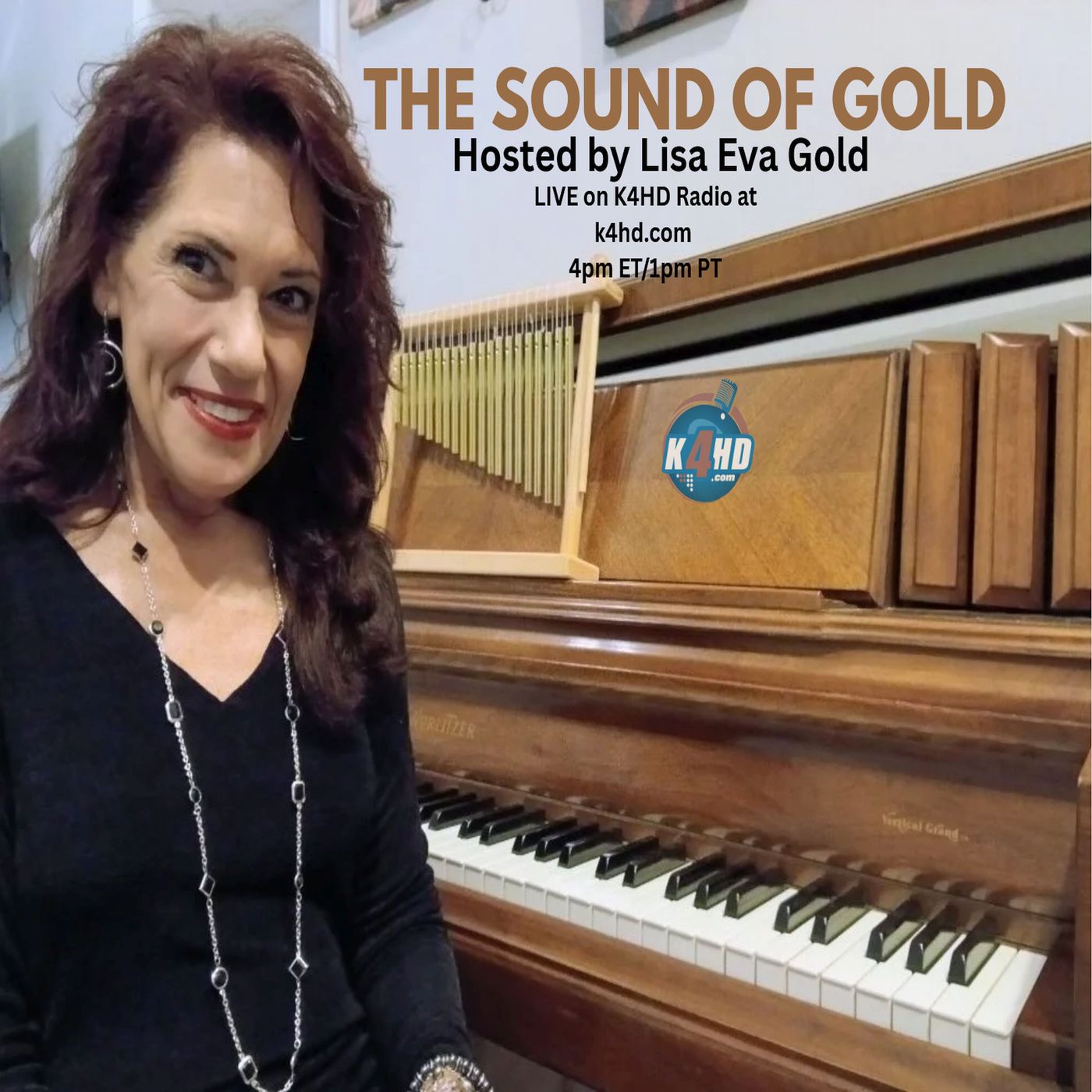
Meet Dave Smith, the creator of Rhythm Skool. Tune in today to learn what rhythm is. How to keep the rhythm going and how to create your own rhythm when playing music. The Sound of Gold is broadcast live Mondays at 4PM ET / 1PM PT on K4HD Radio -...
 iHeartRadio iHeartRadio
  Apple Podcasts Apple Podcasts
  Amazon Music Amazon Music
  Spotify Spotify
  Pandora Pandora
  Deezer Deezer
  Podchaser Podchaser
  Audible Audible
  Spreaker Spreaker
  Podcast Addict Podcast Addict
  Castbox Castbox
  Castamatic Castamatic
  Overcast Overcast
  PocketCasts PocketCasts
  Goodpods Goodpods
  Podurama Podurama
  Podverse Podverse
  RSS Feed RSS Feed
  YouTube YouTube iHeartRadio iHeartRadio Apple Podcasts Apple Podcasts Amazon Music Amazon Music Spotify Spotify Pandora Pandora Deezer Deezer Podchaser Podchaser Audible Audible Spreaker Spreaker Podcast Addict Podcast Addict Castbox Castbox Castamatic Castamatic Overcast Overcast PocketCasts PocketCasts Goodpods Goodpods Podurama Podurama Podverse Podverse RSS Feed RSS Feed YouTube YouTube
 Meet Dave Smith, the creator of Rhythm Skool.
Tune in today to learn what rhythm is. How to keep the rhythm going and how to create your own rhythm when playing music.
The Sound of Gold is broadcast live Mondays at 4PM ET / 1PM PT on K4HD Radio - Hollywood Talk Radio (www.k4hd.com) part of Talk 4 Radio (www.talk4radio.com) on the Talk 4 Media Network (www.talk4media.com). The Sound of Gold TV Show is viewed on Talk 4 TV (www.talk4tv.com).
The Sound of Gold Podcast is also available on Talk 4 Media (www.talk4media.com), Talk 4 Podcasting (www.talk4podcasting.com), iHeartRadio, Amazon Music, Pandora, Spotify, Audible, and over 100 other podcast outlets.
Become a supporter of this podcast: https://www.spreaker.com/podcast/the-sound-of-gold--6696013/support.
0:01 This program is designed to provide general information with regards to the subject matters covered. This information is given with the understanding that neither the hosts, guests, sponsors, or station are engaged in rendering any specific and personal medical, financial, legal counseling, professional service, or any advice. You should seek the services of competent professionals before applying or trying any suggested ideas.
0:51 Hi, welcome to the Sound of Gold. Welcome back, and if this is your first time here, welcome, and of course for all of my listeners out there yet as well, thank you for joining me today. I am so excited. You know. I love doing this, not only because I have fun just showing up for you, but my whole goal is to keep music alive. Music is always around us. It's all around us. So many of us play instruments, so many of us just love to listen to music, go out and see live venues. And for those. Of you that already know me and those of you that don't, I'm a music teacher in Palm Beach Gardens, Florida, and actually as of today i'm it's spring break in Florida, so I am out traveling, visiting elderly family, and so I get a different setup today and so no matter the show goes on right. So, with that being said, being a music teacher music is at the core of my being and it is such an honor to be a teacher and to fire others to learn music and.
2:02 How to play music. Today, specifically, I have a very special guest tuning in from the UK, and I'm so excited because there's so much to learn from my guest, mister Dave Smith, who I know is backstage. Dave, would you like to join us? Is coming on? And Hi, bunco, Hey, how's it going? Good? Good? And Dave? I know Dave and I have been communicating via email and I connected with Dave through Rhythm School and me being a teacher, I'm also a student and so I love learning from other teachers because that inspires me to be a better musician, and it inspires me to be a better teacher because the more I learn, the more I can share what I'm learning with my students. And Dave, your Rhythm School, you have so much that you're offering right now, and there's gosh.
2:58 I think the best. Place to start is tell us a little bit about your journey what inspired you and from what age did you begin getting involved with being a musician. Sure, I'll try and be kind of brief so I don't take up, but yeah, I mean, I guess I came from My dad was a little bit musical, played piano, but he was always tapping along the steering wheel, and you know, I'd. Kind of copy him. And then I formally started playing drums when I was like just before the age of nine, okay, And yeah, I just fell in love with playing drums and percussion.
3:40 And I'm from place that's kind of northeast of London, a couple of hours called Orange and the county Music Service was really strong back then and there was just loads going on, so you could have like lessons, free lessons through the county and so I was having percussion lessons and drum kit and then some private lessons as well, and like in school, but also playing in bands in school in high school, but also lots of kind of county groups as well, and there was a real community of people all really passionate about music and hanging out and young people like people older than me, but also same age and a bit younger, and it was just really inspiring and when I was sixteen, I was very lucky to get a music scholarship to a music school for two years, and that was a classical music school, but there was also kind of chazz happening there. And then I applied to music colleges, so I kind of went through that kind of route.
4:55 And at music college, I mean that was really cool. I'd never really spent any time in London, and then all of a sudden, I'm in London and I saw Elvin Jones in the first week, Who's the Drummer with John Coltrane playing at Ronnie Scott's. You know, there's all these jazz clubs, and there was just lots of gigs going on and it was really really inspiring. And yeah, some of the people I was at college with I'm still playing in bands with today. So that was a really important thing to be in this big community. And share music with different folk. But yeah, I was in my last of music college and I managed to kind of join this trip, this three week trip to West Africa.
5:41 Okay, so up to that point, I just I've kind of. Gone really heavily through kind of bop and then got brillly into kind of sixties model jazz and then had just started to get into some more avant garde stuff and I found myself in the Gambia in West Africa for three weeks. This is like twenty twenty, just over twenty years ago now, and in this village where there was just this amazing this wool Off village where there was Sabah drumming, s A B A r M and all the towns from Tabla so and so there was this kind of big vocalization of rhythm and I got to see like the all night wrestling matches with these rhythms going and the kids playing and lots of dancing, and it was just really inspiring.
6:40 So lots of movement and vocalizing and drumming, and I just kind of came back. I was kind of confused about the music. It was pretty crazy, and I didn't have I wasn't I It was kind of like just join in and play play along. And actually there was a point where I thought I was in the groove and then I looked at the dancers feet and I was like, oh, I've got this upside down. So yeah, I mean, I mean I was in the groove, but it was it was like I didn't understand the frameworks and exactly how that music worked. So when I went back to London, I kind of started this journey of really discovering what it was all about. One of my mentors, Barrick Small, kind of directed me to some some reference points. I was doing lots of samba training in London, so I kind of it was this ye jazz drummer, but kind of branching out into world rhythms and yeah, so I've always and from that point, yeah, I mean that's really at the heart of the teaching in Rhythm School and the Rhythm Academy. It's embodying rhythm and feeling rhythm from the inside out rather than this kind of the theory of what it is and maybe marrying those two worlds so we can.
8:02 Kind of I love that reference. Yeah, and yeah, I mean I could go on, but I yeah, the thread it really as there's a thread through everything, of course, but I feel like that had that had a really big impact. I was also doing a lot of kind of free improv and working with electronic processing, and I got really into sound and trying to almost reproduce some of those electronics sounds that were being my drums being processed, but in live situations without the processing, So really trying to explore the tombre of the symbols and the drums and actually kind of marrying that world of the classical percussion a little bit where it's really about producing sound and the intention in your playing.
8:54 And so I'm kind of bringing a lot of that stuff in, like the actual the musical application of what we do. Amazing it. Yeah, finding the magic in the in the sound and the rhythm and connecting connected like a big thread through all of this is like how great music just kind of is about connecting and connecting. Yes, absolutely, and that's some that's. So I am. A couple of weeks ago, I had Christopher Maloney on my show and he he had lived in Florida. I'm tuning in from Florida and him and his wife they had moved to uh, Portugal, Okay, So when I had chatted with him even before the show, and I've said this before on my show just in general, music is a universal language. And I've never been to Africa, but I can just imagine the authenticity and the as a musician, there's that inner soul that just draws you in to that rhythm because even though I play a piano and i've played since I was five, there is this heartbeat.
10:04 I do not play drums, so I can say my timing might be as great as yours, but but I know that the drums is the heartbeat of rhythm. Yeah, I kind of feel like we're all we're all drummers and we're all singers in a way. It's just we've put these constructs in front of us that stop us from actually doing those things, you know, And it's so kind of innate for us as humans to be making sound and communicating and using our voice in different ways. And so yeah, what I introduced with the Rhythms School is exactly this. So I'm working. It's not for drummers, it's for all musicians. And it's a simple combination of combining your voice using kind of rhythms with your voice subdivisions, using your your voice to say different rhythms or sing different parts, and then your your clap as like your in book percussion.
11:10 And then we do it do the stepping on the pulse, which is. Just grounding us. And you know everyone everyone can walk in time. It's just when you start adding stuff you know, that's when that's when things start falling apart. So it's I think the most important. Thing for any musician, whatever level you're at, is to know exactly where you are and what if you're working on something that it's the right thing to work on. So you're kind of growing from the same kind of trunk, do. You know what I mean? Your roots. We've all got our roots in some way, what we listen to, what we're passionate about or attracted to, what we like to move to, what we like to play, and then you know that's us and then so to always reference that in some way is the most helpful.
12:04 Well, it's a best way to stay. On track and actually have fun because I think you know, in this world where we're served like all these different ads for you know, it's so true, crazy stuff and you're like. Wow, what's that? I need to do that? And then you're like, oh, hang on, what's this over here? And you can get so overwhelmed, but actually all you need to do is is maybe just do the next step from from where you're at. And that applies to pro musicians as much as it does to begin us. You know, it's true, it's very true. Victor Wooten says, he's a good friend of mine. I hope to get in Mama Show one day. He says, when we're young, when more babies.
12:46 You know, and mom and dad chat with us. They talk with us, and we learned to, you know, speak back, and we learned to like they don't. They don't correct us. They kind of like babble along with us until we've figured it out. And he kind of says, music is the same way. You know, you should be able just to sit and play without being restricted. And as a teacher myself, I sometimes feel I feel like I betray my own self because I focus on a lot of foundational theory because I think that as a teacher that's a good place to start. However, I'm almost like a critic of myself because if you get to know the instrument and you play freely, nobody taught you or myself when we were kids how to play. Mom and dad were just like, okay, they spoke to us, we spoke back.
13:40 They gave us toys and they'd be like, okay, play for an hour. Well you know, we're going to do our thing. But they can tell us how to play. You know, so now ours musicians were like, all right, here's the instrument. We're going to tell you how to play. It's like, yeah, it doesn't make sense. Yeah, No, it's a funny one, isn't it. Because I've heard a story before like, well, what if you if you just allowed kid to play piano, just gave that to them to do for like a year, no instruction, You probably have some crazy kind of technique of some you know, but it would be amazing what they come up with. And it's this idea that there's a right way and there's the wrong way, but there's systems right and you know, if you're teaching theory, there's a there's a system. And but I think what what's interesting about kind of the learning process is it's almost the full circle is kind of not unlearning, but yeah, just kind of releasing yourself from these or these these kind of what you think are really important. Well, actually it all goes out the window when you play, because you're just got you really want to get to a point where you're in flow if you're trying to get the flow. But you know, working on technique allows you to go off.
15:00 And yes, and I have this saying for students that have been with me for quite a while, I'll say, Okay, now, once you know the rules, then you know how to break them. Yeah right right? I like that. Yeah so, and feel free to take that with you. But it's true because once you're in it. For my musician listeners out there, we know, once we're in that state of flow, we do break the rules because we can because no two musicians are going to sound exactly the same, because we have our own little zest or our own little spice that we add. To our playing. Absolutely, if listeners out there who may not be watching, because we have a scroll on the screen on how to contact you through Facebook for our listeners, how can listeners tappen and connect with you? Because your emails that I get are phenomenal.
15:58 Oh thank you? Yeah, Well, my email address is info at Dave Smith drums dot com. That's one way of getting hold of me. Yes, like Rhythm School, like the school platform skool, that's where I've been since September. I've been running the kind of rhythm academy and mentorship for five years, but since September twenty five, I've been in Rhythm School or on the school platform and I have a free community called Rhythm School, and I've got some resources in there, and there's it's really cool. There's like there's over a thousand musicians and there's a map and you can see where everyone is and they're they're just all over the world, which is great.
16:43 Oh, I love that. Actually, can we for my musicians that are established and that are growing and that want to connect and. I don't want to. I don't know all of our listeners, so I don't know if this may go over maybe too much, but but I think it all comes together. I think it's never too much if you just stay in the game and it eventually all connects. So what I want to get at is, I think even presently your email that you sent out today, specifically you talk about and you talk about. The compass, the map compass. Maybe that's what you just refers, but you yes, but you go into you said something so clever about and being that my husband and I have been traveling. Its spring break, so we're traveling visiting with family this week, and what you said in your email made me. I used an analogy and I'm like, well, if we're driving and you know the road is windy, we kind of have to go wind with it. If the road's going to go down the hill, we have to drive down.
17:51 If we're going up, we're going out. And so with your rhythm. With the email that you sent today, I'm like I related it and made this analogy. I'm like, well, it's like music. The road is like music. It just you have to I think it was clever where you said when the music shifts, you want to notice it and kind of pay attention to it and shift with it or with it. Can you can you elaborate more on that? Well, I think there's a you know, it's really an important skill to be able to play with the metronome, the click, and it's very you know, it's really good for our timing, you know, but I think we we a lot of musicians will you know, they're relying on the click and they want they're striving to be metronomic, you know, have having great time as being metronomic. Well, actually, there's there's more things going on than that. So within within you know, when you're playing with other musicians, unless you're all on in ear is with the click, and then okay, then you're you're locking in with the click, but when you're not on the grid like that and you're actually making music with other people, or maybe you're playing a piano piece that's kind of got a lot of movement in it's not rigid in that way, so it's about feeling the pulse and and moving.
19:12 You know. The beat isn't like just one place as well, Like the beat is this kind of rounded it has you know, you could there's the back of the beat in the front of the beat, and people position themselves in different ways, and there's a feeling that comes with that. Sometimes it's an urgent, sort of pushy feeling, and sometimes it's a kind of sloppy feeling, and so it's it's you know, and you're like, well, what is that? You know, and it's like it's a mystery really because it's not really in books, right, there's nothing going okay, And now we're going to do some beat practice, it's like or even the rhythm, and so we we have this idea that oh, I've got terrible time because I'm just you know, I'm always speeding up or whatever, or I don't have a good sense of rhythm, and actually, you it's just there's we've all got I believe a good sense of rhythm.
20:05 It's just when there's things that get in the way, and. What would that be. Would it be a distraction of another musician? Would be our thoughts would exactly? It could be an internal thing, It could be an it could be something a rhythm that someone plays kind of makes you push forward, you move forward, but it's actually kind of a cross rhythm where it's something you don't understand. So this sense of subdivision and pulse gets a bit blurry, and then when you re establish it, it's like, oh where am I? You know, And it can be a small thing that happens, and or it could be a bigger thing. I yeah, you could then have a dialogue inside going up.
20:49 Well I've just. Complete, and then you don't know where you are. I think sometimes when there's like a change in section, you get your nervous system kind of tightens and then you're like you you're you're almost like going towards it quicker than it's arriving, you know. And so this set for speeding up is just to kind of or you know, you might rush a fill, or it's it's a react, It could be reactive. It doesn't necessarily mean you you've you've got. To that you've messed up. Yeah, what it says when you mess you know, if you play a wrong no, just it's not. Wrong as long as you change the note that follows it, not to make it right.
21:29 Yeah, I mean there's there's there's a level of like letting go as well. It's like I played a wrong note and let's let's not worry about that. And and so then if you've got if you've got that attitude, which is very hard to adopt, you know, yes, because then you then you don't have this like feeling like everything's gone wrong. We have a tendency as humans have kind of lean on the one percent negative and pull that to the front. And it's like rather than celebrating the ninety nine percent, you know. So I think all of all of that is plays plays in it. But yeah, rhythmically, having and what I teach is connecting to your pulse, the pulse the subdivision which are those beats inside between two pulse notes, between two quarter notes. You might have eighth notes, you might have sixteenth notes, you might have triplets, and really understanding how those subdivisions feel, and then phrasing rhythm, so getting to know how different rhythms feel against that and in relation to the pulse, So so you can have a clearer picture of what's what's going on, and how would you how.
22:40 Would you even share with us more unsyncle patient because you do mention that as well. Yeah, yeah, offbeats and syncopated rhythms. I was talking to it to a student today about syncopation, and you know, even the way we call it off beats, like it's off that even the language around it has this kind of tension, you know, and they're used musically. The effect of off beats is to. Create tension, rhythmic tension, just like dissonance is like harmonic tension. So their devices to create yeah, movement in the music and emotion as well. But we can get caught up in that, you know, And I think that's not that we don't we want to be completely detached from the emotion of the music, but we want to stay grounded underneath, so not lost with the with the rhythm, even though we're playing syncopated off beats.
23:47 We want to stay grounded. And then you the way you do that is to really understand how that feels actually feels in relation to the beat, the pomps however you want to call it, the timing, the under lying and yeah, and once you get confident with that, then it's or understand and have a relationship with it. Then then you have that trust element and it doesn't feel so like you know, and those everything can sit a bit more and relax. You said, you said a couple of words that really triggered me to think and to share there. I tell a lot of my students, especially the little ones, when they're playing the piano, I said, okay, well, you are not only a musician, you are the magician because you are creating with sound.
24:39 And so you had mentioned magic, and it's true. Once we sit down and we flow, we allow ourselves, we trust ourselves in that space, in that place to kind of flow without restriction. It's quite beautiful when we're able to play there. There is. There There is musicians out there that play and they don't think twice about maybe the note or the words because it just comes naturally. There's this part of the brain and I wish I had the time to do more research on this because for me, this is not about me. But I'm making a point for me to sit and play. They call me the instant composer. I just can sit and play freely. But if you and and you can give me sheet music and I can play, but a different part of my brain takes over. And the same thing is with musicians who maybe are new to their band or are new to.
25:40 Timing. It's a different part of the brain. And to marry the two again, I think there needs to be more research done because I think it's more simpler than we make it. I think as humans, you know, we're afraid of rejection. We're afraid of It's almost like going to being invited to somebody's house for the first time and you're so particular are about you know, you don't want to step in the wrong place or sit in the wrong place, or you know. Or rejection. Yes, we're so afree of the rejection that we get caught up in that and that we limit ourselves as musicians and as creators. So yeah, I mean, it's just.
26:23 I totally agree, and but it's actually having a way in like what's the way in, yes, to to then be okay with situation, this new situation with these different people. And I do like the idea of like, well, the main thing, number one thing is too is just to try and like have a sense of togetherness connection, And it's not always the easiest thing to do, but like if that's part of the ingredient of not just like I'm just and I play my part really well, put my head down and do my best, you know.
27:04 It's like, yes, that's that's important. Well, tell us a little bit about your your own bands. Other than being a teacher. You are a musician, so you get together with groups of bands and it is I mean, it's collaborating together as a band, as as a family. You're playing different instruments, you're bringing in your own energy. Share with my audience a little bit about what that's like for you as a musician outside of just you know, of. Being a teacher. Yeah, playing lots of different situations. I think that that maybe as a drummer, it's easier to go to this place of having an awareness of the group. You know, often drumas are kind of yes, they're providing some kind of time and rhythm, but there's also this kind of shaping the bigger picture of maybe the piece or the you know, from beginning to the end.
28:02 Of the song. I like to think a bit like that when I'm playing, like a like a producer, like Okay, I've got my part, I'm just going to hone in on I really, I really there's some there's some things that help with with this that I've kind of picked up along the way. And actually last month in Rhythm School, I ran a listening workshop and so just when you're listening to music, and this can really help. Like how you sit in an ensemble is to listen. When you listen to music, listen from the perspective of different instruments. So try to just focus on on one instrument. You can start with your instrument, you know, but then move to other instruments.
28:47 And yeah, one question I was inviting people on the first listen is is just notice what instruments are playing, so not putting too much pressure on yourself. As well to like know everything. This is really important. But this was a nice little exercises like Okay, what instruments are playing and some of the tracks there was like lots of different percussion and like that was quite you know. So we were picking up the instruments on the third listen, like, oh I noticed a tambourine that time, and then like where in the the kind of mix in the sound picture are those instruments sitting And so this is another tool to think about, like you know, it's not just about playing the notes, it's like where those notes sit in the mix of and and just tuning in to this stuff is informs you're playing immediately.
29:46 It's like Victor Wooton was saying about the osmosis of just being around you know, so you're kind of absorbing the music. But it's not like theory in a way. It's like just noticing where things are sitting, what sounds you're hearing, and from there you could go full analysis and start transcribing stuff. We actually when this was to do with it's kind of pulse where the different layers of pulse might be heard, and counting like how you might count the tracks and approach trying to to get more inside the group. Undo. But yeah, the starting point was to actually listen, so I in all the different situations I play in there's a sense of that, Like how I think you get Once you can feel comfortable with your sound, it's much easier to connect because part of this is on the sonic level. There's of course there's like the notes and the rhythm, but there's also just the mix.
30:54 Yes, and it's so true. I started taking lessons when I was five, and I wish that, I wish I had different training for the fact. I wish I learned this then or back then then to teach it now. I guess that's why I'm a teacher. Yeah, exactly. Yeah. When I was growing up and for many many years, even though I played piano, to listen to a band and I love music, but to listen to a band in my head and for my ears, it was miss if I stood inside a garage and listened to a whole bunch of like banging pops. And so for somebody to want that, one said.
31:35 To me, And I don't remember the first person to listen to the different like what instruments do you hear? That kind of stopped me. In my tracks to be like, oh wait a minute, I'm not standing in a garage listening to a bunch of pots being banged on, you know, And and to separate them each and then and yes, the energy that each musician brings to the instrument is going to be a little different, but it's I mean that's a little bit more. But yes, just to focus on the instruments, keep it simple and take it from and grow with that, and grow with that, because we absolutely make it even for myself, I still make it too difficult for myself, and it's just easier to tear it all down and just small small pieces all chunks.
32:23 Yeah, for sure. So Dave, we have just well we're going a little bit over on time, and that's okay, but tell us tell our audience again how we get in touch with you? And I know, I think I recently saw you have a special for seventeen dollars on a class that you're offering to check out. I don't know if you're still offering now. I'm not sure if that link's working. That was for a or is that past maybe it's pasted. No, but that that that rhythm workout that I was afer seven dollars seventeen dollars a while back is in rhythm school. It kind of unlocks at level five.
33:04 It's slightly gamified, so if you engage in the group, you only need five points, which is like really easy to get, but then that unlocks and it's a really nice little kind of twenty minute workout, and it's a glimpse at what we do. In the premium. I've got a tier, Like I said, there's the free group, and there's some there's the Rhythm Journey in there, and there's we meet on a zoo like a zoom type call twice twice a month, a rhythm hangout, so you can bring questions and I usually do a little exercise and those replays go up in the groups. So there's loads there's loads of free stuff, and then this find your Groove workout unlocks at level. I love that I have to do.
33:46 Yeah, and then we've got a there's a paid tier, which is forty seven dollars a month. That's very reasonable, yeah, and I mean it includes quite a lot. There's a there's a couple of workshops in there which are kind of broke like mini course workshops, one of which is kind of a little deep dive into those rhythms from the Gambia that I talked about the beginning of this conversation. And there's a lot of rhythm workouts like twenty minute they're like, you know, turn up to the yoga class kind of vibe, you know, and you just kind of you can do it longer. You can also go through and press pause and try it at your own tempo. And there's there's lots of resources in there.
34:31 And then there's also a live call once a week, and then I run these workshops monthly and so with the premium membership you get all of all of that stuff. Yeah. So the next workshop is a week today and it is based on the Deep Groove Compass, which is a kind of way of looking at rhythm. We touched on it earlier. You had mentioned the email. Yes, from the. Perspective of pulse, of time, of rhythm and connection, so I not pulse pulse some time the same thing on the side, time or pulse feel is the other one.
35:15 So there's feel, there's time, there's rhythm just kind of off like we were talking offbeats and phrasing and connecting. So and yeah, kind of it helps. It's maybe more of a like a holistic. View of rhythm. So it's not just one thing, yes, actually kind of the combination of lots of different things. A lot of different branches. Yeah, a lot of different branches, just like harmony and melody. Right, it's not just as you can start out with with you start out with one melody, but then you can you can view that same melody from different perspectives. And I think that's the thing, right, Yeah, can you can rather than adding more and more stuff, actually look at the same stuff. Maybe you had a bit more stuff looking at the same stuff through a different lens. I like that from a different perspective. And that's kind of what the foundations are like, which is why pro musicians work on foundational stuff all the time, because it will mean something different and bring something else up for them, because like you said, we're all individual and we're all on.
36:30 We're always Yeah. So in closing, I'm sorry, I don't mean to cut you off with a kind of I mean, my second season and I have a lot. Of I've lost you. We've had some storms here. Are you able to hear me now? I can hear you now? Yeah? Wonderful, wonderful. I know you're tuning in from the UK and it's been such a pleasure to have you here. In closing, I wanted to ask you if it's possible. I know there's a long answer, but maybe making it more brief, you share with our audience as brief as you can what is rhythm?
37:13 What is rhythm? In a nutshell this, this is a great question. I'd want to answer something about time and space. You know, the space between two notes. And as soon as we play more than maybe even counts to one note, but you know, it becomes apparent that there's this space between two notes, and and that is measured in some way with our ear first, how we hear it? Yeah, I have to think about that one more. It's answer rhythm, tempo, melody, the harmony.
37:55 They all come together. And they're all join to create the most beautiful music, but separately they all have their own purpose and and it's yes, I think even as a musician myself, it's it's hard to define, just specifically. In a small in a small sentence, what is rhythm? Yeah, I mean I think of melody. Although I'm playing drum kit, I'm thinking of melody a lot, yes, and reacting to harmony. But yeah, I think, you know, if you were to break it down, it's, you know, for for melody, you talk about the pitch between two notes, and I think for rhythm it's the space between those two notes.
38:41 And then the quiet space between the two notes. I think also has a. It's like being in our vocabulary when we speak and we pause between our words, there is an energy there and could that could that rhythm be part of that, that space that you're. That you're just as important as the as the statement. Yeah. Yeah. You can feel like suspense or it can feel very resolved and relaxed. Yes, yeah, and I love the uh. In closing today, again, I want to say thank you for tuning in from the UK and joining me about your welding school. And it's just there's one last thing you mentioned. Feeling an emotion because of our of who we are as human beings, and because we can express ourselves through an instrument. If I can't feel what you're playing or singing, I can't hear you, is what I tell my students.
39:50 Because music is feeling. Yeah, so and that is and. That could be the rhythm of it. I mean, I don't know, there's there's so many different answers. I think, Yeah, when we're when we're transmitting, when we're playing, Yeah, when it's being played not just practiced or worked out, when there's actually that production of sound. And well, Dave, thank you. We'll have to we'll have to get back to back to that question and and if you come up with something, I'd love to hear what you what you have to say. Thank you so much for tuning into Yeah, thank you having me. Yes, Yes, it's been my pleasure and I look forward to continuing receiving your emails and checking out more what you have on the Rhythm School A s K O O L.
40:40 Yes, awesome. Yes, Google Google it and you'll find Rhythm School. Yes, it's not hard, it's not hard. Dave Smith. Drums dot live is where I've got some info about who I've been working with over the years, including Robert n and my project in West Africa. And it's not the most up to date website, but there's some info and that will send you to Rhythm School as well. Okay, wonderful, lovely, thanks so much. Yes, and I will I will be in touch and best of what best of luck to you and all that you do, and I'm sure we'll connect again soon.
41:22 Cool. Thanks taking Yes. Yes, thank you. My listeners join me next week to help me keep the music alive. I'm not telling you who my guest is yet. Next week I have another great. Guest that's going to focus on music and learning. This is Monday, and it is March sixteenth. Wherever you are in the world, whatever you're doing, I hope you've had a very blessed, peaceful day. Mondays can be the start of a busy week, so please take time out to take care of you and to take a time out every now and again. Thank you again for tuning in today.
42:32 Forward to seeing you. Actually you'll see me next week at four pm Eastern Time. The Sound of Gold one pm Specific time, and wherever you are in the world you can't tune in and then listen, you can find me online The Sound of Gold. Okay for HD. And thank you, Thank you for your support. No O


