
The Sound of Gold with guest MaryAnn Rothschild

 iHeartRadio iHeartRadio
 Apple Podcasts Apple Podcasts
 Amazon Music Amazon Music
 Spotify Spotify
 Pandora Pandora
 Deezer Deezer
 Podchaser Podchaser
 Audible Audible
 Spreaker Spreaker
 Podcast Addict Podcast Addict
 Castbox Castbox
 Castamatic Castamatic
 Overcast Overcast
 PocketCasts PocketCasts
 Goodpods Goodpods
 Podurama Podurama
 Podverse Podverse
 RSS Feed RSS Feed
 YouTube YouTube iHeartRadio iHeartRadio Apple Podcasts Apple Podcasts Amazon Music Amazon Music Spotify Spotify Pandora Pandora Deezer Deezer Podchaser Podchaser Audible Audible Spreaker Spreaker Podcast Addict Podcast Addict Castbox Castbox Castamatic Castamatic Overcast Overcast PocketCasts PocketCasts Goodpods Goodpods Podurama Podurama Podverse Podverse RSS Feed RSS Feed YouTube YouTube
Tune in today to meet MaryAnn Rothschild! She will share with us her musical journey from owning a music school, teaching violin and music theory, to influencing her fellow music teachers. As previous president of Palm Beach County Music Teachers
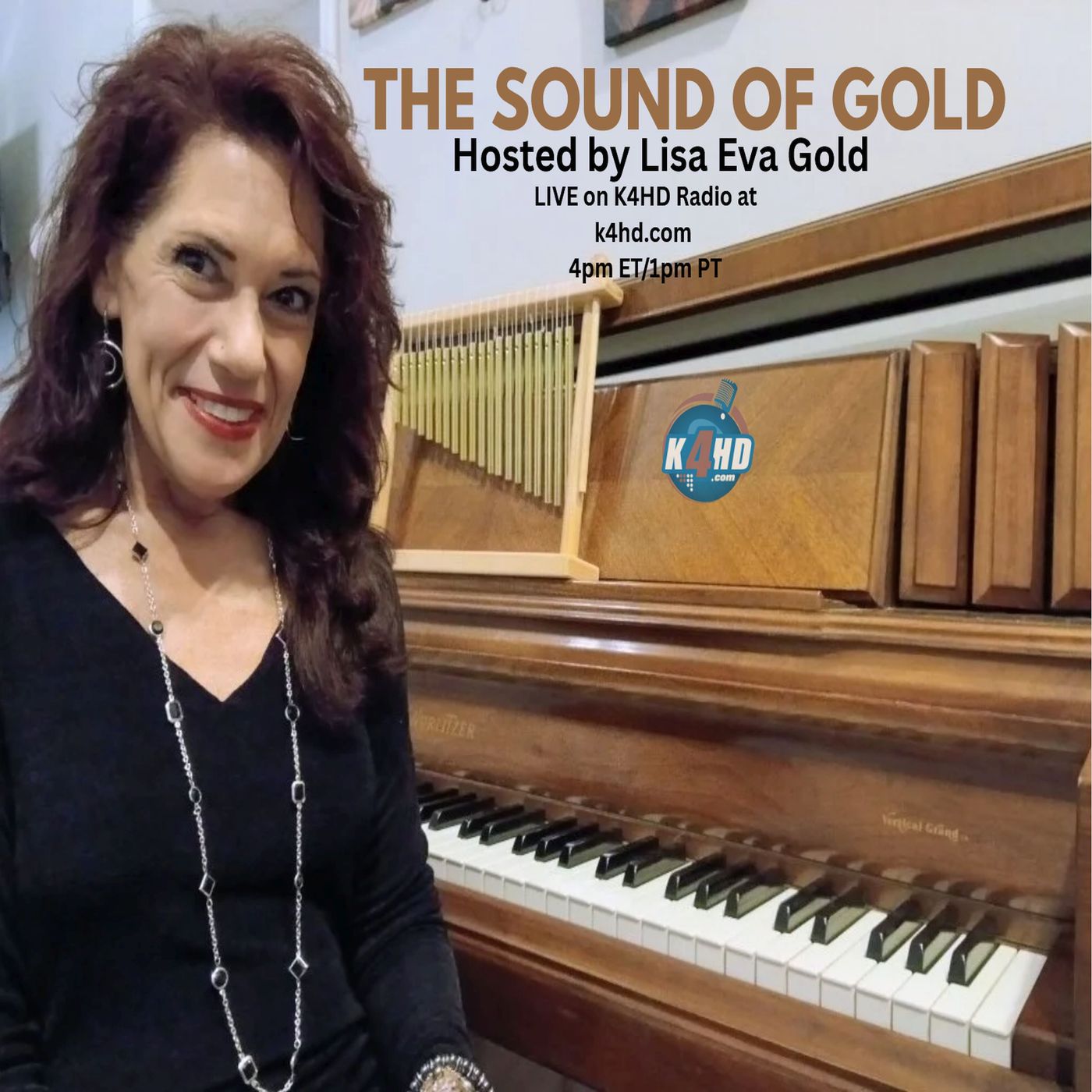
The Sound of Gold is broadcast live Mondays at 4PM ET / 1PM PT on K4HD Radio - Hollywood Talk Radio (www.k4hd.com) part of Talk 4 Radio (www.talk4radio.com) on the Talk 4 Media Network (www.talk4media.com). The Sound of Gold TV Show is viewed on Talk 4 TV (www.talk4tv.com).
The Sound of Gold Podcast is also available on Talk 4 Media (www.talk4media.com), Talk 4 Podcasting (www.talk4podcasting.com), iHeartRadio, Amazon Music, Pandora, Spotify, Audible, and over 100 other podcast outlets.
Become a supporter of this podcast: https://www.spreaker.com/podcast/the-sound-of-gold--6696013/support.
0:21 Hi, welcome to The Sound of Gold. It is so great to be back here with you. I'm here in my home studio with my cat Callie and here at my keyboard, my favorite piano, which is the vertical Wurlitzer. And there are all kinds of different pianos. And so I don't know what your favorite is, but this is one of my favorites next to a Steinway. I do love the Steinway. I don't own one of those yet, but maybe, maybe one day. Thank you for tuning into The Sound of Gold. If you've been here before, you know our topic is all about music, musicians, music venues, music teachers, musicology, and anything in regard to music. And I love the fact that I get to do this for you. And I love every week I have such talented guests on my show. And before I welcome in my guests or share anything about it, if you are out there and you're thinking about playing an instrument, learning an instrument, just take the first step and sign up with maybe a teacher or try an online course. Music connects us with the world. I mean, music, Music unites us universally. Music is all around us, whether it's the wind in the trees, the birds singing, the music we hear in an elevator or at the store. Music is just magical. And I've been involved with music for over
1:51 45 years, and I've been teaching for over 20. And it's Monday here. We're recording. It's the end of a workday here in South Florida. Whether you're tuning in live today, or you're tuning in another day, I just want to welcome you to the show with just a brief Monday melody. And if this is not Monday when you're tuning in, whatever day it is, may it be that melody for the moment. And just sit back and relax and take a deep breath and let it go. Give yourself a break. © transcript Emily Beynon.
3:19 I truly believe that as a human being we get. To live in this world and I don't know if you think like I think but everything is frequent everything is vibration we we vibrate at a certain frequency emotions have a lot to do with frequency and vibration and I don't know any better way to decipher or or quote-unquote uh mention what dynamics are with music but it's it's a frequency it's an emotion and when we think about where we are and what we do on a day-to-day basis and what we surround ourselves with we believe it or not are connecting to our own frequency and i don't want to go too deep into that too deep more into that but i am so blessed to have such beautiful connections around the world with musicians and music teachers. And I believe that our frequencies, our vibrations connect us with each other. It is such a joy and such an honor to have my most beautiful guest on today.
4:27 I have Ms. Anne Morasek. Anne, I know you're sitting behind the scenes and can't wait to join me. Please come out and join me and introduce yourself. There's so much we have to talk about. Hi, Lisa. This is a delight. Thank you for having me today. Absolutely. Absolutely. And Anne, there's so much about you and there's so many great new things that have surfaced recently. Before we get into that part, which is the really exciting part, which not to knock off the other part, but. I would love our audience to kind of be introduced. To who you are, how your journey has led you to where you are and what you've done in music. Absolutely. I think I was born a musician. I was born knowing I was going to be a pianist and a composer. And I nearly flunked kindergarten because of it.
5:18 There was a piano in the kindergarten room and all I wanted to do was learn to play it. I refused numbers. I refused letters. And I was very stubborn about it. My kindergarten teacher did not see this as an asset. She wrote a letter home to my mother saying, if you don't get this child in piano lessons, I will flunk her from kindergarten. If I still had the letter, I'd frame it. Oh, that's so funny. I did start in piano lessons when I was five. Okay. And early on, it was quite apparent I was a prodigy. I was composing by six. I was running my own music studio and teaching by 14. And at 15, I had Schumann's Piano Concerto in A minor memorized and ready to audition with an orchestra. And my teacher was actively pursuing that career for me. Two weeks after my 16th birthday, I was in a horrific car crash.
6:14 Oh, my. And my C1 vertebrae, the atlas, which is the highest vertebrae, was crushed. Yes. And doctors didn't expect me to live. And at best, they said I was going to be a paraplegic. Wow. And I simply didn't accept the diagnosis. Sure. When someone shows up on your porch with a box of snakes, don't sign for it. Yeah. Yeah. Right? And I just had this internal power of hearing the music, visualizing nature of my choosing. Okay. And so as I lay in bed... tears filling my ears, quite literally. I was imagining myself performing on a stage.
6:56 Okay. I was hearing myself singing. I'd been taking dance lessons all these years as well. I was imagining I was dancing the jitterbug and I could feel the heat of the spotlights. I could smell the sweat of my dance partner. I could feel the shin splints in my legs from dancing in high heels. I mean, this was a very real place that I would escape to. And while I was there in this imagined future, I was not. In any way. And then something would happen. Someone would call my name or whatever, and I would return. And the pain would come roaring back like a freight engine. But each time, a little less.
7:37 Nice. And pretty soon I could lift my arms and dry those tears out of my ears. And I began to sit up in bed and I learned to walk with a cane. And I went back to high school with a helper. I couldn't sit down. I couldn't look down. But I could stand at a podium and listen and have someone take notes for me. Sure. And all the time I kept going to this future place, hearing the music with that consistent, steady beat. visualizing myself fully healed, grateful, and excited performing on stage. Beautiful. Two years after the auto crash, I was cast in the show called Jute Box Jubilee at Six Flags over Mid-America.
8:22 Oh, fun. Six Flags St. Louis. Only two years later, I was on that stage. I had envisioned singing and dancing, dancing the jitterbug, and singing the song If a Picture Paints a Thousand Words as my solo. Wow. Coincidence? I think not. No. And that experience was foundational to my knowing the power of spirit, the power of visualization, of steady beat, and of using that internal knowing and the sound of that music and the feeling of that steady beat as a healing practice and tool. Of course. One of the things that your audience probably should know too is that I'm the great grand niece of the Czech composer, Antonin Dvorak. You're probably familiar with his new world symphony.
9:12 Yes. It's his ninth symphony. And so I grew up with everybody saying, Oh, she, she inherited the gift. Right. So for me, music was just my reality. It was who I am. It was my way of being, it was my way of emotionally expressing and relating to the world. And, um, So I'm now a functioning person again, right? At 18 from the wreck at 16. And it's time now to go to college. Okay. And my father was of the opinion that girls did not get an education. Girls got married and had children and they did not need an education. And he says, I'm not spending money on a daughter. So I proceeded to make his life miserable until he relented. He was like, okay, four years, but not one second longer. Well, I was desperate to get a master's degree in music theory and composition.
10:14 So at that point I decided that, I would get my bachelor's degrees in three years and my master's in one, including composing my symphony for my thesis. Wow. So I signed up for 25 hours of classes my first semester at KU. And that was the entire freshman year. And I got a call into the dean's office and he's sitting at his desk and he leans over and he says, young lady, I cannot allow you to do this. So I just leaned in and I said, you know what? I'll make it. If I don't make the honor roll this semester, you can tell me to slow down next semester, but you have to let me try.
10:57 Yes. And I don't think anyone had ever, especially an incoming freshman, been that determined and that bold. And he kind of leaned back and his face changed and he went, well, okay. And I'm sure he thought he'd won that bet hands down, right? But I made the honor roll that semester and every semester. And I was able to finish the bachelor's degree in the three years. Okay. And the master's program, which is a two-year program of classwork, and then most people take a third year for their thesis. Yes. I did the whole thing in one year. Beautiful. Yeah. I've learned that so many people underestimate what the human spirit is capable of. But it takes the lesson from music of the steady beat, of the consistency, of the mindset of the concert pianist, which is we practice until we get it right. And if we have to repeat it 20,000 times, then we repeat it 20,000 times. You do what it takes, right? Yes. Right. But you always do it with joy and gratitude and love in the moment.
12:00 And that vision of who you are becoming in the journey. Yes. And isn't it so true? Hold that thought. I don't want to go off the rails too far. But it's so true. We get so caught up in the here and the now. And you've got to get it right. Got to do it right. But it's really, it's in the becoming that we're like a plant. We need to nurture our own spirit. And we forget that. Absolutely. Yeah. And we have to have a spirit of gratitude every day. I would say, isn't it wonderful? Isn't it wonderful that I have this opportunity? Isn't it wonderful that I have been given this gift of this four years rather than being bitter.
12:48 Right. And say, what do you mean? I only get four years and fighting. Right. I was because I was at certain points convinced I wasn't going to get the opportunity at all, but I was going to have to work my way through very slowly. Right. Okay. Like waiting tables. And people do that. And you can. It's doable. Yes. But I was very grateful for the gift of the four years that I did have. And I was going to optimize that opportunity in a very joyful, happy way. And to the extent that when I wrote my symphony, symphony number one, Shadow Dragon. Okay. When I was a little girl, my parents fought. They had a very adversarial relationship.
13:30 Okay. You know, plates breaking, the whole thing, the whole nine yards. And I would hide with my head under the covers more nights than I can even remember. And my imaginary friend was always a dragon. Yeah. And I always used to wish I had this dragon that would rise up and stand in the doorway and protect me and be my safe place. Beautiful. So I named myself the shadow dragon because I felt like not only did I finally have the power within me to protect myself, but that I had risen up in my own. I love that. And around how old would you say you were? Do you think? Well, I started college at 18. So I finished at 22.
14:12 But that, that shadow dragon. Oh my goodness. My entire growing up. So toddler grade school, junior high. Yeah. It, that was my that was my escape. I would imagine that I had this beautiful red dragon that would stand. Up and protect me. And yeah. You know, I, I don't, this, this show is about you. This is not about me. So I don't want to go to me, but I want to, I want to piggyback off of what you said about like your journey through, through healing and for audiences out there. And again, not, not to get onto my stuff and my story, But in relationship to what you're sharing, I can relate in so many ways. And, you know, it's not easy, even not having to deal with an ailment or an injury.
15:05 It's not so easy to stand in our own power and own it. And congratulations to you because you stood in it, especially when you were going to college later on. And, you know, it's almost as if you have this how do you say this? Not parade, but you have, you have this, this wisdom, this knowing this, these guides with you that are standing beside you being like, yeah, we're not letting, we have a gift to bring to the world and there's nothing that's going to stop us. So move out of the way. And I always did have that sense. I spent a childhood.
15:48 I'm an only child. And I was in a generational gap. So I had no cousins anywhere near my age. They were all married with their own children. They were just being born as infants when I was in high school. And so I learned to connect up. I learned to communicate to what I called divine consciousness. Yes. The great creator. Name your word. And that's always the place I would go when I compose. I've always channeled me. That was part of the real reason I wanted to learn to play the piano in kindergarten, because I was already hearing all of this music flowing through me and I needed a way to get it out. I needed a way to learn to write it down, to express it. Yes. And if you go to my, actually, if you go to my YouTube channel, you can hear what you just called Anne Moracek. Very simple. I have over 300 of my original compositions online. available for free on my YouTube channel, as well as Shadow Dragon, my symphony, so your audience can go and listen to any of those.
16:47 Now, we have an audience that's watching us now, and we have an audience that's just listening. Those that are watching can see the scroll underneath our screen, but those that are maybe driving or not watching, could you spell your last name so they're able to find it? Well, Ann is A-N-N. Yes. Miracek. M-R-A-C-E-K. It's like frankincense and myrrh. Myrrh, ah, just an A. And then Czech, like you would pronounce Czechoslovakia. It's C-E-K. So M-R-A-C-E-K. Okay, nice. Thank you. And also, while we're talking about our listeners, I compose meditations as well. And they have my original piano music that I have composed to the specific frequencies and rhythms to emotionally entrain the mind into that alpha state where we do the most work when we meditate.
17:46 And you can go to my website, symphonyofself.com, and you can download a free meditation there. So that's a gift that I have for your audience. There's also a find your frequency quiz program. that you can take that lets you evaluate where you are emotionally, what your personal resonant frequency is and where you're resonating. And that's also available for free at symphonyofself.com. While you brought up Symphony of Self, there is, congratulations. Thank you. You received Author of the Year 2026 for Symphony of Self. Yes. And would you, I know you have another book before this book. And then maybe we can share a little bit of the journey as to your previous book to this book, the differences and how you and I could talk for hours on this subject, but we only have so much time today. So if we can break it down and just talk about the vibrations, the frequencies. So I'm asking you several questions all at once.
18:57 I can take it from there. Absolutely. So In 2024, I published Unpacking the Attic, A Path to Healing Your Inner Child. And that was written in real time as my parents asked me to empty their home for resale and they transitioned into an assisted living apartment. The items from my childhood being literally brought out of the attic one last time triggered my ability to remember long suppressed and forgotten childhood experiences. And I. was able to go back in time, relive these childhood traumas, and reframe them now with new adult perspective and the intent to heal and forgive. And I realized that so many of my adult anxieties had actually been written from these childhood traumas. I had always carried a very negative self-image of I'm not worthy of being loved. I was always trying to earn and prove myself. And I realized- Which many of us do. Many of us do, right?
19:56 I remember the time when I was visiting my grandfather's house. Actually, this happened multiple times. And he would only say two words to me, sit down. And point to his red velvet couch. And he and my parents would go off into the kitchen. I'd smell cooking. I would hear conversation. In what seemed an eternity, they would finally come back in the living room. He'd sit in his big overstuffed chair. I want to have it, actually. And smoke on his Meerschaum pipe. And it still faintly smells of the cherry wood smoke he would fill the room with. Oh, wow. Yeah. And as you know, smells really trigger a memory. And this is one of the things that was brought out of the attic. Oh, wow. Look at that. Beautiful pipe. It is beautiful. And all I ever wanted to do was sit on Pop's lap, and it never happened.
20:41 And even into adulthood, when I was teaching piano to a studio full of students, I would take all my students to his nursing home and we would perform Christmas carols, hoping that I would finally have that conversation after the concert with Pop. Aw. He would leave before the end of the concert and not come back and lock himself in his room. Aw. So I never had that conversation. That's great. It was for me. And as a child, I had internalized that as I'm a bad child. Pop doesn't love me. I'm not worthy of love. And I was chasing after that all the way into adulthood. It was affecting dating relationships, all kinds of things. This feeling of having to prove myself maybe a people pleaser. And I wasn't, you know, there's so many complications there.
21:28 Sure. And then when I wrote Unpacking the Attic, I was able to go back in time and and contextualize it. And I realized Pop's heart was locked down because he was in grief. My grandmother, his wife, died in her 50s of sugar diabetes, and he never recovered from it. And as a child, I couldn't say, oh, Pop is shut down and he's grieving. Children think everything's about me. So when I was able to then recontextualize it with forgiveness for Pop, It completely transformed the story that I told myself about those experiences. Sure. So I ended up writing a letter to Pop. And what I wanted to do was yell at him. But eventually what I said was, I'm sorry, we're broken and I forgive you. And I put the letter in a green ceramic bowl to represent his big overstuffed chair and I lit it. And as that smoke rose, I had this flood of goosebumps and this feeling of unconditional love.
22:26 And I'm convinced to this day that that was Pop raining down his love for me. And it completely rewrote my internal dialogue. It freed me of all of that guilt, anxiety, self-doubt. And that is just one of 50 chapters in Unpacking the Attic, A Path to Healing Your Child. So fast forward, that book has now won 28 awards. Excuse me. Beautiful. And one of the awards that won was the International Impact Book Awards. And I met Nim Stant, who is the director of that award. And she said, okay, now we've got this fabulous first book, time to write the second. So I just, the healing practices I'd learned from unpacking the attic and my lifelong language of music together as two puzzle and wrote Symphony of Self, Compose Your Life.
23:16 And in Symphony of Self, it takes the 15 laws of music. Okay. And turn, Sorry. And turns them into a system you can actually use to create the life you really want to live. Go ahead. I mean, can we review the 15 laws? I mean, can we break it down briefly? For example, I use the analogy of the key signature. For those of you who aren't musicians, a key signature is a set of sharps or flats. It is an instruction that sits at the front of every staff of music. The audience never sees it, but it predetermines all the notes that are available to the composer and the emotional context of the song before a note is played. So it's the underlying system, if you will, upon which everything is built. And we all have an internal key signature. So, and I, that is actually your core beliefs. What is the story you tell yourself about yourself? And that was the the thing that I rewrote with the story of pop.
24:20 Okay. I went from, I'm not worthy of being loved to I am unconditionally loved and I'm a powerful spirit and I have control of my own destiny. I don't have to chase after someone else's approval. My approval comes from within, from me. And it also connects up to my creator. That's where my approval lies. That's where my self-worth lies. I don't have to look for it outside. It's been inside all along. Yes. So, That's one example of how the principles of music can be related to your life. Another example is steady beat. When I was healing myself from that C1 trauma, I was consistent. I never wavered. I went into that state of visualized reality of a future self that I wanted to be and to live every single day, multiple times a day. I practiced it over and over. And I lived in that space. And that's When there was a disruption, when the pain came back, when there was a setback, I just considered that what we call in music a syncopation.
25:25 The steady beat was disrupted, but I gave myself the skill set to come back to my internal knowing in that steady beat. So when you can verbalize and name it, it's, oh, that's just a syncopation, right? And that is just there to show us what things need to be resolved. So we can look at syncopations as our friend. They're pointing a spotlight on things that need resolution, places that you point your attention to further your soul's journey and your path down toward that imagined future where you want to be, right? So we can use that as information to guide us back into our internal study. And Symphony of Self now is a little bit different. One is self-help, but it The category is actually experiential self-help. At the end of all 15 chapters is a QR code that you can click with your phone. And it takes you directly to a 10-minute guided meditation with music that I compose to the specific frequencies and rhythms to emotionally entrain the teaching of each chapter. So it moves you from understanding into a felt experience. And that's where transformation lives.
26:38 Absolutely. I want to. I don't want to cut you off in your thought and what you're sharing, but there's so much I want to share back. And I'm going to go back a. Little bit to mentioning, you know, sharing with unpacking the attic and your grandfather and certain trauma. I don't remember. I don't know if it was my daughter that I told this to, or if it was someone maybe in her eight. My daughter's 29 now. So I think in the years, some years past, I remember having a conversation with saying... You kind of, you grow up and you learn in your 20s that you look back and be like, for many of us, I would like to say, I think most of us, we look back and be like, oh my gosh, like there's so much in my childhood and how do I make sense of it? And then we spend the rest of our lives trying to maybe relearn perceptions and relearn how to look at the world and look at ourselves. And most recently I've been learning too, and I continue to learn, you know, a lot of times our thoughts, our perceptions on something, like you have to like almost double ask yourself, is that really mine?
27:45 Or was it something I learned along the way? And trauma, you know, going back and all of us have dealt with some type of trauma. If you're a human, you've dealt with something. And we, I think a lot of us, and forgive me if I'm over speaking for the human race, but I believe a lot of humans out there disregard the fact that they've had some kind of traumatic experience. And instead of dissecting it and letting it go, more or less, in forgiveness and just letting it go for yourself, they internalize it. And I think some people can become angry or unsettled and just, oh, I don't know why I feel this way.
28:29 Or they have ailments. So for the audiences out there, really Don't be afraid of yourself. If things are surfacing, like Anne says, there's, and I believe, I haven't read your book yet, but I am excited to, and I will. There, you know, if there needs to be a shift, allow it to happen. Absolutely. Allow yourself to rise. And I wanted, I also wanted to mention, I most recently been using this as my uh, in a lesson, my dynamics with my little kids, because the word dynamics, a young child doesn't really know. Okay. It's just what the teacher is saying, but instead of using dynamics, I'll say, use your emotion.
29:14 What does loud feel like? What is soft? What does medium loud feel like? So when you talk about key signatures, you know, it's in the key, there's like 12 basic keys. If you consider the sharps and the flats and, um, But there are, if you hone it down to just seven white notes and seven keys, most people can relate to that. And I think. I don't know, I grew up as a musician. So forgive me for my audience if this sounds Greek in some way. There's basically, on a piano, there's seven white notes. So usually with my students, I'll start with just the sound of those seven white notes.
29:56 And in a key signature, depending on which key. Note, There's either there's it's either neutral like C or there's going to be sharps or flats depending on where you are. So so I love that your book goes into really delving deeper in that and relating it to the human spirit of our emotional well-being. Exactly. One of the chapters is actually about rest, which we need music. Rest is not just the absence of sound. It is a necessary component to the score. It allows for the phrase that we've just heard to settle. It creates the space of the breath for the singer. And as a pianist, it allows you to look ahead and place your hands on what comes next. So there's several things where we're allowing one thing to settle and rest.
30:46 And we're looking ahead and preparing for the next beginning. And that rest is an essential part of the music. It's an essential part of our human spirit and our soul as well. We need to have processing time. We need to have time where we let an experience be reflected upon and let it land and let it rest, which is why writing Unpacking the Attic had to come before I was able then to move on and write Symphony of Self. Unpacking the Attic looks backwards. Retrospection can be a powerful healing elixir. Absolutely. So healing. Symphony of Self looks forward. Music is the owner's manual to reality. And symphony of self hands you.
31:28 I want to ask you, because I'm a writer myself, as well as a musician and piano player. You said, I don't have to repeat how healing writing is. What did you uncover for yourself? If this is too vulnerable to share, I understand, but maybe on a surface level, what did you uncover for yourself in writing yourself? unpacking the attic and then writing Symphony of Self because they're two different chapters of your life. Right, they certainly are. Yeah, what did you learn most that you could share with the audience that would have maybe an impact on our listeners? Yes, I think it reminds me of a story.
32:08 Okay. When I was little, I used to be strapped into the back car seat. This is before we had shoulder straps in this, but we had the seatbelts and I was strapped back in. I was a toddler. My parents would be fighting as is per usual. And they would get into the worst fights when my dad was driving. Okay. Don't know why, but that was a trigger point. And at some point at a stop sign, my mother would get out of the car, slam the door and walk away. Now I'm a toddler strapped in back, watching my caregiver leaving. Oh, not ever knowing if she was ever going to come back. Oh, and knowing my father had never been my caregiver. And I thought I might die. Right. Right.
32:48 That's, So I internalize that as anyone I love will eventually abandon me. That was the story I told myself. Fast forward, I'm now married to my beloved Richard. And he had a job at one point where it was causing him to work late because he was in marketing and they had print deadline. So he would call and say, I'm going to be working late. Now my mind went to, he's leaving me. It's over. I'm done. He's abandoning me. And I didn't know where that was coming from until I wrote unpacking the attic really gave myself permission to go back in time and to relive these things, not as a repeat of the trauma, but as a lens to, am I still writing my, my future life and my current life with as a child and with a kazoo, am I now an adult conductor in charge of my life?
33:47 Right. And I, reframe that and tell myself a new story about these circumstances and tell myself that it wasn't about me back then. Right. And that just because I had a certain experience there, there's no reason to pull that forward into every relationship that comes later. Right. I'm going to hold that thought for one second for our listeners out there. If this resonates with you, like allow it to, because you just hit a nerve for me. And again, this show is not about me. It's about you. But I want to connect with you. Growing up, my dad. Was an airplane pilot. And when my parents fought, my dad would threaten my mom and say, like, I'm calling work, which he would do, and be like, I'm getting on the next flight out of here.
34:31 And I mean, you just healed me. So for listeners out. There, if you've experienced something like this in your past, yeah. Like, it is. A wound that needs to be healed. Absolutely. It had nothing to do with us personally as children. Right. And yet as a child, you don't have the wherewithal to contextualize and to distance yourself from the emotional experience. That's not within the child's capability. So it's up to us now as adults to be the conductor of our own life. Yes. Pick up the baton, right? A conductor doesn't fire the brass section for being too loud. He tunes them down.
35:12 He makes it manageable. Right? Yes. We have to have the bigger picture. The conductor is the only one with the whole score. He's the only one that can see from the piccolo down to the bassoon and the string bass. He sees the entire score. So we need to learn where we focus our attention. If it's time to bring in the flutes, I'm not looking down here where the strings are. I'm looking up here. Direct your attention to where it's needed most. Conduct your life. Take control. Don't let life happen to you. Have life happen through you and from you. I usually say be your own parent.
35:52 Absolutely. Captain of your own ship. Be your own manager. Like who else is managing? Like you're the only one that lives there. Like, like own it. Yeah. Step up to the baton and take, take up, you know, tap, What am I trying to say? Step onto the podium and hold the baton. There we go. And I also wanted to say this. I teach a 10-week course, Symphony of Self Method. Symphony of Self is trademarked. And it is a interactive course where you course materials and a workbook and a study. And we alternate between you doing your work and then coming back to me the next week. And we go through the homework together and we talk through everything. So it's study, live, study, live. I'm also hosting a retreat in Sedona at the Sedona Mango Retreat Center.
36:40 It's February 26th through 28th. And this is a very exclusive experience. You really want to dive into the Symphony of Self Method and work with me. Surrounded by the beautiful Red Rock Mountains of Sedona and the Energy Vortexes. It's a magical place. It is magical. And that's only open to 20 people. And I'm gifting anyone who signs up now. With $ 1, 000 off, and if you sign up with a friend, if you come as two, I will give each of you a $ 250 check when you arrive. So that is a bonus for your listeners, for anyone who wants to dive further and really learn to be the conductor of their own. Pose their life with attention because it's free. It's empowering. And if you're feeling like, is this all there is to my life?
37:29 I'm overwhelmed. I'm out of control. There is a language there. There's a vocabulary that I can teach you with rhythm and harmony and distance and occupation that allows you to truly become the composer of your own life. I love that. I love that. And I have to say, I'm sorry. What is it? Symphony of self.com. And you can get all the details. I want to apologize to my audiences out there. I have cats. If you've not tuned in before, it seems like when I have a show, The cats seem to feel like they need to stay awake. And especially my orange tabby Charlie, he's got to run around like talking throughout the house. He feels like he needs some fun to show.
38:11 And I want to ask you, you're offering it to 20 students. Now, at a different time, me personally, I've signed up for something along the same lines, a different focus. that's in Sedona, but I'm not physically going to Sedona. So they've offered virtual ticket. So are you going to offer virtual tickets or no? No, not at all. This is because it's vibrational. It's frequent. You need to be in the space. We are going to be experiencing a night under the stars. Yes. Sedona, right? We are going to be writing letters to someone. Like I wrote a letter to pop. Yes. Which will be very personal. And we're doing in ceremony, we're lighting them in a bonfire. There's experiential things. We're going to be painting at eight by 10 canvas, which is an emotional sitescape. So we're taking a sound bath in a room with the singing bowls and I'm taking everyone through meditations with my original music. So that's not something that you can really do remotely because these are all beautiful experiential things. So we're We're not just doing the class, which there will be, of course, coaching, there will be content, quite a bit of it actually, but it's alternating with three pescetarian all-you-can-eat buffets a day and the community and the spirit of meeting other women who are like-minded. Just like we've enjoyed each other so much.
39:38 There's that connection of community that happens when you get together with purpose and in a loving environment like that. So it's an experience that I want to offer to all. a select number of women that we can get together and really do this work together. So there is a form to fill out on symphonyofself.com to see if this is something that you would be interested in. I even have a full color, beautiful magazine that I put together that I can send to your audience if they're interested in the experience. Wonderful. Wonderful. And I want to mention, you know, um, We're in this space, in this place, in this world, in this universe where we are rising above. We are the light. We are the love. We are overcoming the darkness and the negativity. And we're allowing more of that to come to fruition, if that's the right word to say.
40:30 And I think for listeners out there, if you haven't taken any steps to do some type of inner work, inner healing, the idea of joining a group of ladies or unisex, whatever whatever, is scary, is scary. And if you feel like trepidation or timid and not sure if you want to show up because you're afraid of maybe being judged, being vulnerable is the most beautiful place you can go. And to just know that everybody's coming from that place. It's not easy for anyone. Right, exactly. And knowing that you have someone that has been through it.
41:12 Yes. Because I know what pain is. I had a painful childhood. I had a near-death injury. I have overcome many obstacles in my life. And it gives you a depth of understanding and compassion that, for me, is something that I want to gift with others. I want to gift to others. So if there's someone in your audience that feels like, oh, she doesn't know, I know. I've been there. I've lived it. And there is a path through. And to be in a loving space where you're fully supported and integrated is a wonderful gift to yourself. It truly is. It truly is. And like you, I mean, or I mentioned earlier in the show, everybody, you know, everybody's got stuff that we've taken with us. In fact, I had a conversation last night with my husband. I said, anything that happened to us as a child, if it's not healed, we take it with us. It's like love it.
42:10 And you need to work through it for yourself, not for anybody else, but for yourself to find that peace and that love within, because that's where it's at. It's from inside. And once you, once you learn to love yourself, think of how much more you have to give to your partner. To everyone that you interact with, right? When we become whole and healed, we have this abundance that we want to give. And as I like to say, Hurt people hurt people. Healed people heal people. Yes. Which space do you want to be in? Raise your hand if you want to be a healed person. That has the passion and.
42:51 Love to heal others, right? That's the space we want to all move toward. Absolutely. And we have about one more minute, two more minutes. I'm sorry to cut you off. I love you dearly. You are such a blessing to me. I wish, like another friend I met, through online. I wish we were neighbors. We have so much we can sit on the porch and chit chat about. For our audiences out there, please tell us one more time while we're live, how they can connect with you. The best way is to go to my website, symphonyofself.com.
43:31 That's the easiest place. There's a contact there. There's information about having me come in to speak for your organization. There's the retreat. There's the online course. There's both books, Unpacking the Attic and Symphony of Self, and my children's book, Friendship Flies the Sun. Just a wealth of information where you can dive in and find out more about me and contact me. So highly recommend symphonyofself.com. That's S-Y-M-P-H-O-N-Y-O-F-S-E-L-F.com. All one word, symphonyofself.com. I can't wait to read. It, honestly. Thank you. We will be in touch, Anne. Thank you so much for making the time today. And for my audiences out there, tune in again next Monday at 4 p.m. And if you're watching the recorded version of this, tune in when you can. And in the meantime, allow.
44:24 Music to be your healing source. Help me keep music alive because. We are the healing source. so so


