
The Sound of Gold with guest Tobias Hamilton of Hamilton Piano

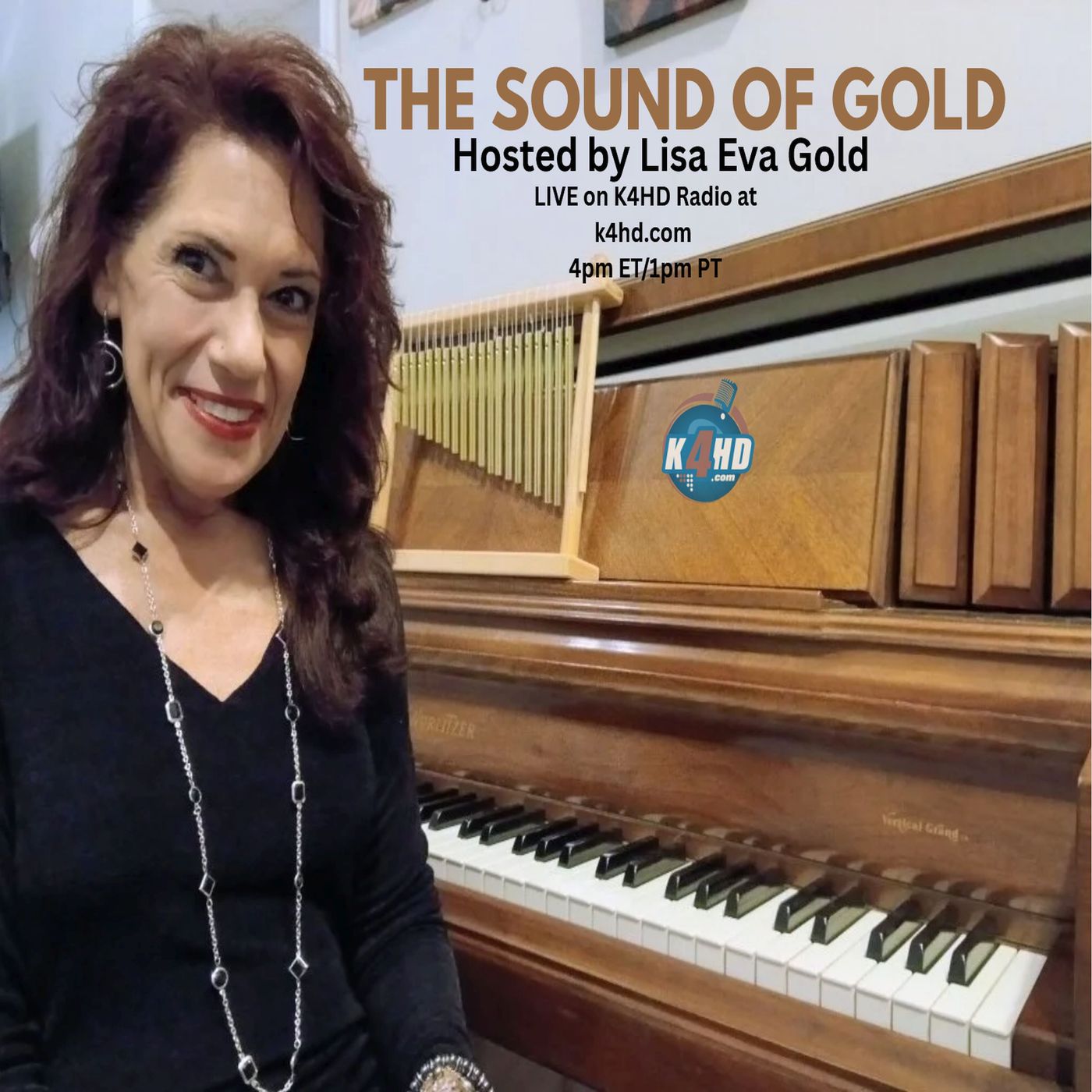
The Sound of Gold with guest Tobias Hamilton of Hamilton Piano The Sound of Gold is broadcast live Mondays at 4PM ET / 1PM PT on K4HD Radio - Hollywood Talk Radio...
 iHeartRadio iHeartRadio
 Apple Podcasts Apple Podcasts
 Amazon Music Amazon Music
 Spotify Spotify
 Pandora Pandora
 Deezer Deezer
 Podchaser Podchaser
 Audible Audible
 Spreaker Spreaker
 Podcast Addict Podcast Addict
 Castbox Castbox
 Castamatic Castamatic
 Overcast Overcast
 PocketCasts PocketCasts
 Goodpods Goodpods
 Podurama Podurama
 Podverse Podverse
 RSS Feed RSS Feed
 YouTube YouTube iHeartRadio iHeartRadio Apple Podcasts Apple Podcasts Amazon Music Amazon Music Spotify Spotify Pandora Pandora Deezer Deezer Podchaser Podchaser Audible Audible Spreaker Spreaker Podcast Addict Podcast Addict Castbox Castbox Castamatic Castamatic Overcast Overcast PocketCasts PocketCasts Goodpods Goodpods Podurama Podurama Podverse Podverse RSS Feed RSS Feed YouTube YouTube
The Sound of Gold with guest Tobias Hamilton of Hamilton Piano
The Sound of Gold is broadcast live Mondays at 4PM ET / 1PM PT on K4HD Radio - Hollywood Talk Radio (www.k4hd.com) part of Talk 4 Radio (www.talk4radio.com) on the Talk 4 Media Network (www.talk4media.com). The Sound of Gold TV Show is viewed on Talk 4 TV (www.talk4tv.com).
The Sound of Gold Podcast is also available on Talk 4 Media (www.talk4media.com), Talk 4 Podcasting (www.talk4podcasting.com), iHeartRadio, Amazon Music, Pandora, Spotify, Audible, and over 100 other podcast outlets.
Become a supporter of this podcast: https://www.spreaker.com/podcast/the-sound-of-gold--6696013/support.
0:00 Professional service or any advice. You should seek the services of competent professionals before applying or trying any suggested ideas. Hi, Welcome to the Sound of Gold. If you're new, welcome. If you're returning to our show, welcome back. My show is basically The Sound of Gold. We focus on music, musicians, music venues, music teachers, music schools, and I'm located here in Palm Beach Gardens, Florida. My studio is presently in my home right now. That's where I am airing live for you. And I I am a piano teacher as well as a radio show host. I've been teaching for over twenty years in Palm Beach County and it's just something I've been doing for a very long time and I love I love doing. I want to start off by talking about instruments. And I've played violin, I've played guitar.
1:23 I've settled with piano, and I don't mean settlers in. I guess you can take that different ways. But my love my piano, My instrument is the piano. That's that's my instrument, my go to And you know, when I have opportunities to play at venues sometimes there is not a piano, and I have to bring a keyboard, and honestly, it's not my favorite thing to do because there's nothing realer than is that even a word realer, there's not, There's nothing realer than the piano itself. I mean an acoustic A digital piano sounds good, doesn't need to be tuned, but it doesn't have that quality that sound as a piano does. And today I'm so excited to welcome Tobias Hamilton from Hamilton Piano out in West Palm Beach. Tobias, Hi, how are you good?
2:16 How are you doing? I'm doing well. Thank you so much for making the time today to be here on the show. Thank you for having me on it. This is really going to be fun. Yes, yes, it will be. It is. It is fun. There's so many questions I have for you and for our audience out there. I know you've had a studio and I've known you for gosh, I've known you over twenty years. And you know we have similar friends or that swim in the same pool that we swim in. And I don't know if that's weird to say, but I use that analogy. But you know, we have this family this nit close. Knit family of musicians, and it's extended out to even people I don't know, or maybe you don't know either, But where you started, I remember your studio and where you are now.
3:09 It's just such a bigger transition and the studio you have. Please tell us a little bit about it. Tell us exactly where you're located and how people could find you, and I have so many questions. Sure, So we're located in West Palm Beach, just one block north of Forest Hill, on the east side of Congress at sixteen fifty six South Congress Avenue. It's called Palm Springs, but do West Palm Beach you'll find us faster. And yes, you're right. We did start in two thousand and eight with a small twenty two hundred square foot shop, and we were doing that during when the crisis was the economy was at its worst. But I still decide, hey, well I'm going to try this because I was kind of tired of working out of my garage and my father's garage. So I opened up and grew into sixteen thousand square feet and then after that I bought this building five years ago, and uh, now we're up to thirty employees just about and uh, we just keep growing and growing, and we are a fourth generation company. My grandfather taught my father and my uncle. Uh, and then I taught my son. My nieces are here, my daughter's here when she's not in college. And the no one in my family had ever opened a shop. They just kind of kept their businesses separate and worked out of their own homes. But I wanted to, you know, try it and see and I my dad says.
4:32 Don't do it. You'll you'll, you'll, you know, the overhead's gonna kill you. And I said, yeah, yeah, yeah, you know, I'm gonna try it and see what happens. And I said, I'll try it for a couple of years if I if I fail, I fail. If I don't, I don't. And we didn't fail. So you know, we're we're doing good and we're trying to get back to the community in the senses like you know, we have our you know, we do recitals. Eventually we want to add a recital hall and a recording studio and things like that, uh, because we have the property to do it. And that will happen when I don't know, but you maybe the next time we do a video like this, well you know, in a few years we'll have it started or whatnot. But yeah, basically we wanted to do stuff that no one else has done before.
5:16 That's why we do a lot of customs with nice. Now do you play piano? I do, okay, so, and I know. I wouldn't say very well. I took lessons as a kid from age four to twelve, and when I was about ten years old, you know, I kind of didn't want to do it anymore. But I was the son of a piano tuner, so it took me a little bit of time to tell my dad to get the nervous say Dad, I don't want to do this anymore. So finally when I did, he said, you'll regret it, and I said, yeah, sure, I'm twelve, you know, of course I know more than him. And then as time went on, I do regret it because back when I was younger, I could pretty much play almost anything if you put the sheet music in front of me.
5:58 But I got back into. Playing the piano when I was learning how to tune pianos, because to break myself from the stress of learning how to tune a piano, I would just start coming up with my own music. And that's what I. Did and that's what I play. So it's but that's how I got back into playing. So I want to go into talking about the instrument itself. But before we even do that, you mentioned a couple of times piano tuning. So what there audience out there? There may be people that own pianos that do not own pianos, But the idea of tuning a piano, what is it that you use, what is it that you listen for? And I know piano tuners, each one is a little bit different.
6:38 There's more than one way to tune a piano, like there is a skin of cat and for instance, the way I tune a piano is different than the way. My father, my uncle, and my grandfather did. There's devices out there, electronic tuning devices that can be used. You can do it orally, you know where you just use a tuning for can set your temperament and then go through do your. Octaves and unison. But what technicians have to look for is basically your intervals, your partials. And setting a temperament. And if you use an ETD device, that's good to you, but you still have to rely on your ear just because it's a double check. And that's where I think the best tunings come in is because not only do you have a visual check, but you have a hearing check, and you.
7:21 Put those two together. You can't get any better than those two. If you just relied on one or the other, you know, that's fine too, but having both, in my opinion, is what makes the tuning the best that it can be. So one time, this is some years ago. Thank you for sharing that. This is some years ago when I was I think it was I don't know if it was at this warehouse or the last warehouse, but you had a piano that was Lenny Kravitz's. Do you remember that right? And I don't know if it was that piano or the grand next to it, and it blew me away and I used this. I share this with my students. You said to me, it takes ten thousand and pieces, or this piano is made up of ten thousand pieces.
8:04 Between nine and fourteen thousand parts or in a piano, more moving parts in a piano than in a car. That is just incredible. Now does that go for let's say, like I have a vertical grand Worlditzer. So compared to like a Baby grand or a Grand is it is it just difference in size or difference in the amount of material that's used. A little bit of both. Size. You know, you have different stringing scales, so you may have more strings. You're gonna have more in a bigger piano because they'll put more bass strings in, you know. On longer pianos. It depends to certain manufacturers add more keys to the piano, you know, like a Bosendorff will have extra base keys.
8:47 So it yep. So it just depends on the manufacturer too. All right, And that's very interesting. So what other pianos are companies? Because there's so many. I mean basically, if I would play this piano or a piano that you have in the wordhouse, I mean, it sounds different. Oh that's another thing I wanted to bring up to you is each piano is has their own style. Like I know, like when Doug comes to two my piano, He's like, this is a happy, cheery, cheerful piano. Then like, I've had another piano before this and it wasn't as happy sounding. And when I go and I play different pianos, there's just a different feel to it a different sound, a different a different energy, and I can't as a piano player, I don't know where that comes from, other than maybe the maker.
9:40 So the tone of the piano comes from the hammers that hit the strings, the harder to hammer, the brighter to tone, the softer hammer to mellower to tone. And then you also have the touch of the piano. So the harder the touch, more you have to play harder in order to get the sound out of the piano. So between your different touch and tones is how you get the sounds out of the piano. But it also comes down to the manufacturer. For instance, there are no two pianos that are exactly the same. And you could even take two pianos made side by side and it doesn't matter who made it. They're not going to be the same instrument. And so my father had told me many many years ago before he passed away, that they hooked a computer up to a piano. And this was back when computers are not like what we have today. And it spit out that a piano can produce over one hundred billion different sounds.
10:32 Wow, and the human ear will never hear all of them. It's impossible because everybody plays the piano different. You know, you play pianosmo four timo, you play hard, you play soft, the chords, the you know, everything that you play, the different hammers that are in the piano. So there's so many variations that a piano can produce that the human ear would never hear everything that a piano can do. I love that. I love that. Yeah, it was I think you heard in the beginning of my of my show I mentioned there's nothing like the piano. The digital pianos, the plug in pianos, column plug in, they're they're great for starting out with, but there's nothing like the I mean, I'm not knocking. I think it's an incredible invention, as incredible to have that option because not everybody can afford a piano. Now what you know. On that same note note, if someone were to come to buy a piano from you, is there do you have like a payment plan or do you work with them on a pay scale or is it like a set rate and then you know either it's for them or it's not. I don't know if that's kind of a silly Oh.
11:45 Yeah. We have three different options. One is a rent to own program where they can rent the piano and they can rent it up to six months and whatever their rental fee is goes towards the purchase of that piano or another piano. We have six months no interest or we have twelve months no interest, and that's all in house, uh that we do. We try to. Our job is to make sure our customers get the right piano. It's not about selling a pianos, about making sure they get the right piano. And you also have trade up value. Too, So if someone wants to buy a we sell Roland digital. So someone wants to buy a roll in to start with, and then they want to upgrade to an acoustic piano, then you have trade and value. With Now do you still do this because I think years ago you had you had checked one of my pianos and I was looking to do a trade to upgrade the trade. So do you still do that? Do you still offer that? Like, if somebody has a piano that they want to upgrade, you look at their piano as a trade in option.
12:41 Yep, yep, we absolutely do. And with pianos, whether you're taking a piano in or whether someone is buying a piano from you, and it's being delivered to their home. Is it a set rate for moving the piano or does that is that included in the price of the piano? We need listeners? Sure, so we do charge for delivery. Uh. We have one price for local ground floor. A vertical is X amount of baby grant is x amount. Uh. If it's going upstairs, it's additional. Of course. If it's going out of our. Local area, which is stupid, or to Boca, Uh, it's additional. Uh. And if we have to crane it in which we do a lot of times, uh, you know, or some kind of funky delivery that we we do. You'd be surprised some of the crazy moves that we've done, but we do.
13:31 Uh. You know that too. But yes, we have a set price if it's local ground floor. But if we have obstacles in our way that we have to hurdle, then. Okay, all right, I have a silly question. Now you are to me, and and I'm not saying this for for an ego boost, but I'm saying this as a as a compliment. But Hamilton Piano to me is like the number one music store in Palmis County. I mean, there's there's Bob's Pianos, There's Guitar Center, There's there's others out there which are great, but in my in my mind, sorry, in my world, like Hamlet, there's Hamilton Piano. There's no there's no company like you out there.
14:15 Thank you. I think, I think what we do to set ourselves apart is service first. Uh. You know, I got into rebuilding and tuning and all of that before selling pianos. Uh. And then you know, and. Some of the work that we do at our shop, there's less than maybe fifty people in the country that actually do what we do. And some of the stuff we do nobody does. Because I'm in the I'm the president of the Piano Technicians Guild for all of South Florida, and I go to PTG conventions and I know a lot of technicians. I talked to them from all over the country, even some all over the world. I've had some come to the shop and when I tell them what we do, they are blown away because even those shops don't do that in house. They have to send that out to be done. And that's because I wanted everything in the shop so we could have a quality control with it and know because I've had to.
15:07 Send stuff out before and not. Happy with what came back and which makes my life harder. And so I said, well, we're going to learn how to do this. Some stuff took us five years to get down, six seven, eight years to get down, but we kept sticking with and there's other projects too that we're still doing that We're still in the process of figuring it out how this is done, so that this way we don't have to worry about parts that we can't get, that we can do it ourselves. We have all the machinery between a. C and C machine and a three D printer, and I have a very very good crew. My staff is I'm very very blessed to have them. And so between all of us were we talk about it, we figured it out, and you know, we keep moving on.
15:52 I love that, And it's such a musician's attitude because because as a musician myself, I don't build pianos. I don't, but I'm always and I'm not only a teacher, I'm also a student, right, I'm always wanting to better myself, like I'm my biggest competition. So it's like, what can I learn more? How can I do better. How can I be of service, let's say, to my students and be a better teacher? What you know? So I love that attitude, and I love that you have a great crew. I know you have a lot of family that works with you, and you're very tight knit and all that you do for the community. I knew you had mentioned you were looking at maybe building more in what you already mentioned. But you have so many pianos. I'm kind of getting off off the subject, but you have so many pianos that I believe last time we talked, when I was at your warehouse, you had said that you had almost well I don't know, but you had storage units with pianos in it.
16:53 Still don't remind me. I've got over I've got over nine storage units. I have nine stores units full of pianos, and some are four customers because we do store a lot of pianos, and the rest are all minine. So but I look at it this way, when I purchase a piano, a half a dozen people are going to make money on that pano. So because by the time we have to string it, rebuild the action, refinish it, polish the hardware, so on and so forth. You know, six people all can make money off of that piano. So if I've got three hundred people, there's a minimum of ten years worth of work for everybody here if we never had another customer job. But that's why I have somebody's because we're so busy doing customer jobs.
17:39 We can't get to my own pianos. And when I was first getting into the business because my dad had gotten sick, that's why I got into tuning. My dad had collected like thirty thirty five pianos, and I said, well, that's never going to happen to me. I want to get buy one, get it done and move on. And of course, you know what my father taught me was just do good work and you'll always be busy. And that's that is true because we're always busy, so it's hard to get ours done. But yes, we have I have a piano problem. I admit it. I have a piano problem. But yeah, it's it's one of those things. But it's it's That's how I look at it too, is it's better than kind of having money in the bank because it's future work for for people, and it's an income coming back in the in the back end.
18:23 So with that being said, for listeners that are listening in that maybe have a piano. Now we talked now I mentioned storage. However, there are people out there that have their piano maybe sitting in a garage, or sitting in a non air conditioned storage unit, or sitting in a basement, depending what state. You know, what state they're in in the in the country. So could you share a little bit with our listeners about how important it is to how important the weather is. How would I say the weather affects the piano? I like so Florida. Of course, we have so much humidity out there, and eighty percent of the piano is made of wood, so it will accept that humidity and it will cause problems.
19:08 So the two biggest things that you have to well, I would say three things. One, you have to protect the piano by having it and acclimatize storage unit or in your home and the ac on to help keep the humidity down. Two would be having a dehumidifier system inside the piano because that it will evaporate the humidity and moisture from getting to it, and that prolongs the life of the piano. And three is tuning it regularly because unfortunately, sometimes the piano becomes mistaken as a piece of furniture and it's not. It's a musical instrument and it has to be. A piano is happier when it is tuned and serviced properly. It will start to act up when those when it's not done, it doesn't. It's like what happens when you don't change oil in your car. Well, you're gonna start having some knocking noises. You're gonna have some problems. It's kind of the same thing with the piano.
19:59 And it's actually the least cost the least to maintain product in your home because you only have to tune it down here in Florida once or twice a year, so it doesn't it's not something drastic. Yeah, I've learned to be twice a year person and it's important. I mean, it does make a difference. I hear the difference in playing in my piano and one of them. I don't know if you know Zia's music studios in Jupiter, they always get their piano tunes frequently too, and it just makes it a big difference. Yeah, I'm sorry, but you're right. Because commercial settings you have to tune it more often when you're whether it's a school or a church, concert halls.
20:40 My concert halls, I tuned the piano before rehearsal and after rehearsal, before the concert, and then you do in schools or restaurants or churches, you do have to tune it more often, just because it's getting more than normal use, you know, within a time timeframe. So call me out on this if this is too silly. But a lot of people go out and listen to music, and a lot of it might or not all of it is piano. A lot of times it's guitar. Nine times out of ten you will frequently see a guitar is sitting there adjusting there their strings, maybe because they need to tighten an E or an A, or because they can hear that it's off. So the same similar terminology applies to the piano because of the strings inside the piano. If for the audiences out there, if you have not seen the inside of a piano, please make an effort to get out there and look inside the piano because it's just so amazing.
21:38 You can see as many as you like at my facility. We get free tours. You know, through our shop of you know, the inside and out of a piano, you get to see things you've never seen before. We have very rare. Pianos here sometimes, and yes, tuning a guitar is a lot easier than tuning a piano. There are six strings compared to almost two hundred and twenty, and a piano has twenty tons of ten when it's at perfect pitch, which is a four forty. So you know, sometimes I have to stay for a concert and during intermission I go out and I have to touch up, you know, a few unisons here or there during the concert, just to make sure everything is okay. But for the most part, you know, the tunings hold very well. But there are some artists that are phenomenal and you know, they beat on the piano and it's like, okay, great, you know, but that's what we we do.
22:26 That's our job. So can we can we ask like what is or who who has impressed you the most in your years or maybe most recent years as far as an artist or celebrity, who has been who has impressed you, who's been like an inspiration to you? There are that would be a whole other episode. I have a long list. Billy Joel was super nice. Jon bon Jovi is super nice. You know. Renee Fleming, Uh, she's very nice. We have hundreds of autograph pictures of artists on our wall, and I have four photo. Albums, very thick of autographs.
23:07 I work for Live Nations, so I do a lot of the other big bands, you know, like Bruce Springston, YouTube, Nora Jones. The Eagles, and so I have come. I've been very fortunate that I've heard some horror stories, you know, with some technicians and artists. Uh. And I have had. A few myself, very minor ones, uh through the years. But I've been very fortunate that uh, you know, I was trained by not just my family, but some Sineway technicians and other technicians, and they helped me be the technician that I am today. So you know, something arises, it's a pretty well we know how to take.
23:49 Care of it, because concert works completely different. Than uh, you know in home. You know, tunings and work. But if a problem arises, which things do, or string breaks, what are you going to do? Right? You can't really replace it because the string's not going to stay in tuned because a new string under that tension is not going to stay in tune for the concert, so you have to do what's called splicing a string, and that's very difficult to do. We actually had our last Piano Technicians Guild class we taught a class on that and there's a lot of bloody fingers from everybody trying to tie a string and it's difficult, it really is. So. But there's just certain things, you know, with the concert work that you're trying to tune the piano while they're they're doing sound checks or someone's wailing on the guitar and checking that out.
24:37 So it's a whole different different world. Yeah, And. Is it pretty much in range as far as the frequent the vibration, the frequency of your tuning. I mean, they say the fourth three to two is the best uh tuning to be at. I know, like my pianos four forty, But do you have a range of what you like to tune your keys at? So perfect pitch is a four forty that's what standard for the United States. A four thirty two has come up in the last recently, you know, in the last probably a decade or so, where that's more in harmony with the earth and it sounds better so I've had some artists want me to tune it to that, which I have done. European orchestras or European artists prefer a four forty two because that's their standard. One of my concert halls, the Society of the Four Arts in Palm Beach, we have a nine foot Humberg steinedway there and I keep that at a four. Yeah, it's a beautiful piano.
25:33 It's one of my favorites, and I keep that at a four forty one. So this way it's right in the middle. So at least if they if if it's a European artist, you know, it's not too far from forty two, and it's not too far for you know, the American artists to keep it there because pitch raising and pitch lowering a piano back and forth to change the pitches. We were doing that for years and it wasn't good for the piano. So we keep it at a four forty one at that hall. Okay, all right, and at your at your place right now at the warehouse. I don't know if this is a fair question, Tobias, because I understand before I even befom even asking out of all the pianos you have in house right now, right and someone were to walk in, do you have a favorite that you go to right away?
26:22 Or do you have several favorites that you that you would bring a piano player to first, or you just like just try them all. No, I've got some favorites, of course. I mean you're going to have your higher quality instruments and your lesser quality instruments, just the way that it is, because there's different price points. Your higher quality ones costs more. Of course, we have a beautiful Shimmel in here, that's a gorgeous sound. We have a Petrov that's very very nice. And usually your European pianos are what sounds the best, and it's what I like the best personally. But that's why when we rebuild a piano, we German parts in. We have custom German strings made. We put German hammers in German action parts because that's the best sound that, in my opinion, you can get from a piano. And once those parts all gel as good as the piano sounds. When we first rebuild it, you know, it sounds very very good.
27:16 But as it ages after a new soundboard is in and the strings and everything, and once everything starts to gel together and it ages three, four or five years. The piano sounds even better, believe it or not. So it's just one of those things that that's why we use. You know, German parts. But yes, there are some that I do direct and I show customers the rebuilds that we're doing. Now, for instance, we had someone in yesterday that wants to rebuild a piano, so I showed them a couple of sign ways that we have that we're doing, and so I told them, this is gives you an idea of what your piano is going to sound like if you decide to have us. Do it nice. Now, this is again maybe a silly question, but there are different manufacturers of out there, right, So you have, like you mentioned the German pieces to European piano.
28:06 So you have cars that are made in China, cars are made in Germany, cars that are made in America. They each have different parts, I mean similar parts, but they're made in different countries or they made a little differently. So can we say that it's safe to assume that depending on whether it is a Baldwin or a sin Way or a Wurlitzer or Yamaha. They have similar parts, but they're made by different manufacturers. Yeah yeah, even different from different origins, they'll still use different parts. You know. It could be you can have a Japanese piano with German parks in it, you know where it's they they are selling a brand new piano, but because they put these higher quality parts in, so the new manufacturers do do that also, you know, and you will have different characteristics between the pianos. So, you know, a Yamaha is a lot of people say, oh, I'm not a fan of this piano because it's like this, and I like this when I don't like this, And of course everyone's got their opinions, but for me, it's you got to go by the individual personality of the piano itself, because just because let's say it's a Yamaha, doesn't mean it's gonna be brassy and bright this one. You could find one that's rich and warm sounding, and that's the one that will suit your needs because touch and tone are the two most important parts when you're looking to buy a piano.
29:29 Okay, all right, you know I mentioned earlier in the show, I've known you for a long time. I don't know you, but I you know, we've interacted in the piano worlds, and today having you on the show again, I'm thanking you, and I'm also expressing I love that your attitude is about the service to the customer. You're about You're not about the sale point. You know, there's let's say a seventy thousand dollar piano. I've seen them, you know, and you're not about the price tag. You're about what fits like, what fits with the musician, what fits right for them, where they're happy. And that's such a valuable trait that you that you have as a business owner and that you have as in the music world. And again, I love that you're on the show today, and I hope people that are listening come and visit you, or at least call and schedule a time to come and check out the pianos and maybe try try one or two or see what works for them.
30:35 Or just take a free tour. Just come in for if you already have a piano, you can either upgrade it or if you want to change the color or or whatever you want to do, or just come in and take a tour just to get a better understanding of what goes into it because that's our job is to educate so that if you're looking to buy a piano, you want to know what you're getting into, because we've had so many horror stories of something as simple well as this. A customer get buys a piano and we go to pick it up and we can't move it because as termites, so we can't even put it in our in our truck. We won't do it. We won't take that risk. So you know, and that's just one small thing that could happen with that could be wrong with a piano.
31:18 Okay, So I'm sorry, did I cut you off? No? No, So for our musicians out there that have a piano, and don't mind my cats there there. There. Let's say it's in air conditioned place, a home or or studio wherever. What is the best way to keep a piano clean? Because if you go when you buy all the oils to spray the piano all the time, eventually that stuff builds up and damages the wood. You have a secret that you'd like to share with us about how to keep your in home piano or your studio piano.
32:02 So for internally technicians like we have seven of us that are out on the road can do the internal cleaning that you do not want to mess with because you could cause a problem. But externally, we do have a solution that we use for every piano is different. You have your satin finishes and your high polish finishes, so we have a product that we use for the high polish, but ebony, you know, pianos satin, you could use just a very lightly damp cloth, maybe some mineral spirits, but you have to be very careful, you know, because if you're not careful, you could cause a bigger problem. A lot of people use wind decks for high polished pianos. Do not do that. That is going to make it worse.
32:44 There's not many times we look at the piano and you can see the streak marks and you can see. Everything, and we know that that was youth. For natural finished pianos like yours there, you could use Old English. You know, they have light medium dark. Yours looks like medium to dark kind of tone, you know, So you could use something like that, and you don't just pour it all on. You just take a little bit and kind of rub. It on there. But for the most part, just dry dusting it and very very lightly damp cloth for the most part. But those are some of the things that you can use. Spray and shine is something you can use too. For high polish. Finishes, you just really you want to have a professional do it. Some pianos can't be wiped down. They have literally have to be buffed, like like you buff a car.
33:31 We do that all the time to the high polish finishes to bring that luster back. So there's there's many different techniques with the outside of queinic clean. But those are a few little minor things that you can do. Okay, all right, good to new, good to do. And I also want to mention MTNA, the Music Teachers National Association. I know that you've opened your facility for us. I mean, you know I'm on the board. But you support the community and you support new teachers, whether whether you're on our listeners, whether you're on mt and A, or whether you're a music teacher that is working in a school. And it doesn't matter what you're connected to. If you're out there teaching, you're out there in music and sharing your talents and doing what you do best. I mean, Hamilton Piano is the best place to go and check out the pianos as well as tobys. Let me ask you, do you have some upcoming events for the community.
34:35 I think we have a couple of recitals coming up, you know. We don't. We don't have really any events ourselves. But some of our concert halls, do you like Glazier Hall that just opened up. They've got a lot of really good events coming up, you know, But we don't personally. I mean, we give the tours on a whim, you know, so that's not like kind of scheduled, uh, when someone comes in. We just had a family come in U a couple of weeks ago and they called to me today and said, Hey, can I bring my dad in and show him around? I said sure, so, you know, showed them around and so. But we do have a couple of recitals coming up for the teachers. And but eventually when we do add onto the building and we have a recital hall, we're going to be able to do bigger, better things, especially with some of my concert artist friends. And then also having a recording studio so that kids can do their recordings to get into either.
35:28 Back or dry Fist or college or whatever. That's another way that we can give back to the community because this business has been very. Good to my family and to everyone that's associated with it. So we do try to get back in any way that we can with those kind of things. You know, we've donated pianos too, you know, for for charities. Okay, that's good to know. That's good to Now you're not so I know you're not on the same street, but you're not that far from g Star. Also, actually we are in the same street. Yeah, it's funny you said that because about he probably left already about ten minutes before the show, a student came in. He goes, I walked past this store every day? Can I check? Can I look around? I said, yeah, go ahead, play whatever you want, you know, have fun.
36:12 And then and then I had to do this of course with you. But yeah, it was funny you said that because a student just came in before the show. That's awesome. That's awesome. Please tell our listeners again how they where you're located for those that are just listening that aren't watching, and yeah, how do they reach you? Sure, so you can. We're at sixteen fifty six South Congress Avenue, West, Palm Beach, Florida, three three four zero six. You can call us at any time at five six one nine six five eight zero nine zero. You can reach out to us at info at Hamilton pianococeo dot com. So info at Hamilton Poco dot com. We do a lot of videos, so we have a lot of social media things on Facebook, YouTube, but we also have a podcast called Hamilton Happy Hour. We've had a lot of guests on that's what I can't wait to have you on ours next. But we have Hamilton Happy Hour, which is a podcast where we've had singers, technicians, concert artists, all different types of uh uh guests on our show and it's it's it's a lot of fun.
37:19 Yes, I'm looking forward to that. Thank you. And with that being said, I have to pick on you. So I saw when your Instagram posts from the from the Happy Hour and it was it had me laughing and I hope you don't mind me picking on you and maybe fine re sharing it. But you had mentioned the time that bon Jo became into the studio and you were in the middle of working. Can you can you reshare that story because it's just too funny. Yeah. So I am in the bigger part of my shop and my electrician was here and I and I had on my had him on my forkliff. He was up to the ceiling working on the electric And so Cheryl, who's my oldest friend I've noticed since seventh grade.
38:02 She runs the office. She walks in and she goes, John bon Jovi's here to buy a piano. I said, yeah, right, she goes John bon Jovi's here to buy a piano. I said, bye, Steve, and I said, I you know, I said, I'll be right back. So I walk in and he's in with. His wife, super nice, and they picked out a Yamaha piano and he says, I want to put it in my office and if it doesn't fit, would you take it back? I said sure, So we bring it to his house, put in his office. Fit perfectly. He loved it. Everything was great. So two weeks later I went to give him his free tuning and while I'm tuning, after I'm done tuning, and I play it and he walks in and he says, so, what are you doing there?
38:43 And I said, well, I'm doing this and this and this, and I'm like, I'm showing bon Jovi how to play the piano. This is really cool and I said, John, do you want to try it? He goes, I'm just learning, but yeah, So he sits down and he starts playing. And he was writing a. Song for his daughter's wedding, and I'm hopefully I'm pretty sure the wedding already happened, because I don't want to spoil anything, but long story short, he was writing a song for his daughter's wedding and I was getting chills because I was hearing the lyrics. He had a few few verses and the chords and I was like, man, John, how do you do that? And he goes, it's the piano and he's tapping the piano. It's the piano. It's the piano. And I thanked him for the autograph he gave me, because he gave me a really cool autograph that we have hanging up on the wall. And he says, thanks for the next hit machine.
39:26 And I said, John, thank you very much. That's a really good picture and he goes, yeah, I thought you'd like that. That was in my office, so that's why I gave it to you. So super nice guy, him and his wife, you know. And there's I've got a lot of other stories too with artists you know that I've been fortunate enough to to work with and and some have picked out pianos for their friends from us. Some rent pianos from us, you know, and you get you know, it's it's like there's a there's a connection not just between the technician and the artists, but you also have to have that with the piano teachers. Because we we need you like. You guys need us, you know, we need you to be teaching to keep our business going too.
40:09 So it's a it's a win win win all the way around. Uh and without you guys, there wouldn't be any piano shops and then we're here to being able to service you know, you all's customers. So it's a win win win. Yes, I agree. I agree, And I also agree with bon Jovi. It's the piano because there's pianos I've played, you know, you know this very well. There's pianos I've played where it's just like flat and just not doing anything. And then there's other pianos where I'm like, oh my god, this is I don't know where this is coming from, but it just sounds beautiful. So yeah, and it's the artist too that brings out the piano because you know, it can be magic when you have an artist that's on stage and it's just him and the piano, and he is the one that they become one, you know, and that it can be magical.
40:56 And how I look at it is he's the NASCAR driver where to pick. You know, we got to make sure that that instrument is is up the par so that there aren't any problems, you know, when he's when the artist is playing, because once again, between nine and fourteen thousand parts at any given time, something can be wrong, right. And you mentioned you mentioned Billy Joel before being super nice, and he is super nice. He was just in Wellington. In fact, he I'm gonna say he crashed the party, but friends of mine were playing on stage and he ended up going up there on stage to play with them. So I don't know if you heard about that. I did, and I was like, oh man, he was so close to coming to my shop because he's passed by us to get there. Yeah, he is very nice, him and his wife, and you know, it's it's nice to work for artists that are as good as they are, like Copeland Davis. He's excellent actually, Davis. I know him, Yeah, yeah, he him and I are very good friends. And to be able to work with these artists, and you know, it's a language too, because you know, you have to they try to explain what they want out of the piano and it's the technician's job to try to figure it out. And sometimes that's really hard. You know, it's not the same English language. But when you have the artist that is. I have noticed in my career that the bigger the artists, the easier they are to work with.
42:22 It's the smaller fish that are trying to be the big fish. You know, they're trying to to make it give people problems. That's just what I've come up with. It could just be me, but you know, every everybody is different. But it's it's it's so important that the artist is comfortable with the instrument and with the technician. Uh. And there's many stories about that. I'm sure a lot of concert texts out in the world can can share their stories. So but it is it's important, you know, to have the relationship with the artists and also with the teachers because it's that once again trifecta and win win right. And and you mentioned it's and I'm just going to go off a little bit on it. It's a different world.
43:07 It's a different religion. It's a different not a religion, but it's a different If you're a musician, you get it. And if you're if you're in this world, you understand. It's just a different language. And as a music teacher, it's you know, to understand the language and grow on that. It's just amazing what flourishes because there's never any end to it. And that's the beauty of having a real instrument and learning on a real instrument. And even if you have to start out on digital, that's fine, but getting to work with work on a real piano, and there's there's nothing like it. You're absolutely right. And the thing is is don't stop. My father always told me repetition is the key to all scale. Of course, the more you do it, the easier it gets. But if you don't stop like I did, and you keep going, I tell the students that come into the I promise you if you stick with it, it will get easier, and you will twenty years from now. You could be at your house and you have a piano or someone else's house and there. You got to gathering a party whatever, and you sit down and start playing the piano. I guarantee everyone's going to flock to hear you played the piano, because not everybody can do it. It's not an easy instrument, but in the long run, it gets easier, and if you just stick with it, it makes you smarter. It's a proven fact because you're getting your left hand to do something different than you're right, so fires neurons in your brain that most people do not use, so especially as children growing up, it makes They took a survey
44:40 of CEOs and presidents of fortune five hundred companies, and the one thing they all had in common, they all took piano lessons. And so it's a proven fact. You know that it does make. You a smarter person. It disciplines you, it gives you patience. You know, you just got to stick with it. That's the hardest thing. Well, we're just at a time to buy a Thank you so much for being here with us today, and i'd love to have you on again another time. We could talk more about some of your experiences that you've had with clients and more about different pianos. I would love to get more into that. Yeah, absolutely, anytime. Yes, all right, Well, any last words before we.
45:22 I appreciate you having me on very much. Once again. Anybody has any questions, you know where to reach us, and that's what we're here for. We're here to educate and and do what we can. And you know, I will say this, I'm not saying this because it's my shop, but it'll be worth coming here. We've had people from all over the country come to the. Shop to see us, and it's worth the trip because you get to see something you've never seen before. So it is something very unique and special. And I'm not just saying that because it's my shop. That's what that's what people tell me, so it's true. It's true. Well, thank you Tobias, and you and I will talk more about your podcast and about having you back on the show.
46:02 I appreciate it. Thank you very much. All right, we'll talk in a little bit. Thank you so much for tuning in today. I'm so glad that you're here and I'm so glad that you've been listening. In any questions, you can reach Tobias at Hamilton Piano Company in West Palm Beach. And with that being said, I seem to say that a lot I noticed, but I'd love that we've had this opportunity to share with you today and tune in next week to find out who my guest is and to help me keep music alive. And in the meantime, I'm going to end on a couple of notes on my piano.


