
The Sound of Gold with guest THICK AS THEIVES BAND

 iHeartRadio iHeartRadio
 Apple Podcasts Apple Podcasts
 Amazon Music Amazon Music
 Spotify Spotify
 Pandora Pandora
 Deezer Deezer
 Podchaser Podchaser
 Audible Audible
 Spreaker Spreaker
 Podcast Addict Podcast Addict
 Castbox Castbox
 Castamatic Castamatic
 Overcast Overcast
 PocketCasts PocketCasts
 Goodpods Goodpods
 Podurama Podurama
 Podverse Podverse
 RSS Feed RSS Feed
 YouTube YouTube iHeartRadio iHeartRadio Apple Podcasts Apple Podcasts Amazon Music Amazon Music Spotify Spotify Pandora Pandora Deezer Deezer Podchaser Podchaser Audible Audible Spreaker Spreaker Podcast Addict Podcast Addict Castbox Castbox Castamatic Castamatic Overcast Overcast PocketCasts PocketCasts Goodpods Goodpods Podurama Podurama Podverse Podverse RSS Feed RSS Feed YouTube YouTube
Local treasure coast band in south florida. Lead singer is also a doctor by day. Tune in to find out what it takes to have a full time career, a practice schedule. Singing tunes from the 80's and 90's. Playing with a 5 member band at local venues in treasure coast.
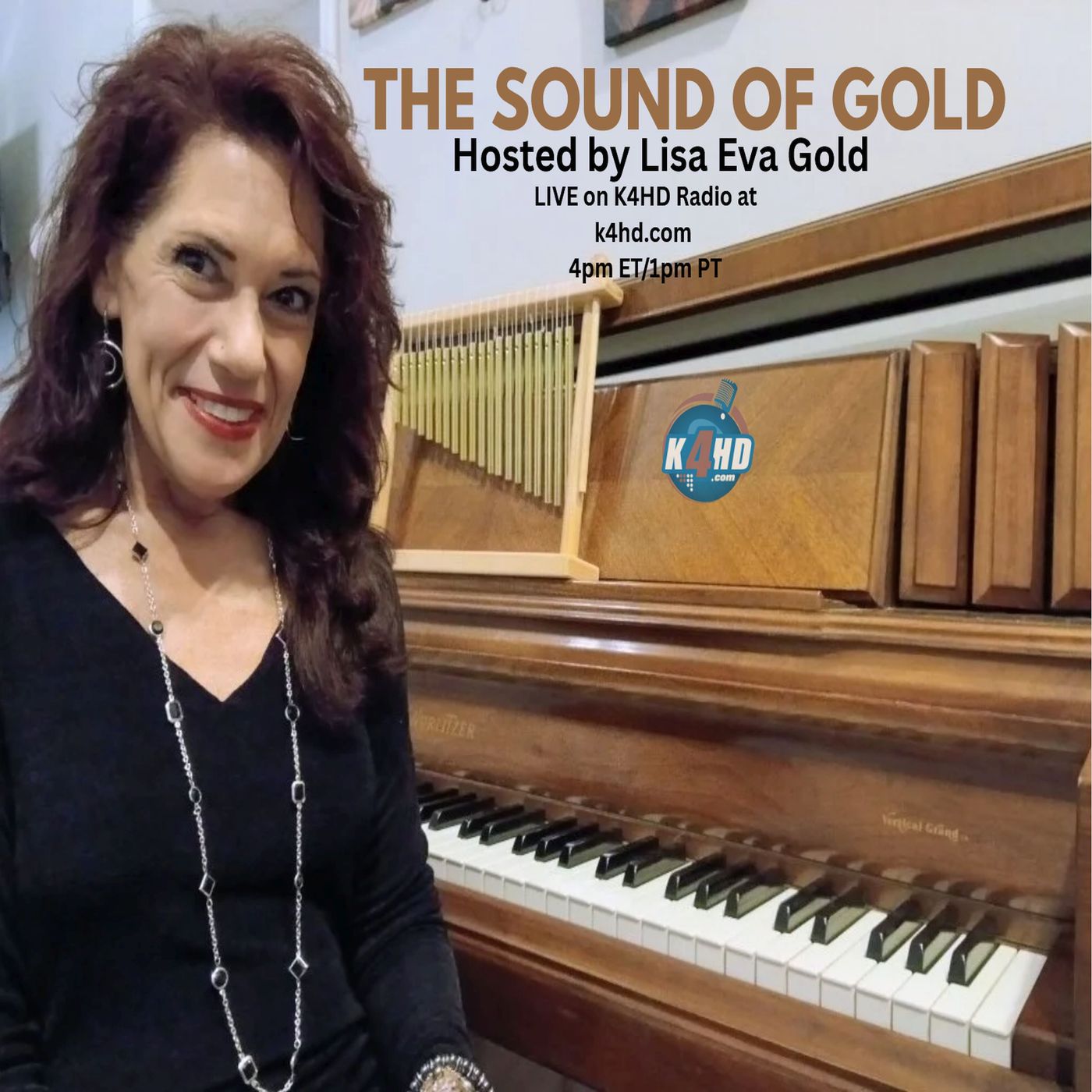
The Sound of Gold is broadcast live Mondays at 4PM ET / 1PM PT on K4HD Radio - Hollywood Talk Radio (www.k4hd.com) part of Talk 4 Radio (www.talk4radio.com) on the Talk 4 Media Network (www.talk4media.com). The Sound of Gold TV Show is viewed on Talk 4 TV (www.talk4tv.com).
The Sound of Gold Podcast is also available on Talk 4 Media (www.talk4media.com), Talk 4 Podcasting (www.talk4podcasting.com), iHeartRadio, Amazon Music, Pandora, Spotify, Audible, and over 100 other podcast outlets.
Become a supporter of this podcast: https://www.spreaker.com/podcast/the-sound-of-gold--6696013/support.
0:01 This program is designed to provide general information with regards to the subject matters covered. This information is given with the understanding that neither the hosts, guests, sponsors, or station are engaged in rendering any specific and personal medical, financial, legal counseling, professional service, or any advice. You should seek the services. Of competent professionals before applying or trying any suggested ideas.
0:51 Hi, welcome to the Sound of Gold. And it is December. First, it's starts to believe it's story to December. I hope everyone had a nice Thanksgiving. If you are tuning in from the United States, we share that Thanksgiving holiday together. And if you're tuning in from overseas, I hope you had a nice weekend. And while we're here today, if you've been here before, you know, welcome back. If you're new to the show, I would like to share with you the purpose of why I do this show. And The Sound of Gold is based on music, musicians and music schools, music teachers, music venues. I obviously love cats.
1:36 If you're watching this live, you'll see that I have two of my cats joining us today and they love music too. So with that Bean said, we're in good company. Wherever you are, wherever you're tuning in from. My heart is full of music, and everything around us is music. Music is so healing, Music lifts us up with music can depending on how we feel, we can connect to music at any level. So that being said, it's fun when we have the opportunity to get out and about and to meet up and see live performances. I have a scheduled guest today who may be writing behind with work, and so once once he's perhaps gets off of work, he'll join us. But in the meantime, while I have your attention, I thought maybe I could just play a little bit of music for you and then talk a little bit more about the meeting of music and what it feels like to be a musician. What it's not work. Right, So, anytime we go out we see a musician playing or performing, they definitely have put the time into practicing. They've taken lessons, or they have a mentor. I know I do. I still take lessons even though I've played for forty five years and I'm always learning something new. But every time
3:07 I play a performance, anytime I play for an audience, it's not work. It's something I enjoy doing. I just know how to do it. And if you are a musician who's listening, you'll understand that it's just it's just sharing a love of passion.
4:06 Beca and.
6:00 I'm not playing from many sheet music. When I go to open mic, they call me the instant composer. I just kind of play the energy that's in the room, or play whatever is channeling through me, and so I get to share that with you. I get to share that with my audiences when I perform live as well. I wanted to focus well, as I mentioned earlier, I have a guest we're expecting again might be working over time, so we're waiting for their presence, so before they get here, I do want to talk more about music and more about what goes into it. So other than having a radio show, I'm a music teacher. I teach piano and I teach music theory. And if you are a musician, that's listening. If you are not a musician, that's that's still listening. Music theory basically is a language, right, So when we let's say we read a newspaper or we read a book, whatever language we speak, we're reading the word.
7:00 We understand the grammar, we understand pronunciation. You know, there's a difference between a question mark and a period. There's a difference between an exclamation mark and a comma. So wouldn't that being said the grammar and the literature that we learn in school to speak a language or to read a language, it's kind of the same when it comes to music. If you're learning to read sheet music, it's learning a different language. It's learning the pronunciations, it's learning what we call the dynamics, it's learning what we call Ila's call it ornaments. Right, So you can have just a sheet of music, whatever song you're picking, and it could have like all these details on the sheet music, and we have no idea what they mean. That's where music comes in. Music theory comes in and breaks down the meanings of how to play a sheet how to play sheet music. So if you are a musician who just not read music but can play by ear, that's almost another talent. Well, it is another talent, And I've learned you can learn to play by ear with training your ear right, really listening. So when you're training your ear to listen, you're listening to language, and you already can hone into the grammar of it, if that's the right way to say it. So the same thing goes with reading music theory and reading music and learning music theory,
8:31 is you learn that grammar and how to play sheet music when you're learning music as me teaching as a from my point of view, every teacher has their own way, so there's no one teacher better than the other. We all have. Something different to share and we all have something to teach. So if you were working with me and we went over the notes and learning the different grammar grammar, I wouldn't I would not encourage you to get overwhelmed with it, because it can be overwhelming. So I would suggest, and if you're new to music and new to wanting wanting to play an instrument, get to know your instrument. Learn like you have your low end, your high end. Learn the different sounds you you have your mid octave. And I'm going by a piano because piano is my my instrument.
9:26 But there's guitar, there's banjo, there's drums, there's so many different other instruments out there. Learn the difference in the sound, because if you think about it, there's a difference. I'm gonna I'm kind of mixing this up today in regards to grammar. I'm going back and forth in regards to grammar. If I'm yelling at you opposed to speaking at a low tone, it's a different dynamic. That's the term we'd use in music. In literature, it's a different pronunciation of how we would speak or how we would we would say something. So the same thing goes for the piano or again the instrument, whatever instrument you're playing, pay attention to the sound because depending on where you are playing your low end, high end, mid range, it's going to have have a different feeling. And that's another thing too.
10:19 Music is all about feelings, right. What I said earlier is you can relate to music no matter how you feel, no matter what level you're at, we can all relate to music. So when you're playing music, the same is true. You're playing what you feel. The more you can connect to a piece that you're learning to play, the more you can understand what the story is, the more you can relate to that story, the more you can play it. I have a saying that I tell my students, if I can't feel what you're playing, I can't hear it. And so when you play a piece, really get in tuned with where that piece is coming from. Understand the story of the song. Right, the song the lyrics is the same as the story, So understand where it's all stemming from, so that you can you can connect with that song, kind of like being an actor. Right when you're acting, when you're on stage and I have theater background.
11:17 When you're on stage, when you're playing a character, you're connected to where that character is emotionally. You are connected where that character is in space and time, depending on what the story is. So connect with your song, connect with what you want to play, and connect with understanding where the song is coming from. With the same idea when you're sitting and you're playing and wanting to create right, there's no limit. There's no limit on playing lower, higher, mid range. It's just expressing who you are through sound. And I think the biggest how would I say this, There's a few different ways I want to express us.
12:00 You want to get to know your instrument, know your lows, your mid range, your highs, but you want to play in a way that you're expressing yourself. However, the secret is you have to give yourself a permission, right, Because I think it's really scary when like someone says, okay, just play something. And I have a lot of my students, they'll be like, well, I don't know how to play. But you know what, we all do. We all have this gift to play an instrument. We all have this gift to play music. It's just kind of getting out of our own way and being a little free without limitations to just play. Easier said than done, perhaps, However, for my musicians, for my non musicians, for my friends that are wanting to learn to play or are playing like step outside the box, right, I can express to you that growing up, I took classical lessons. I started when I was five. I played up until thirteen fourteen, and then I kind of went off and did other things.
13:04 But I played. I played many years, and then I went back to lessons. But I had to learn. I was a classical teaching. You are taught very structured, right. You were taught to read music and to play it. Let's say perhaps classical Beethoven or chopin. You have to play it a certain way with the timing correct, and you have to It's almost like going to somebody's house no, I'm going to take that back. It's almost like having to follow directions right. Let's say you are show up at a new job and you're told you have to do this, this and this, but I've never done it before, so you're maybe tagging along with someone that's going to show you the way of how to do the job right.
13:52 So with music, when you're classically taught, when I was classically taught, you are taught inside this box of having to learn it a specific way, right, So it limits it limited me. It limits us as musicians when we're just playing what we're reading right, when we're playing what we're hearing, we get to hone into what we hear and play it. However, some of us can also improvise on that as well. I don't think there are any two musicians that are the same. Every musician has a gift. Every musician has an ear for how they play. If you have set Billy Joel down and you set Elton John down, they are not going to play the same exact way. They're going to have their own style, their own way of playing. Another analogy I can make is if you are not if you and I were given a recipe to bake a cake. Okay, and I'm kind of going all over the map, but hopefully all over the map today. But I'm zigzagging a little bit, and I hope you're following along. If you and I were given a recipe, let's say we're going to bake a cake, and I'm on one side of the kitchen, You're on the other side. We both have the same ingredients. I guarantee you our two cakes are not going to taste the same because we kind of give it our own little flavor. We might add maybe I might add a little bit more vanilla extract if it calls for that, or or I might not where you might, you know,
15:22 you might add a little something different to your recipe. Even though we're following the directions, we might improvise a little bit on our recipe, so it's not going to turn out the same. That's where I go back to saying, no two musicians are the same. If you are looking at my listeners out there, if you have not ventured out to an open mic, check out whatever town you're in. There are open mics everywhere that you can connect with friends out there that will support you, loop that will support you in your music journey. If you're just in the beginning of your music journey and you're wanting to get out and play and be around musicians that are going to support you and growing through music and learning, that's the place to be. So don't be afraid. Don't be afraid to step out there. I can promise you.
16:17 In past radio shows, I've had lots of guests on that have said that they have been so supported in the music community they become an extended family. So definitely step out and try and connect with music people out there. There are also online music schools that you can connect with online friends, and there's Zoom. There's different ways to communicate where you can see each other, you can listen to your videos. There are great schools out there that do that and great communities where you can meet friends that way. So I encourage you to do that. Getting back to the language of music, don't let it overwhelm you.
16:59 You speak English and or actually it doesn't matter what language you speak. Whatever language you speak, music again is like learning another language. But don't be overwhelmed because it's step by step. There's so much to learn about music and it never ends in the forty five years i've been playing music. I'm still learning. As I mentioned earlier, I still take lessons. There's so much more for me to learn. That will never come a time where I'll say, Okay, it's kind of like the cake. Like the cake is baked, it's good. We're done with cooking. That doesn't happen with music, and that's the beauty of it. I will tell you this, though.
17:40 There are some consistencies to learning music, and I hope I'm not getting too far for some of you. There's the timing in music. You know, you have your coord notes, your half notes, you're dotted half notes, your whole notes, like those will never change. You have you have the different dynamics in songs, and depending on the sheet music you purchase, and if you're learning from sheet music, there's a consistency to about playing what you're reading on the page, like that doesn't change unless you change it up and want to add a different rhythm to it. When you're learning, keep it basic. I have a student of mine where we'll start. We're working up on the housetop, right. We have a show this Saturday or recital. And for this one student, she's like well, you know, she calls me miss Lisa. She's well, miss Lisa, well, what about like we start playing the songs, what about this page over here?
18:37 When I'm you know, what do I how do I you know, play this or that? And I say, okay, well, let's start at the beginning. Let's play it through first, and then we can go in and kind of micromanage different sections to make them sound smoother or better. But when you're playing a whole piece, I'm trying to make an analogy here, so that's understandable. You don't want to look at you don't want to look at the whole staircase from the bottom of the stairs up because it's overwhelming. So when you look at a whole piece of music, so that you're not getting overwhelmed, we kind of break it down, even with my student, measure by measure, and we learn that measure by measure, you're kind of ironing out each section and taking it step by step instead of looking at the whole staircase from the bottom up.
19:31 You're taking each step as you go, so that when you're learning music, when you're playing each measure, when you're reading sheet music, you're not overwhelmed. It's going to take as long as it's going to take to learn a piece of music, and so you can't give yourself like, Okay, well I'm going to learn this song in three months and know it great and perform it like yes and no, you can do that, however you want to work at the pace that you're at. I have another student that enjoys bringing in very difficult pieces to start off with, and it seems to take us a really long time to learn it because they're not necessarily there yet. So sometimes I will bring them in an easier version of sheet music to learn from. So, going back to the language comparison, like if we're learning a language from the beginning, we're not gonna I'm not gonna give you an essaye or write, or I'm not gonna say okay, read this five hundred page book. When you're just starting out and just getting to learn the timing, the dynamics, the different meanings of like crescendo de crescendo, there's just so much to learn and not to be overwhelmed with it step by step. I still to this day have to work on my timing. I still to this day I have
21:01 to practice my scales. I still want to get better at it. I still want to do some diverse things with what I know, but I have to be mindful of the timing. I think the greatest gift we give ourselves when we're learning to play an instrument is not only learning the music theory of it, but it's the discipline of practicing. And not only does the discipline of practicing how to play music help you focus on your instrument and help you focus on learning how to play reading music, or listening to music, it helps you in so many other areas of your life that I can't pinpoint specifically in what ways it's going to specifically help you, but I promise you, once you're focus on learning an instrument, learning the music, learning how to play, you're going to find other areas of your life where you become more patient with yourself with learning different things, whether it be at work or at home. It's just it's a gift you give yourself. So if you're out there you're not playing an instrument yet, I encourage you to reach out to an online community, reach out to maybe a music studio in your community, to start taking lessons, and to reach out and find out what ways you can better yourself, or if you're just getting started, you can always the sound of gold is. I always post this on my
22:34 Facebook page Alisa Evil Gold or by Lisa Evil Goold. So you're welcome to join me on Facebook. If you have any questions, you can always message me there. In addition to that, just understand that whatever you're learning, whatever instrument you're learning, give yourself the patients and the grace for learning it. And it's going to take as long as it's going to take. And I know that whatever teacher you choose, you want to feel comfortable with them. You want to be able to feel understood, and you want to be able to work at the pace that you can work at smoothly, easily. And yeah, just have fun with it at the end of the day, that's what it's all about. It's just about having fun. Well, with that being said, I think I'm going to play a little bit for you now. I have no sheet music practiced, or no sheet music in front of me.
23:30 I have no music practiced other than just sitting here and kind of honing into energy I'm feeling. I'm just playing a little something for you to sit back and relax. If you're in a space and a place where you can lay back and close your eyes, go ahead and do so, and let my music kind of take you where it takes you. If you are driving, don't close your eyes, but let the music take you where it takes you. So enjoy. I'll play for a little bit and then I'll talk for a little bit and hope for the our guests will join it and and meet with them soon.
24:23 M h m h m hm. The b.
28:43 And st. Chast this.
30:38 Here thing.
31:50 Than thule from the.
32:33 Things easy.
33:55 At anything anything, anything, anything, dis.
35:20 If you're just tuning in, this is the Lisa Gold Show. Actually I used to have a show called the Lisa Gold Show Lisa Eva Gold. This is the sound of Gold and we talk about music, musicians, music schools, music venues. Today. My guest perhaps got called out to work over time, and we were going to focus on a lead singer who was because Thieves is the name of the group and he performs out on Treasure Coast. And not only is he uh is he a lead singer, he's also a physician. So we will give him the benefit of the doubt. Perhaps he got called off to go take care of somebody who's not feeling well. So, with that being said, the purpose of the show today the focus because thieves and our lead singer and a physician. Earlier in my show today, I was talking about the language of music, music theory, help. Being a musician and playing is not work. And you know, we still learn, go to school to know what we know and to play how we play. But in regard to the guests, my guests today, the purpose of having him on the show today was to share with you how, like other shows I've had, how musicians juggle. We juggle a work schedule, we juggle playing music.
36:45 We juggle. Let's say, if we're in a band, we juggle playing with musicians and all kind of meeting out a schedule that we can all get together and perform at or perform together to practice. So with that being said, the annoys in the background, I have a kitten who if you're watching you might have seen on the show. Here she's playing with one of her balls, so one of her catballs. So she's making music in the background right now. What I want to share with you today is, along with everything else, when it comes to music theory, learning an instrument, getting together in your community with other musicians, learning an instrument, learning how to read music.
37:31 If I. Well, I've played my little life, so I don't know what it's like not to play an instrument. I don't know what it's like not to be around music and hear music. But if you're just venturing into this world and wanting to learn how to play music, if you're already playing music, I think the biggest secret is should be patient with yourself. Right, whether we're learning how to bake, whether we're learning a different language, whether we're learning anything new, a new job, a new whatever, it's it comes down to us, our attitude, how we show up. And really, if you think about it, everything we do in this life is a choice that we make, right, It's a choice that we choose to do or we choose to create.
38:20 I'm sorry, it's kind of funny that my little kitten is running around with this little ball. I wish you could hear. But anyway, you know, be patient with yourself because if you think about it, when we're doing the things that we do, a lot of things that we do is get to it's not that we have to I mean, like, yeah, I have cats, have to clean the litter box. But I get to clean the litter box because I like my house to be clean, right, So it's still a choice. I still do it, but not everything is having to clean the litter it's you know, everything we do is a choice. Your job that you choose to do is a choice. The you know, the place that you live in, it's a choice. You know, you work with what you've got. You you make choices with the cards you're dealt and you know, I think we're always looking for like the horizon, like what's better, what's out there? How can we get better at playing music?
39:15 How can we get better at whatever we're doing in life? And really, again, you only have yourself to look at. You've made the decisions to be where you're at or to do what you're doing, And everything takes practice. Relationships, driving a car, working, you know, machinery, whatever it is, it all takes practice. And even if you know it well, you still want to get better at it. At least that's how I am. I always want to outdo myself and do better. I want to learn from other people. I want to I want to be an influence, but I also want to be influenced and I think that's the way to be human. I think music there are okay, there are basically twelve bays tones on the keyboard if you want to break it down, and everything's in vibration.
40:06 And maybe I'm getting a little too technical, but the whole idea is that you want to hone into maybe connecting with those tones, connecting with the different sounds of music and correlation to life and the choices you've made or choices I've made. It's really just connecting to what we choose and given ourselves a permission to keep moving forward and not thinking we always know what we're doing. I think the secret is to always kind of be the student, even for ourselves, always to want to learn more and be better at what we do. And I think we get too stuck in thinking of our adults or we know it all, and we really don't. There's always something more to learn. So going back to music theory and music lessons, give yourself permission and give yourself the patience to be patient with yourself when you're learning, and that goes across the board whatever it is. Well, with that being said, I don't know that my guest is going to be with us today, however, we do have a few more minutes and I would love to play for you a little bit more on the piano.
41:16 So sit back, relax, and I'm just channeling this in and excuse me. Whatever music you're looking to learn, it can be done, so be patient with yourselves, reach out the teachers online or in your community. You can also find me Lisa Evagold on Facebook. If you have questions, you can message. Me as.
43:06 As Thanks for tuning in today.
44:20 Please go out support your music community. If you just want to go out and listen to live musicians, that would be awesome. And yeah, support your music venues. And I don't mean financially, I mean show up, be a support, show your enthusiasm, get involved and be the best. Be the best version of yourself always because no matter where you are, whatever you do, wherever you go, you are important. You make a difference and give yourself the grace and the patience you deserve, whether you're learning a new instrument, learning music, and or supporting others. So with that being said, let's keep music alive and tune in next week. Really good to meet my next guest, and I can't wait.
45:12 I'm not gonna tell I will post it next week, and I look forward to seeing you all. Seeing you, Oh I don't see you, you see me or you hear me. So I look forward to connecting with you next week. So I have a blessed week, and stay warm some places. It's getting a little chilly out there. It is December. Thank you so much,


