
The Sound of Gold with guest Tony Parlapiano
 iHeartRadio iHeartRadio
 Apple Podcasts Apple Podcasts
 Amazon Music Amazon Music
 Spotify Spotify
 Pandora Pandora
 Deezer Deezer
 Podchaser Podchaser
 Audible Audible
 Spreaker Spreaker
 Podcast Addict Podcast Addict
 Castbox Castbox
 Castamatic Castamatic
 Overcast Overcast
 PocketCasts PocketCasts
 Goodpods Goodpods
 Podurama Podurama
 Podverse Podverse
 RSS Feed RSS Feed
 YouTube YouTube iHeartRadio iHeartRadio Apple Podcasts Apple Podcasts Amazon Music Amazon Music Spotify Spotify Pandora Pandora Deezer Deezer Podchaser Podchaser Audible Audible Spreaker Spreaker Podcast Addict Podcast Addict Castbox Castbox Castamatic Castamatic Overcast Overcast PocketCasts PocketCasts Goodpods Goodpods Podurama Podurama Podverse Podverse RSS Feed RSS Feed YouTube YouTube
Join me today to learn about Popmatics. Tony Parlapiano is the founder of Popmatics. An online piano schooling made EASY. Play the piano and advvance your skills at all levels with Popmatics!
The Sound of Gold is broadcast live Mondays at 4PM ET / 1PM PT on K4HD Radio - Hollywood Talk Radio (www.k4hd.com) part of Talk 4 Radio (www.talk4radio.com) on the Talk 4 Media Network (www.talk4media.com). The Sound of Gold TV Show is viewed on Talk 4 TV (www.talk4tv.com).
The Sound of Gold Podcast is also available on Talk 4 Media (www.talk4media.com), Talk 4 Podcasting (www.talk4podcasting.com), iHeartRadio, Amazon Music, Pandora, Spotify, Audible, and over 100 other podcast outlets.
Become a supporter of this podcast: https://www.spreaker.com/podcast/the-sound-of-gold--6696013/support.
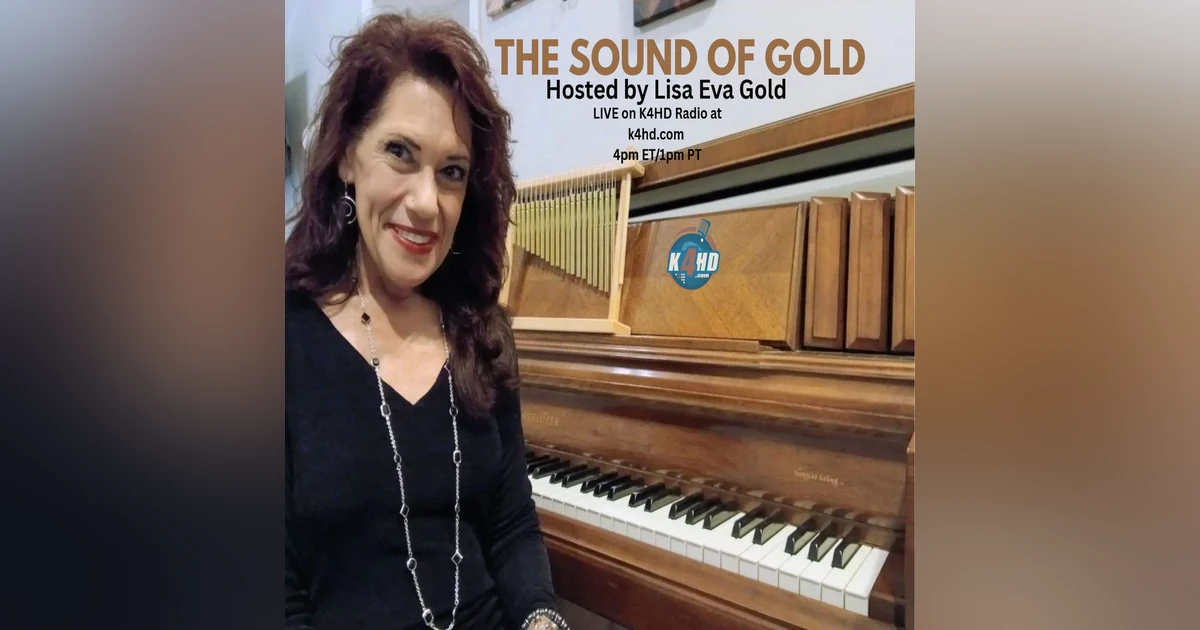
0:21 Hi, welcome to the sound of gold. It is so good to be back here with you and you can see me. I can't see you and you can hear me. It is so great to have the privilege to host the sound of gold. It is my true pleasure to shine the light on music, musicians, music venues, music teachers, musicology, anything to do with music. I personally have been playing piano since I was five years old. I'm here recording. Um, I have a team that works behind the scenes, but I am presently recording in my home studio. Uh, and I love my Wurlitzer here. It's my, it's my baby vertical, I guess you can say vertical grand. And I want to talk about how important it is to not only look into learning how to play an instrument, but really, um, touching base inward, like connecting inward and music is an expression.
1:23 Music is a feeling music is music is life. Uh, I've been doing this so long that I just, I don't know what my life would be like without it. Um, I have a very, very important special guest on my show today. And before I even get into that, I just want to invite you in, um, And ask you to relax, sit back, relax. It's a Monday. We just personally, I had a great busy weekend. I had my, my first, I'm a noticed as a star acknowledged as a Steinway teacher. So I got to have the first Steinway piano teacher concert at the new Steinway in West Palm beach, Florida. So it's a great, it was a great honor. My students did awesome. So, but other than that, I had other things going on and other shows and, It's just been busy. And it's Monday. Mondays are usually like so packed with starting over a new week. So sit back and relax. I'm just going to wanting really to clear the air a little bit. Just take a deep breath and relax. Welcome to my world.
2:41 So so.
3:29 Wherever you are tuning in from today and whether you're watching us live or you're watching the recording, thank you for being here. I've been teaching piano for over 20 years. I've been playing for over 45, not to give away my age, but, and maybe that doesn't really, but maybe it does. Not only am I a teacher and I'm a piano performer, I've still continued to be a student. And it's so important to, as a musician, for all my musician friends and musicians I haven't met yet that are listening, it's always important to keep a student mind, to be open to learn. We learn from each other.
4:09 In fact, my show this weekend, I told my students, I said, not only am I your teacher, but you're mine as well because I learned from you. And so being a student with that being said, our schedules are busy. Sometimes we work a full-time job. Sometimes we are not home as much as we want to be. And how do we make time to practice? How do we make time to learn? And if you can't have a teacher in real life, you can still have a real life teacher online. And no matter where we are in the world, the beauty of technology is that we can connect from anywhere. Today, I have a very, I consider a very special friend, a very dear friend, and a very talented, talented teacher that has created a program called Popmatics. And I'd like to introduce my friend, Tony Parlapiano. Tony, join me, please.
5:01 Hey, Lisa. Hey, Tony. Introduction. Yes, of course. Of course. Now, Tony, before I start bragging about your pop Maddox, because I have so much to share and there's so much I want you to share. Can you share with our audiences out there that are our musicians or looking to get into music a little bit about your your life's journey as to how you got to be where you are today? Sure can. Music has been a part of my life from as early as I can remember, but playing the piano is something that I came to a little bit later when you consider that it's my profession. So I didn't start playing piano until I was in college. Before that, I was involved with high school band and actually I started in elementary school. I went through some woodwind instruments and then I made the switch to some brass instruments.
5:55 My brother, who is 22 years older than me was in a guitar duo and he had a bass guitar. And if I could learn how to just play the, the root notes, I could sit in with him and his buddy when I was in, in high school. And then I picked up a guitar and in high school, I was a drum major in the marching band. And I went to college thinking I was going to be a high school music director. That's a plan. And I took a jazz improv class and there was no piano player there. And I knew just enough to sit down at the piano, just enough to have the confidence to sit down at the piano in this improvisation class. And that's kind of how I got my start in piano.
6:40 I fell in love with the instrument and immediately wanted to switch my major from music education to focusing on piano. Somehow managed to convince the educators at the school to let me do that. And I spent The next summer, desperately trying to catch up to everybody who had been playing since they were six. Okay. And very quickly, I got to play with a lot of different bands. And I was introduced to, there was a really great scene in the Hartford, Connecticut area of original music. Okay. And I was working at a music and art center. It was actually called Ricardo's Music, a small mom and pop music shop. And a lot of musicians were there. A lot of teachers were there. And I got to meet a lot of local musicians. So that's how I kind of got my start. I've been involved the whole time.
7:29 I'm the youngest of nine children. All of my siblings played an instrument. Okay. Growing up. So when it was my turn, there was a lot of instruments around the house to kind of pick from. So that was really fun. Yeah. And that's kind of my involvement. And then once the piano came in, I started, everything else kind of went in the background. Okay. What do you mean everything else? Well, the guitar. Oh, okay. Kind of stopped playing the brass instruments and all my focus just went, I sold all my other instruments so I could buy these keyboards and I could, and that's what I spent most of my time playing that from then on. Nice.
8:09 Nice. So I want to ask you, um, what inspired you to, I understand what you've shared with us and it's such a beautiful journey. What inspired you to go in the direction of teaching jazz? piano from there you fell in love with piano and then what kind of inspired you to begin like what what was birthed into this popmatics of what it is. Today okay so well with popmatics that that evolved very organically over time i didn't really set out to create a curriculum or anything like that i was just teaching music lessons one-on-one yes and when i first started teaching that way I thought, well, surely I didn't have the right path because I didn't start. So I thought maybe I should try to teach the way everybody else learns.
9:01 So I went and looked at all the method books that were available, and I picked the one that I thought was the best, and I brought it to my students. And right away, none of them were really practicing the things that I was sharing with them. And I recognized right away that if they weren't interested in what they were doing, then they It just wasn't going to happen. And so I remember I started telling students, just bring in a CD. Back then I had a little portable CD player I would bring into my music lessons. Bring in the CD. And I would just try to work with them on the songs they loved. And immediately there was this beautiful relationship that would come up. All this discussion.
9:42 Why do you like this song? Oh, my dad. My dad's in the band. So it was immediately bringing more of a connection together. So over the years, I kept creating more materials for my students, more and more material. And then somewhere along the line, it materialized into into Popmatics. I had this name and that really started from, I got an opportunity to teach my high school chorus director. Oh, wow. It was really kind of wild because growing up, my music teachers were all my heroes. Nice. And I really wanted to go into music because my seventh grade band director, he just had high level of enthusiasm. And I was like, I want that guy's job. He just seemed so happy teaching music. And then it was great in high school. And then I was in the chorus and then I went, it's just all growing up.
10:31 I had great experiences with all my music teachers. And when I started teaching him, I remember there was this, I think we were both a little nervous because he was like asking a student to be his teacher. And I was like, well, you're kind of like one of my, the reasons I went into this in the first place. And, it was in his lessons that I started creating a lot of the materials under the umbrella of what I now call Popmatics. And so that's kind of how that all started. And it was about four years of creating these materials. And at first I was just naming these different concepts and activities and making a list of them. And then it was about four years ago, a little over four years ago now, that I made the switch from teaching private lessons to opening this online music school. Sure.
11:21 And many people think that that was a, wow, there's such a risk that you took. And I didn't realize it at the time that it was such a risk. I just knew that that's what I wanted to do. It turned out it, if I knew what was about to happen, I might not have done it because I wasn't nervous because I had like 50 private students that was teaching income. Yeah. Very busy. And then when I switched to this model, none of my students really wanted to come with me into this. That's hard. Yeah. And I didn't know that that was going to happen, but I was kind of trying to solve a problem for myself that my schedule was just, it was unmanageable and I have three young children. And so I couldn't, I couldn't deal with the 50 private lessons a week anymore and constant reschedules and all that. So, When I originally started the Popmatics program, it was really because I just wanted a better schedule. I had no idea it was going to evolve into what it's become over the past four years, which I know that you know quite a bit about. Yes.
12:22 And I want to share with our audience, Popmatics is an online program, an online community of learning how to play the piano. And I think I found Popmatics probably around 2023. And I have files in my email list or folders. And one of them is Popmatics and I have it dated 2023, but I'm pretty sure that's when I started really following you. And with your, this is going to sound really weird and I apologize. I have one of my daughter's friends, this is again, so strange. And I think I said this to you once before. He said to me, I was with my daughter, her friends, and I don't know, I was just talking about something.
13:09 And he looked at me strangely and he goes, the way you speak and the way you explain yourself, he goes, that's how my brain works. And I thought, oh, well, that's a compliment, but that's so odd. Nobody ever said that. And then I listened to you, Tony, and I'm giving you the same compliment. And it's such a weird compliment, but the way you express yourself and the way that you are just being you, I don't know. I have a way of connecting with you at that level because you just like we're in an understanding. And I think hundreds of us out there, we get to connect with people in this way without, you know, trying. So, so I thank you for being that person.
13:52 Thank you. Yeah. Yeah. Pop Maddox. I just went through, I'm going to jump around a little bit. I just completed one full year and within 365 days, if I missed one, 10 days, I still caught up. You were still like always in my ear for the whole year. And the amount of time, the investment of time, the amount of knowledge that you share. And I have lots of music teachers on here. And I love all my music teachers and all the connections I have. Top of the line, you provide so much. And it's like, it's almost impossible to get it all done within a year. Just because there's, yes, there's the daily and then there's, you know, the challenges. But then there's also like the side stuff, like the listening or, you know, office hours. It's just there's so much. Or the campfire. There's so much there. Now, to share with our audience a little bit more, because I'm so invested, some of our listeners are like, I have no idea what you're talking about.
15:02 Yeah. Can you take us on a little description of a journey as if somebody were to sign up to Popmatics and it's easy to find online and you're easy to find, you have a one of a kind name, Tony Parlopiano. And it's, it's you were made for this. I feel that way. Yeah. Yeah. So can you share with us a little bit about taking us on a journey as to what is Popmatics? Sure. Well, Yeah. We're an online music school, but as you mentioned, we're, I think you really see the creativity in it where it's, I'm really trying to provide an experience for students to feel like they're invested in their learning. Sure.
15:50 In my mind, it's, it's much more than just video lessons. I'm really trying to create that campus like experience. What I'm, I, And that is what I wanted to do with Popmanics is I wanted to give myself the college experience that I wish I had had. Okay. I started a little later, so I didn't have, I was just barely hanging on in college. But I always loved this idea of compartmentalizing my learning into three areas. So our three areas are listening, creating, and understanding. And so the creating part is where we focus on improvisation and creative play. And that is the part I think that you and I connect on the most because even as you're playing here and you have your chimes and you just, the instant composer, you know, that's what you go by. And that is my favorite thing in the world, the ability to just sit down and play music for five minutes or however long you wish.
16:51 But that is really the heartbeat of our program is the creating classes. And those are called campfire because just like I remember telling stories around the campfire as children. I like to tell stories and create ways of interacting with the instrument that don't require much theory at all. Sure. A way that you can just follow simple instructions, make sounds. If you have the understanding, you might be able to do more with the instructions, but everyone can play. So that's the creating part. The listening part is really about recognizing that everyone has this ability. We've all had a song stuck in our head. How did it get there?
17:36 And many of us could, if we had to, we could imagine being in a room and someone singing happy birthday. And even though no one's actually doing it, you can imagine that and actually, and hear it the same way you have a song stuck in your head. And I know that seems like such a normal thing, but I think that that's absolutely amazing that at any moment on demand, I can start playing a song in my mind that no one else in here, but me. So I have this ability to create the sound and listen to it. And so that's what the listening classes are about is if I can hear it and I can recognize it, can I understand what it is? So that kind of ties in with the understanding. So when I hear a song and I hear here comes the sun by the Beatles, I recognize that melody. I understand what it is and I can play it. And so we have a kind of a student there there's, there's, kind of an activity with that aligned with that. And then the understanding is really my unique approach to trying to simplify music theory. Okay.
18:37 The way where it's not being reductive about it. I'm not trying to eliminate anything. I'm not trying to necessarily fix anything, but I think we have almost an unfair advantage as piano players because we have such a visual instrument and it's so easy to just see the patterns. And I think through, um, the way that I approach the instrument and showing students those patterns, you can really simplify all the subjects that you would need to get into. So it's a hard thing to explain, but I truly believe that music should be as easy to play as it is to listen to.
19:18 Yes. And that is not the experience that most people have. We love listening to music. That's so easy. But I see so many Musicians who go into music lessons and they're timid. They don't want to share what they're playing. They're afraid of making a mistake. They're very self-critical. And so I try to eliminate all of that through creating classes where it's just create for five minutes a day. That is your daily homework. And we encourage people to record those and and, and save them. And we don't listen to them unless they ask us to, but the idea is that they're, they're creating an inventory, a record of their effort. And so that, that's really, that's really it.
20:02 There's like three areas of learning. It is kind of a lot, It's much more than just what you would get with individual lessons. Oh, absolutely. In terms of the investment that you might put into it. But at the same time, there's also this feeling at Popmatics that you don't have to deal with your past. So if you had a tough month, it's okay. Don't worry about it. We study 12 keys over the 12 months. Yes. So sometimes people... get a little sidetracked or it's summer and they're busy. Well, when the new month comes around, there's a lot of energy to day one of a new month. We get a new key, we get a new theme. It's a fresh start. And so that's kind of, I guess all the things that I want for myself as a musician, all that like freedom and creativity and structure and forgiveness and grace. I kind of wrapped all that into a program and, along with the storytelling and all of it.
21:00 I love it. I love it. And for our listeners out there who are not musicians or who do not play the piano, or for musicians out there that do play an instrument or piano, you have the 12 basic keys. And what you said about music, you know, we grow up, we hear, you know, I don't know. I'm a big fan of Billy Joel. There's Billy Joel songs I listen to a billion times. hundreds and thousands of times over the years. So it's like, well, if I can hear it and it's playing and I can connect with how it makes me feel, then what is the barrier? And it's kind of a rhetorical question.
21:44 What is the barrier that's there that's keeping me from expressing it on the keys? And I think an instrument, and I learned this myself as a piano teacher and as a student, you really need to become friends with the instrument. Like get over the fear of, oh my gosh, like either I'm going to break this or it's just not going to play that way. I want it to. And I tell my students, it's a piece, I mean, I love the piano and I, without being disrespectful, it's a beautiful piece of furniture if you just do nothing with it. But it's the musician who is the magician that brings it to life. And going off track a little bit, I've said this in previous shows, And you know, I think from knowing me, I play music not only from how I feel and express it, and you do as well, but I play it with the intention of healing.
22:39 Like if I'm in a room, an open mic or someplace playing, I'm picking up the energy in the room and I'm composing what I feel based on what everybody else is feeling. And I can't explain that better than that, other than being a channel. But my point is, is that I believe As we evolve and move forward in life, it almost feels like the musicians of the past, even though we had these icons and we still have icons, it was almost like they were looked at, at least my family did, looked at it kind of like as the bottom feeders. Oh, don't grow up and be a musician. Oh, don't do that. That's not a lifestyle you want. You'll never make it big or make tons of money. And if you do, it's not the right way. So all this...
23:26 stuff that I grew up with. I think a lot of, many of us grew up with. And so my point is, is that as we evolve and move forward, especially in today's day and age, I believe that being a musician and learning an instrument, especially the piano, we are the healers of the world. We heal ourselves through our music. We heal others through music. And I can't brag enough about why not be a musician and pop Maddox, I just, there's so much, there's, it's just so much fun. Yeah. You know, one of our students in the program, David, he said something one time that I'll never forget. He said, I believe everyone is a musician. You have to be convinced that you're not one because as children, we all sing songs and we all make things and we share them and we share them freely. And even now I have young children and they're, they're writing short stories and they're making art and somewhere along the line, an inner critic develops and some people listen to that too much.
24:36 And I think there is a certain type of musician. I think this is where you and I share an alignment where we never let the music kind of protected us from that. Yeah. The healing part of it. Like I know that I can, call upon certain artists when I'm in a certain mood that I want to, that I want to help pull me out of it. And in the same way that I can sit down at the piano and regulate my own emotions, if I'm, if I'm, I can just feel better. I know that I can go to the instrument and feel better in five minutes, feel more connected. And all of a sudden everything comes into perspective. What's important. And, and yeah, so I, these things are hard to talk about and hard to put into words, but I think we're saying very similar things there.
25:29 Absolutely. Would you be so kind as to, I mean, you are kind, so I don't have to ask you, would you share with our audiences? I know you have free, like, I don't know, are you still doing the free trial on the campfire? So, well, right now, anybody's listening to this right now. We don't, we don't have anything that's totally free right now, but we, we, we do, we're doing an early start on our black Friday offer where if you use the coupon code number nine, so spell out number and then nine, you can actually spell out nine to either way it works and you get your first two months for $ 9.
26:10 Okay. And so, uh, it's normally $ 49 a month for the, uh, what we call the vinyl package, which is our video lesson. That's where we have everybody start because we have a welcome course that we want everyone to go through. And we've just recently revamped that and made this beautiful travel guide because learning music is an adventure. So we made everybody this great travel guide to keep them grounded. So that is when you sign up for that, the welcome course you can get through. If you take your, if you really take your time, and you're thorough with it, it would take about two months. So this offer is great because $ 9 a month for your first two months for 18 bucks, you can get through the whole welcome course.
26:57 You get this beautiful travel guide. You go through our campfire course, you get the listening museum and you get the stage one of our understanding. And if you're really loving it, which we think you will, then you're welcome to stay on that plan for as long as you like. And then we go into, once you go through the welcome course, we go into what we call the great adventure, which is 12 keys over the course of 12 months. That's kind of the, as you mentioned, it's, it's hard to like receive everything in that amount of time, but that is kind of the particular pattern that we, that we go through. So yeah. I'm sorry. No, that's it.
27:38 And you had mentioned many of times, cause I've, I mean, every day there's, you know, more than one video I would watch. Well, depending on my schedule, I do work. I do work. And I do sleep. I try to anyway, but you inspire me in so many ways because it's almost like you, you just have a way about you where you, like you give permission, not only to me, but I know I'm sure I'm speaking for other students that take popmatics courses. Like you give permission to just like, kind of relax, just like playing the sandbox. Or like the other day I took one of your phrases and one of my students was working on Fur Elise. And there's a part in it where there's the staccato and just the small part.
28:30 Was it Fur Elise? It might've been another song. And I said, just because I would normally say the staccato is like popcorn popping. And I thought of you, I go, just jump in the puddle. Yeah, exactly. I just jumped in the puddle and then they got it, you know? So you use these phrases and these like real life stuff that relate to so much, at least for me. And especially I have my foot in the door with film and creativity. And, and so you use a lot of characters and a lot of reference to just being on set and being in the film world. Yes, absolutely. And I, that's how I, I live my life that way too. I walk through life feeling like it's a movie sometimes because it's just more fun that way.
29:18 And yes, having the characters in the program, it just helps to... And I remember things through stories so much better than through anything else. And it's interesting because sometimes people get very upset with me. Yeah, well, I mean, I have a very limited perspective, but sometimes I share things online and I forget sometimes that I'm not talking directly to my students and I'll use a term that people are unfamiliar with. I'll say, well, what is that? What does that mean? And when I explain it to them, they're like, well, there's already a word for that. And why are you making up words for things? and they just don't really see how it fits in the big picture of pop Maddox and the storyline and all that.
30:05 And so, you know, I, I, I just forgive them for, you know, like the way that they approach that. But it's, I see this sometimes in, in academia where people want to talk a lot about theoretical terms and the correct way to do it and how you're supposed to name a chord. And all of that means very little to me because at the end of the day, it's like, well, play me something like what do you like play me a song play me something from your heart just and even when we started here like i was just all smiles when i was watching you just play your intro music and because it's there's nothing better than that to me is someone sitting down playing and i i love hearing cover songs like if you played a billy joel song i would love that too but the fact that you just played and like that is the sound of lisa you know this is my sound and We all can have, we can all develop our own understanding of sound and we can all develop our own signature sound.
31:06 And a lot of what I have in Popmatics is ideas that have been brought together. I think I wrote it down the other day. I was writing down all the musicians that I've worked with over the years that have helped influence my understanding. And they're not all piano players. Some of them are drummers that I played with that really helped shape my understanding of rhythm. Some are my former college professor. I have a guitar player friend who I've talked with extensively about, because a guitar player approaches music a little differently. Yeah. It's the instrument. You got to study the instrument. Absolutely. And the instrument will help you understand, you know, someone who plays an instrument that can only play one note at a time might have a very different understanding than someone who's playing chords and has that ability. So, yeah. Yeah, there's a lot.
31:56 A lot of times, I'm sorry, did I cut you off? No, you didn't. My, especially for beginner students, I'll usually say, okay, name me like seven of your friends or name me like a few of your, you know, different, keep it simple. You know, tell me who your best friend is or a couple of your friends in the class. And they'll tell me, I'd be like, okay, if you're walking down the hallway and you're walking and then you hear from behind you, one of your friends calling you, How do you identify who it is? And they go, oh, well, their voice. I go, bingo. I go, so what I want you to do and what we're going to do right now is we're going to play a note and we're going to listen to their voice. And there are seven, 12 different notes. Well, I based it on the seven white notes to start out with. And I'm like, okay, well, that's C and then that's C's voice, right? And then you have a flat and you have the sharp and I may have, I have this new analogy with one of my adult students. I go, okay, think of, because we talked about minors as well as majors and scales.
33:01 And I'm trying to explain the circle of fifths. And I go, okay, so C has no children. And then you go to G and G has this, has F sharp. Now F sharp is G's child, but F sharp is a little bratty, right? It's a little sharp. So it's You know, I take you. You're such an influence to me to kind of like think outside the box. So thank you so much for that. And it's so important, like you said, just just play. And I also tell my students and you and I think the same in this way. Like if we're raised to like play like the best of the best, the Beethoven's, the Chopin, the Rachmaninoff, the and then, you know, the Billy Joel's, the Barbra Streisand and so on and so on. We're taught to play their music because we love their music. But then who are, like, who are you? Where's your music? And I always say, okay, well, we learned this one song. Okay, great.
33:56 It's so-and-so's song. Now that you know it and you're familiar with it, we're going to break the rules. You know the foundations. Now jazz it up your own way. Improvise a little bit into it. So not only is it important to learn to play a piece of music, but then like, okay, Um, and I've said this before on my show, I'll tell my students, there is no music police coming, but if they do show up at your door, please call me because I want, I want Gordon's signature, you know, so make a joke of it, but. Yeah. Well, you know, I, I was, I did not have that experience because I started piano late. So I did not have the piano teacher. I did not grow up learning the classics pretty much straight away. I was playing with other people. I remember when I was first playing, um, I only knew how to play in a couple keys.
34:46 So I would be in bands and I would have to transpose the keyboard until I was able to learn all the keys. And I think one of my greatest strengths as a teacher is that I can remember what it was like not to know these things. Because I started as an adult, I can remember what it was like to learn all of this. And I think sometimes when it's such a part of your childhood and you kind of forget how you got good. You forget how you learned. And I've noticed that certainly with some of the teachers where I've, it took me a while to build my understanding up to a point where I could really receive a lesson from some of the more advanced teachers because in the beginning they were speaking and I just, I didn't have the foundational knowledge in place to really understand what they were saying. And so that was another part.
35:41 And I didn't expect I didn't realize how powerful like the most early concepts in popmatics would become like the things from stage one and stage two. It's like stage four is great. It's like great tricks and expanded diatonic system, all this stuff, but it's really all the tools from the beginning that I think, uh, really set me up for success. And, and the, the level of freedom that I have now, I think sometimes people think, Oh, he's, you know, that's fine for Tony. And he can, I mean, I, Truly, it's most of the freedom that I have now has been developed over the past four years of running this program this way. And putting myself, I really participate as a student in my own program. You know this.
36:25 Yes. Everything, essentially, that's what Popmatics is. It's me sharing my learning experience. And I really don't expect everyone to be able to keep up with all the content that I produce. I have these video lessons. And as you said, there's these listening classes. There's too much. And I'm also trying to serve a lot of people that are in different places. We try to give people the structure and the organization so that they can kind of find their way. And that's really what I want it to be is I want to, I want to provide the community trail that we all kind of work through and that we go through together. But I really want students to feel free to like, there is a path that's for your footsteps alone.
37:09 But if I could quote Jerry Garcia, um, Yeah. I love, I love that. And I wish, I wish pop Maddox was, was existing like 45 years ago. I cannot play Rachmaninoff. I'd have to really practice it to play it. And I rebelled. I had like five piano teachers that kind of quit on me because the first piece I played at a recital was pure release. And then after that, I wanted to learn to play stairway to heaven, which I did. And, and after that, my teacher's like, okay, well, you must learn Beethoven. And I go, but I remember as a child, I go, I don't want to, I want to play my own stuff. And she would get mad at me. She's like, no, you must play this. This is like the beginning. This is our foundation of music. You must learn this. And it kind of scarred me as a student because I couldn't be free to be me where I took my experience.
38:04 And now I'm like some of my very youngest students, I'm like, just go and play. They're like, what do you mean? I don't know how to play. I'm like, Yeah, you do just play. And I make a joke and I'll be like, when I'm not here, mom says, go in your room to play. Does she tell you what to do and how to play? And they laugh. They go, no, I go. So let's, you know, step out of the box. Let's step out of like the structure of the lesson and let's just play some sounds. And let's, let's, you know, there, there are no wrong notes as we know, but, but I also, use the analogy and I tell even my youngest kids understand this. I go, let's say, you know, you name five of your friends, would you all invite them to out for ice cream on the same day?
38:49 And they're like, well, maybe not so and so. And I'm like, well, that doesn't change. Like when you're a grown up, there's always like one or two, you're not going to bite at the same time. I said, Think about that with music. Like, see what notes fit well together by your ear. Because if it sounds good to you, it's going to sound great to your listener. Like, trust your connection. And you know what, Tony? I think that's, as human beings, we've, I don't know, is adulterated the wrong word or the right word? We've been warped in so many ways that we, like, trust society or we don't trust society. Or, we you know we go to a restaurant we're like okay we want this and we expect you know to get what we ask for and we rely on others to do things but then when we when we come down to ourselves and to express ourselves it's almost like we will i don't know if it's a past generational thing we were we take i don't know we hesitate we hesitate. We limit ourselves. We get in our own way.
39:50 Yes. And so pop Maddox is a beautiful, beautiful online school, online program that allows you to just be that child to be free and play. And you, you give us structure. That's why it's like, okay, well I can't, I can't be bad at this because you give us like, okay, here's the playground. The swings are here. You know, the path is here. The stones are here. The skipping the rain. I mean, you bring it all in and it's just, I can keep going on and on. It's just such a privilege to be, be a student of yours and to get to brag about your program. Yeah. Well, you just brought up the structure and those are, I'm always, I'm always kind of balancing two elements and, and structure and freedom are two of the foundational elements of music making. And I, I found that, Sometimes if you give students too much freedom, then they don't know what to do. Well, just play something. What do I play?
40:50 You can play anything. They get stuck because they don't know. But if you were like, just play all the black keys, then all of a sudden it's like, okay, all the black keys. So I learned about when you bring in the structure, they can actually have more freedom. But if you bring in too much structure, then it turns into.... A limitation, right? Am I right? Is it a mistake now? And they're trying to get it right. So those, that's always kind of like a dial in play. I kind of think of all these things. So listening, creating structure and freedom, you know, the understanding and the imagination, those are that, that in play too. It's like, I see a lot of people talk about the music theory and the, understand this, here's your theory, study theory, theory, theory. And it's like, well, understanding without imagination is only half the magic. Like be able to tell a story with the information that you know.
41:48 And so I sometimes tell people, I said that the best advice I ever got was from, from musician. He says, just forget everything, you know, and just play. And then I realized I said, that's, that's great. But I also realize that sometimes I have to spend some time increasing what it is that I know so that I'll have more interesting things to forget about. So it's kind of like a balance. It's like sometimes you get stuck and you're like, I need something new. I need something new. So you've got to build your understanding so that you can gain a new skill and then you can forget about it. So it's this kind of constant learning, creating, listening and building these things in so that it becomes real. we can really take ownership of these things. And I think when we go back to those three areas, the listening, the creating, and the understanding, it's like, if I can explain it, if I can understand it here, if I can recognize it when I hear it from someone else and I can make it with my hands and I really own that sound, no one can take it from me.
42:43 I know what it is. I know where it lives. I know where to find it. And, uh, that's kind of like the trade, you know, of, of, of music making. Absolutely. We, we have just a few minutes left. I have one other question. Um, most music, uh, classical is some, some is this way. And then there's some artists that are not so consistent, but music is a pattern, right? So, um, what is your, what is like the quickest response in, um, mastering a pattern without keeping it creative? Is that, is that a good question? Is that an easy question?
43:24 I'm not, I'm, I'm, I'm, I think it's a good question. I'm not sure if I totally understand it, though. Yeah, go ahead. A pattern is, I mean, a song, there's like a form A, form B, form A1. There's forms in a music, in a song. But even like Happy Birthday, it's a redundant melody, right? So maybe, I guess what I'm getting to, and you brought this up in one of your classes, like pick the songs you remember as a child. that are repetitious, right? There's a pattern. And take the pattern and don't be afraid to step in the sandbox and play.
44:06 Yeah. I think what you're kind of talking about, one of the things I always mention, students need to have what we call a traveling song. So these simple melodies that we remember from childhood that we don't need to look up sheet music for it. We can just sing it. happy birthday. I could hum it. Right. We've all been in the room, had to play it on demand. So the songs, traveling songs could be things like, um, it could be like amazing grace. You are my sunshine. It could be Christmas carols, just things that you can sing on demand. They're usually short and repetitive. And the idea is that you would, those are easy to take ownership of because like, for example, I know that, um, both Amazing Grace, Happy Birthday, and You Are My Sunshine, all start on the fifth degree of the scale. So as soon as I know that and I hear it, bum, bum, five, one, I kind of carry that sound with me. And if I understand where that lives on the instrument, that pattern, then I can play it in any key as long as I'm with it. So with those traveling songs, I always like to know, what note does it start on?
45:14 What note does it end on? And we take what we call as the tendons. I have to, I'm sorry, I have to cut you off. We have like one minute left. It's been a privilege, a privilege, it's an honor to have you on the show. And I look forward to learning more from you, with you. And for all my listeners out there, Popmatics is one of a kind. I suggest you check it out. And there's just so much to learn. For my listeners out there, tune in next week to find out who my guest will be. Every week I do have a fabulous guest to join me. And Tony, wish you a happy Monday evening.
45:57 And I hope that you continue to be who you all that you are and be just as creative as always.


